
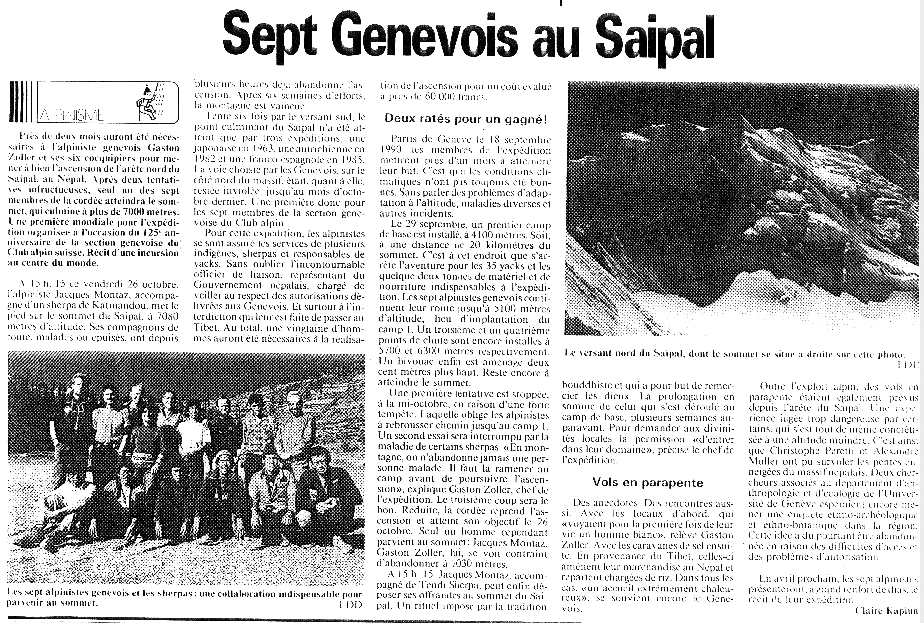
New Route on Saipal-Himal
by the Geneva Section of
the SAC
Kathmandu and
the approach hike
19 September 1990
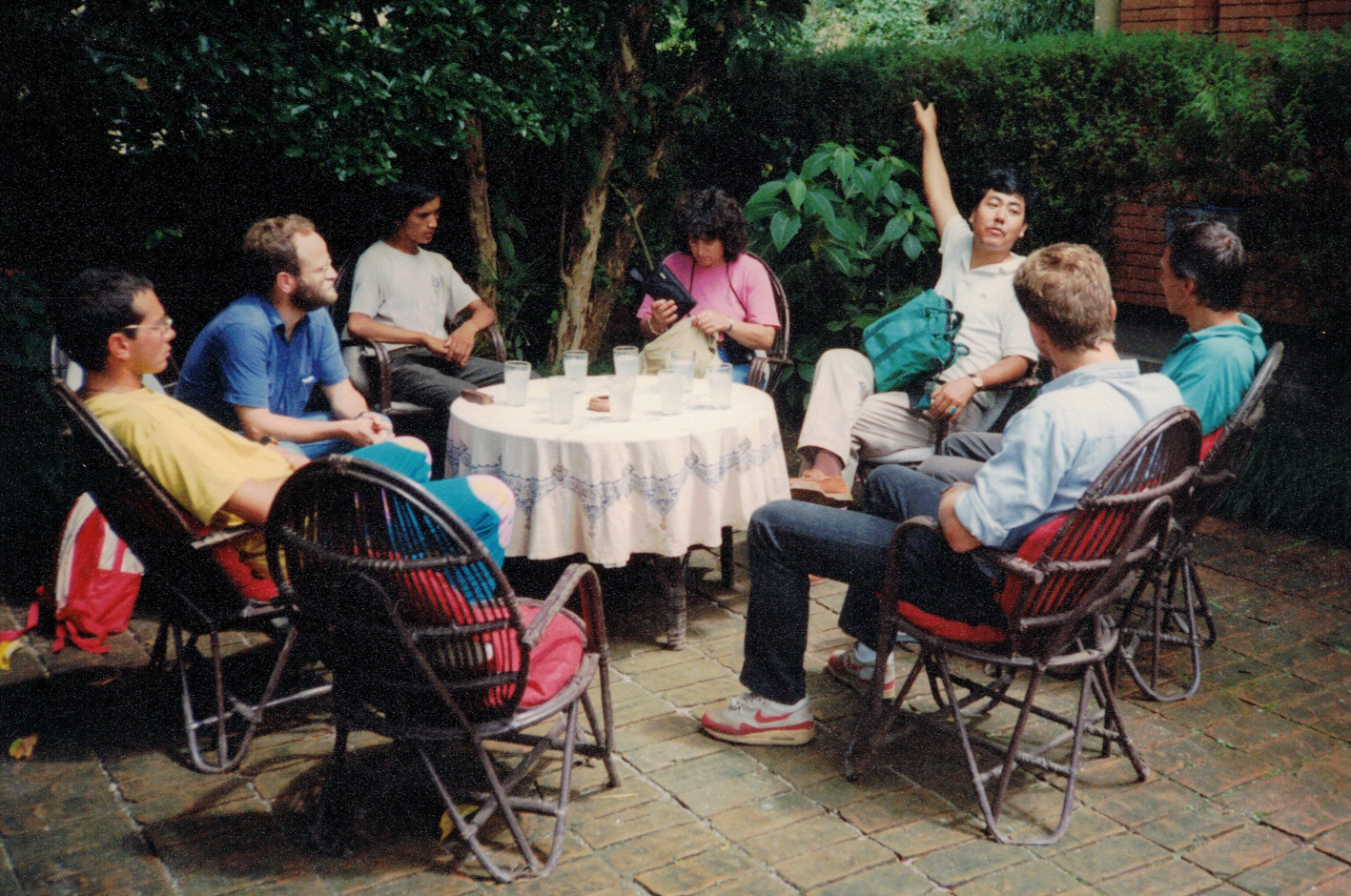
Arrival in Kathmandu
We are greeted by Tensing, who introduces us to the sherpas and the other members of the expedition, as well as the equipment for the trek to base camp.
20 September
Departure of group luggage and personal excess baggage for Nepalganj and then Simikot.
Setting up emergency supplies in case of a helicopter rescue. Miscellaneous purchases.
As we walked past a temple, we received a blessing in the form of a red mark on our foreheads, known as a “tika”.
21 September
Receipt and repair of the compression bag
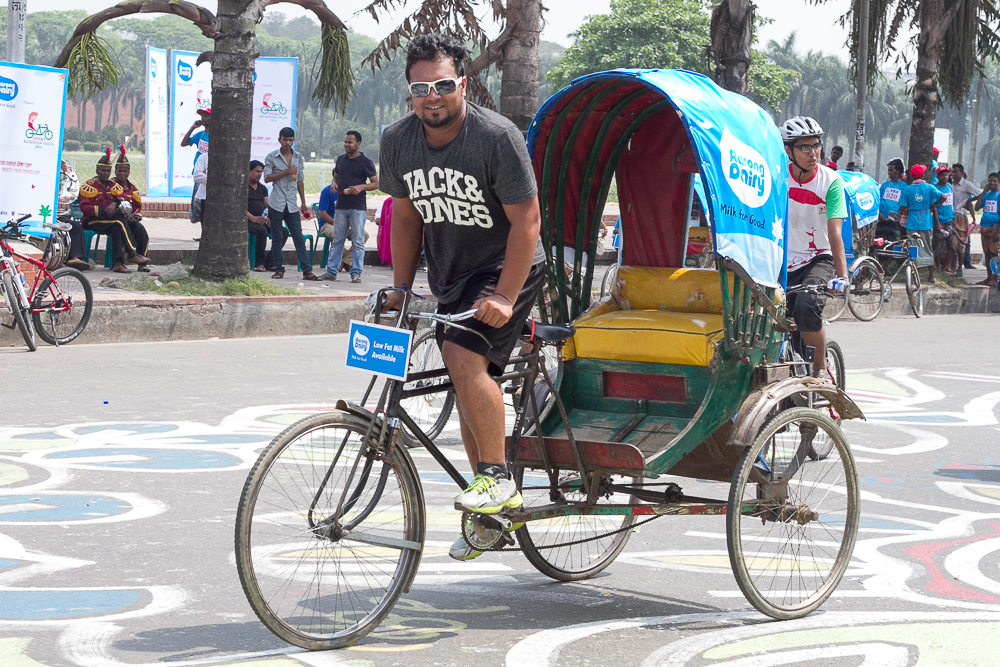
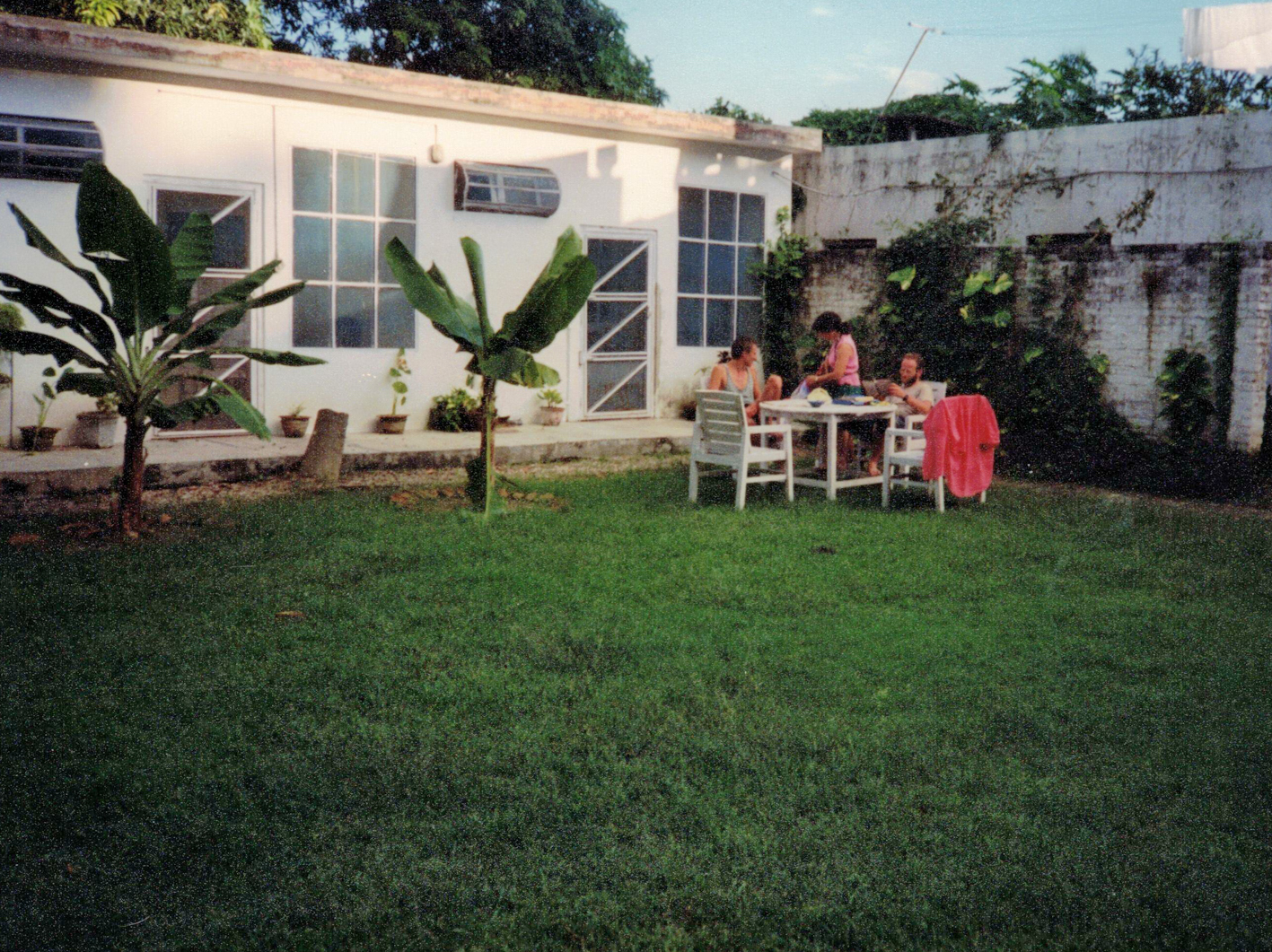
Our colonial-style hotel is nestled amongst the rice paddies, a 10-minute rickshaw ride from the bazaar.
22 September
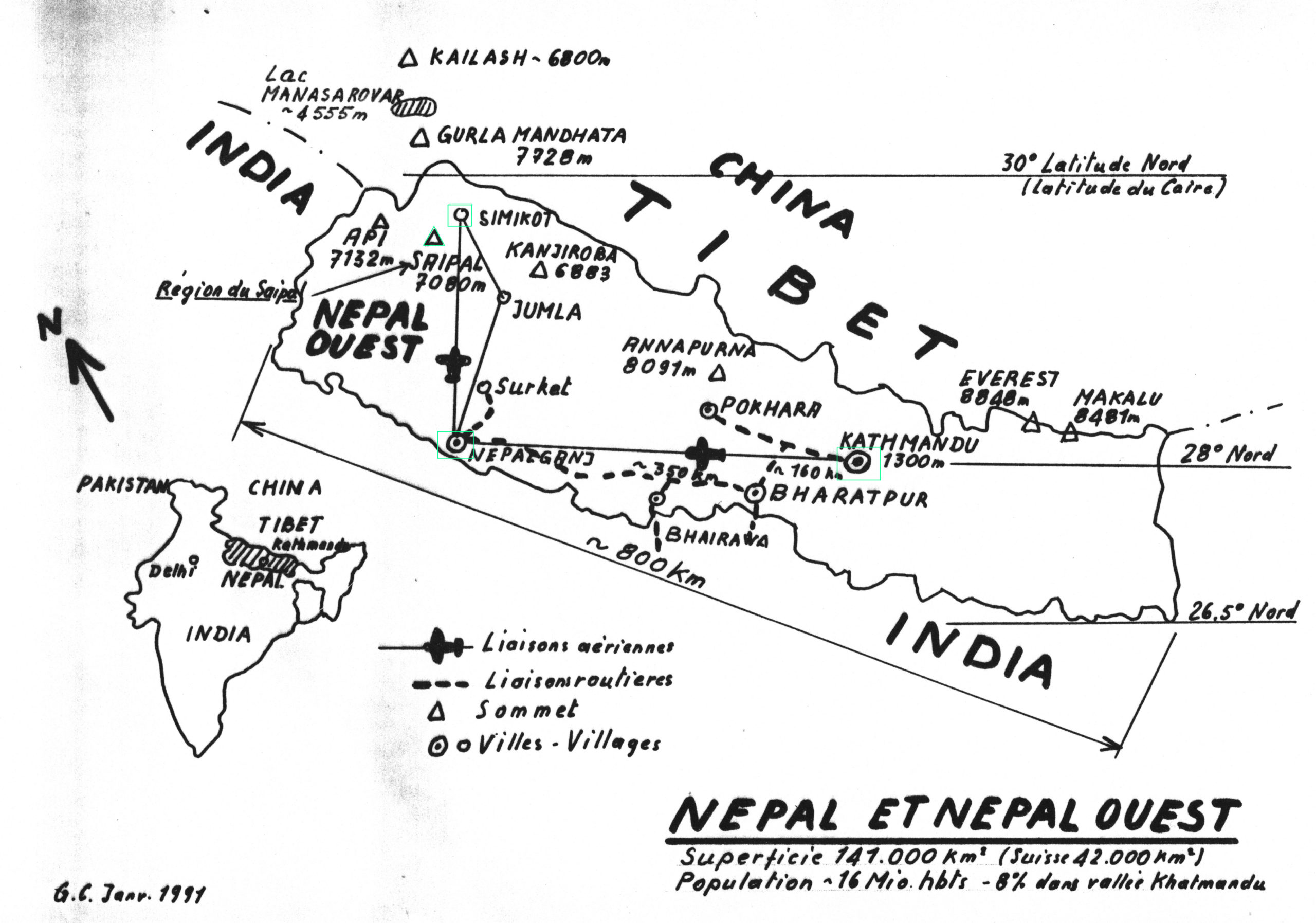
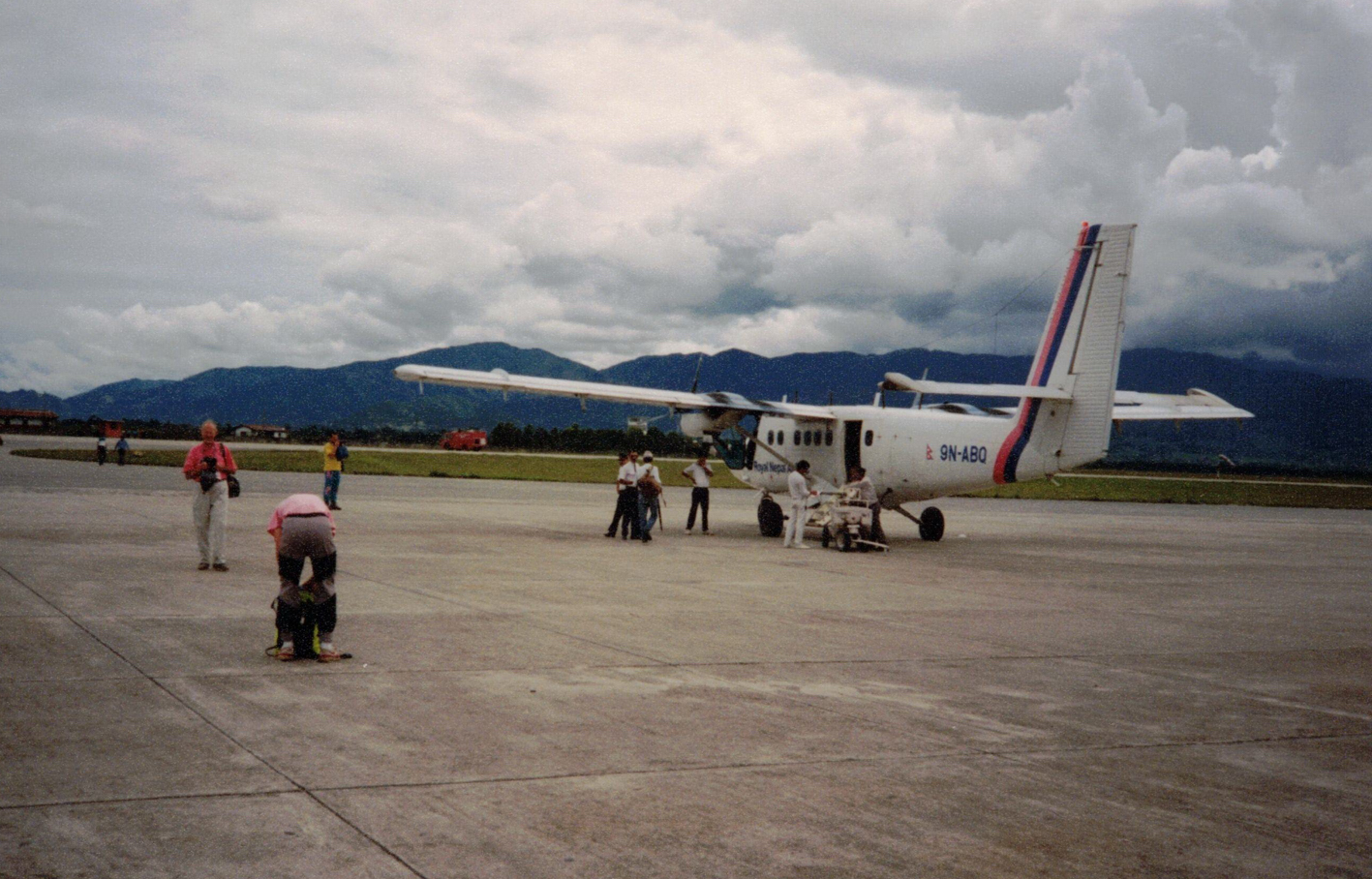
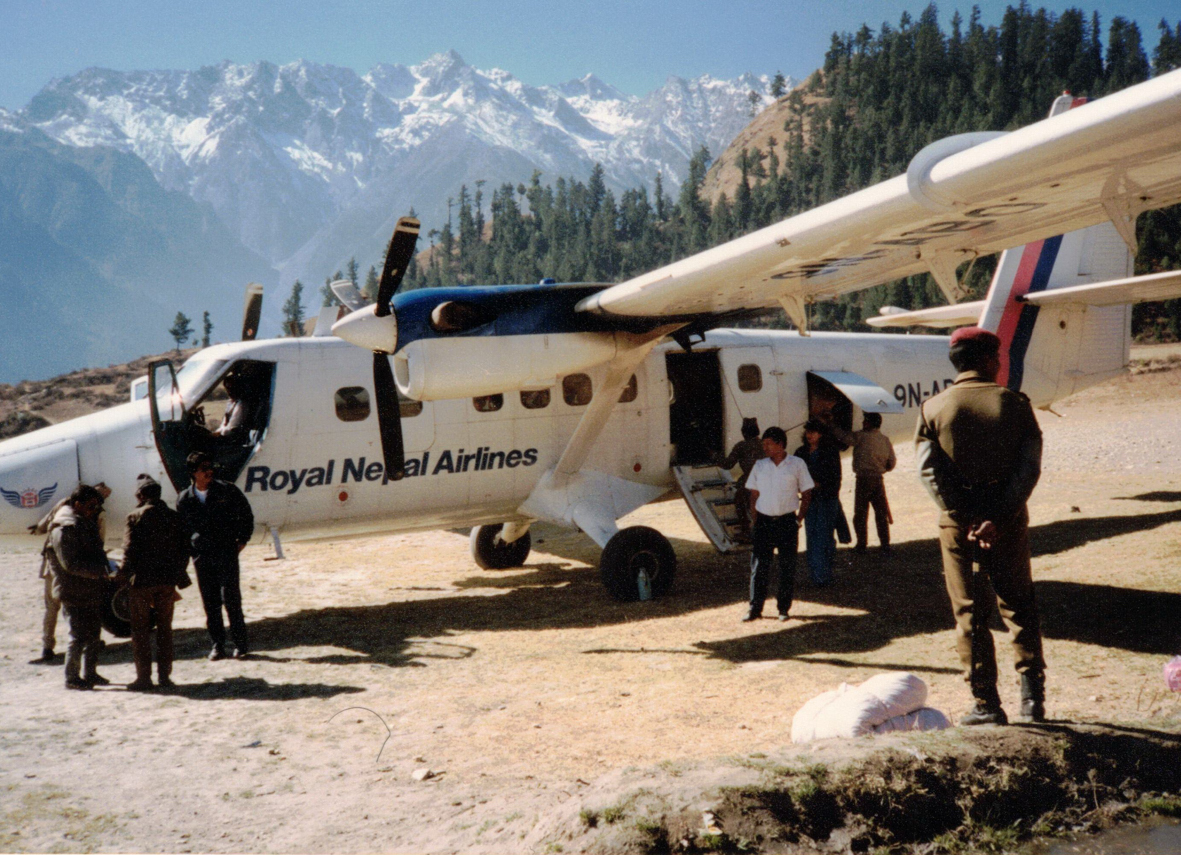
We set off for Nepalganj at 12.30 pm on a Twin Otter, after a picnic at the airport café.
We’re flying at an altitude of 3,300 metres and can make out Annapurna and then Dhaulagiri. A perfect landing in Nepalganj (150 m). It is hot (35°C) and very humid.
Rice fields as far as the eye can see and large, muddy rivers. A typical Indian town.
The locals are busy preparing for the ‘Dashain’ festival.
23 September
Departure for Simikot. Woke up at 4.15 am; the plane took off at around 6.45 am. We flew at an altitude of 4,115 metres, high up in the clouds.
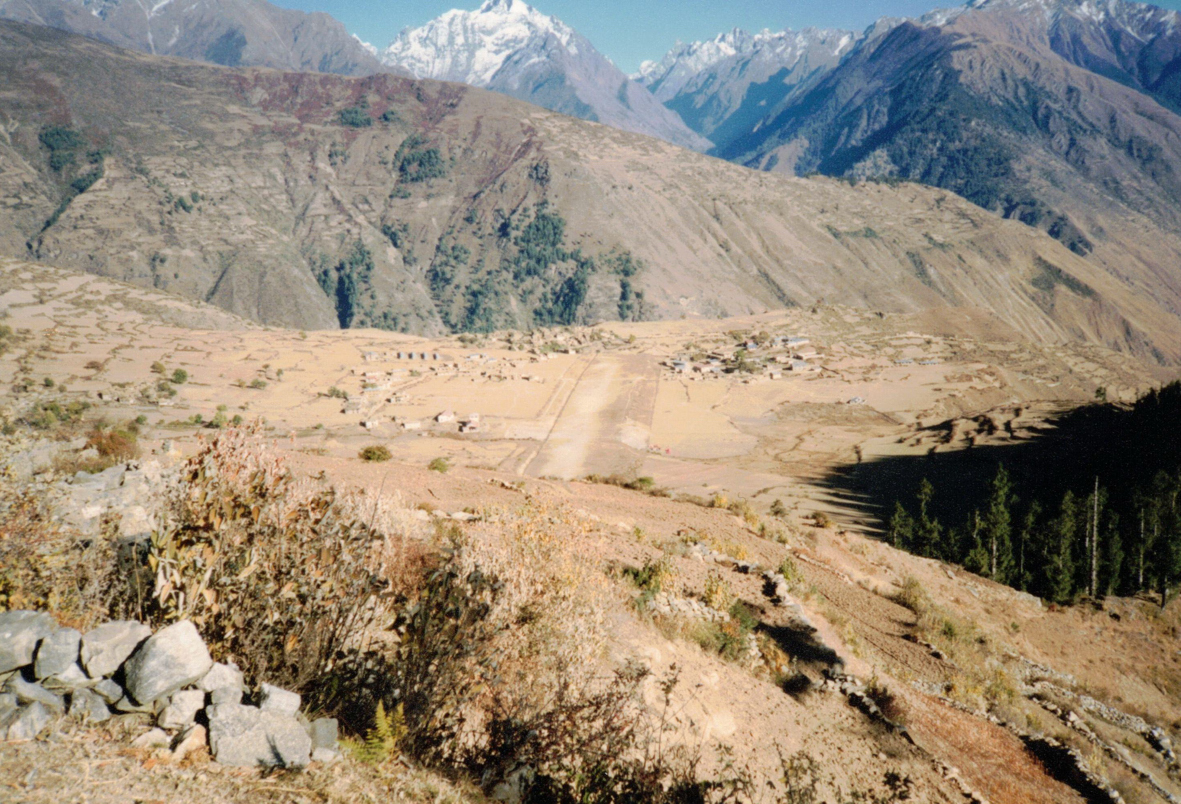
Simikot is a town in the mountains of the north-western Nepalese Himalayas, situated at an altitude of 2,910 metres.
The pilot is struggling to make out the track.
On the fourth pass… finally, a patch of clear sky over the 500-metre dirt track.
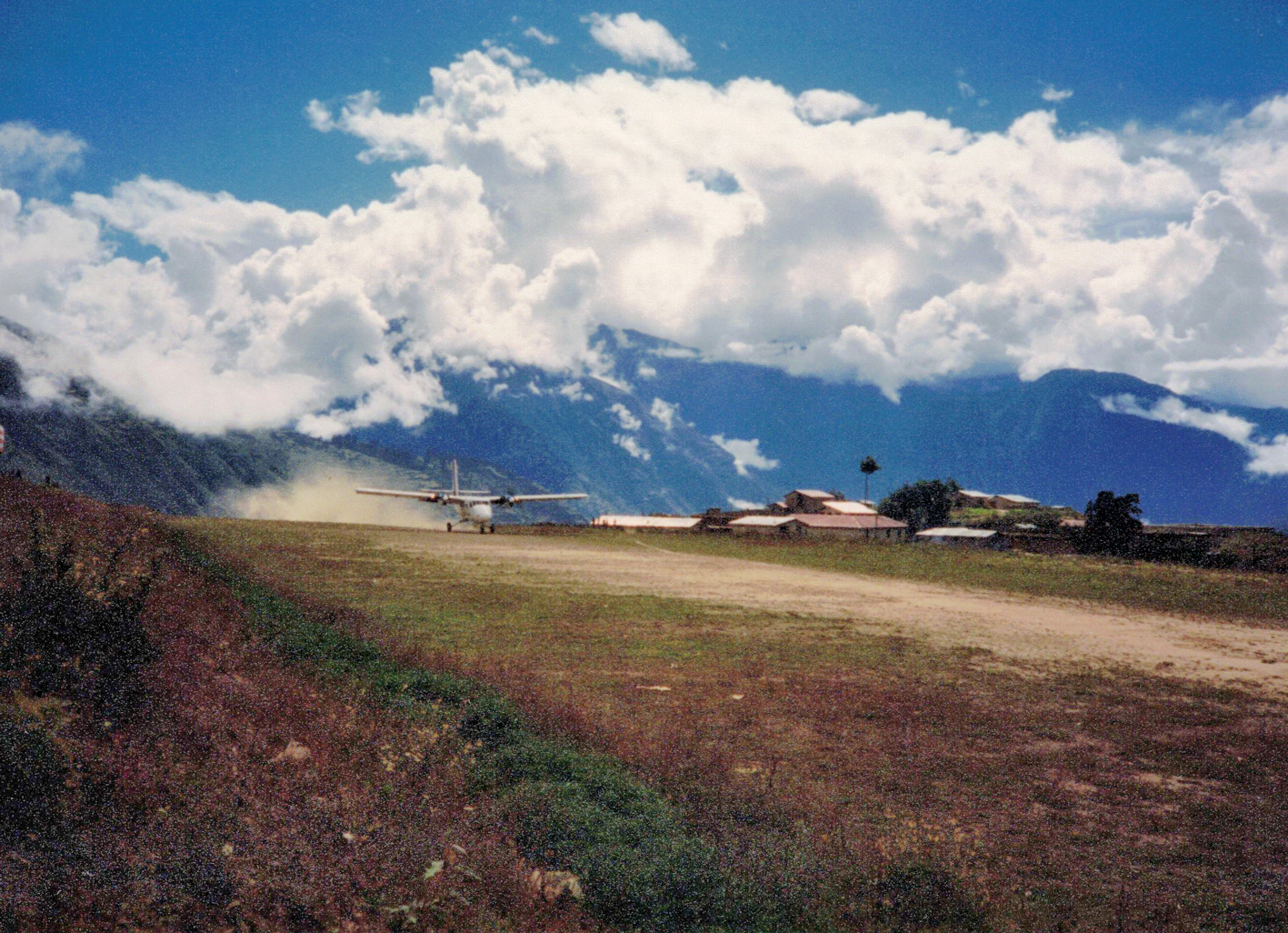
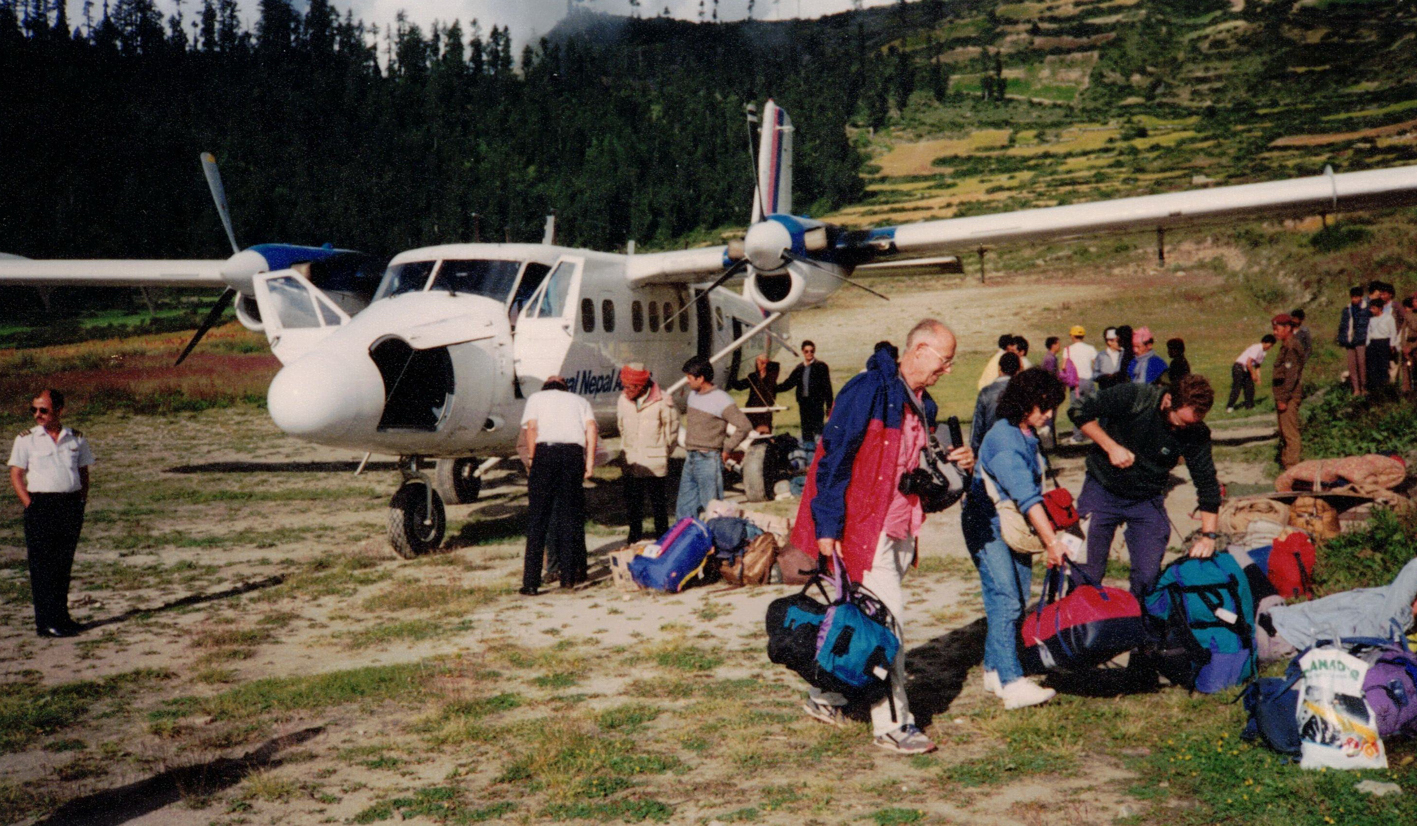
Unloading. The whole village is here… it’s a party!
Most of the equipment had already arrived on site the day before, along with a sherpa and an assistant cook.
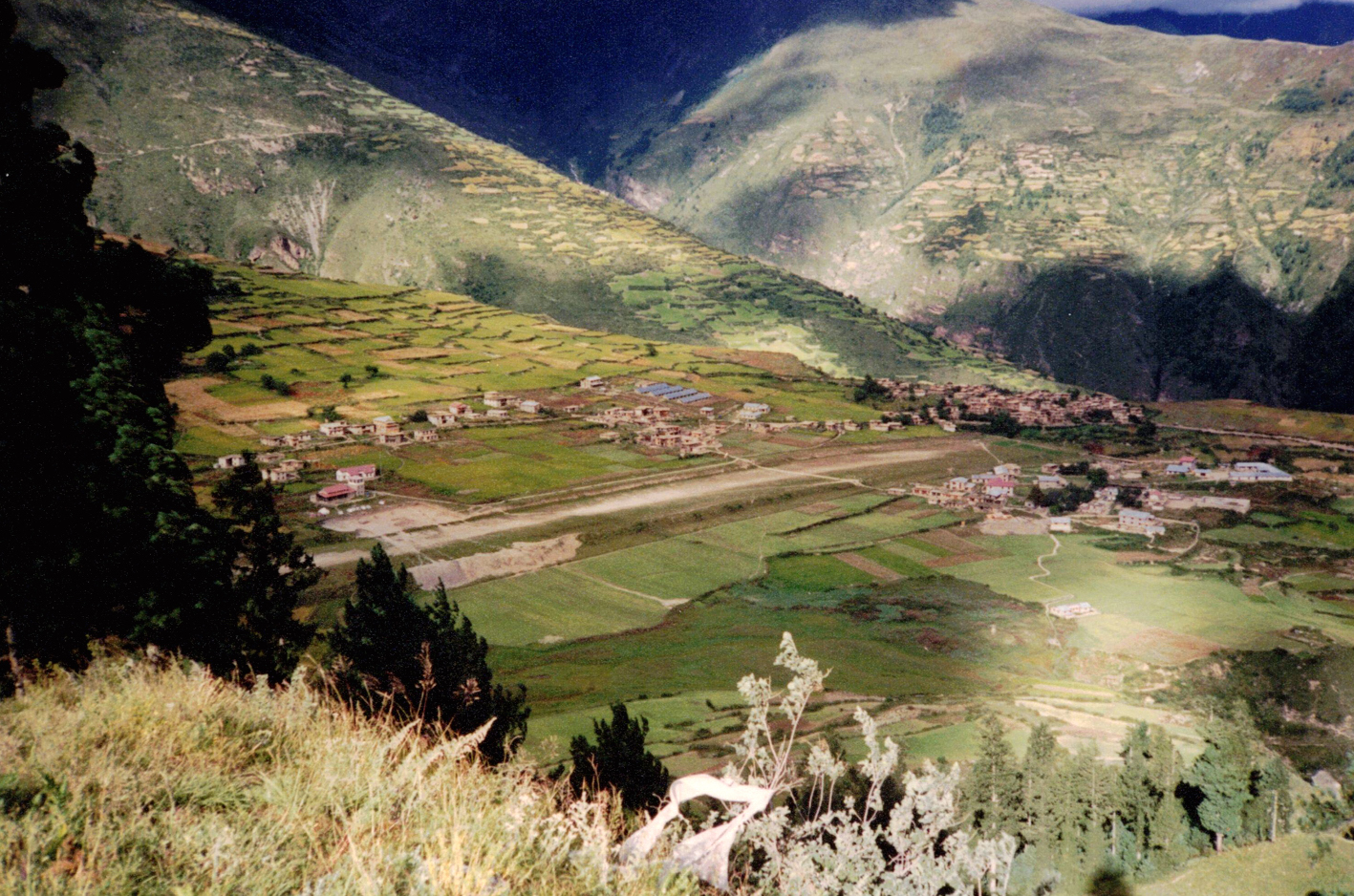
Simikot
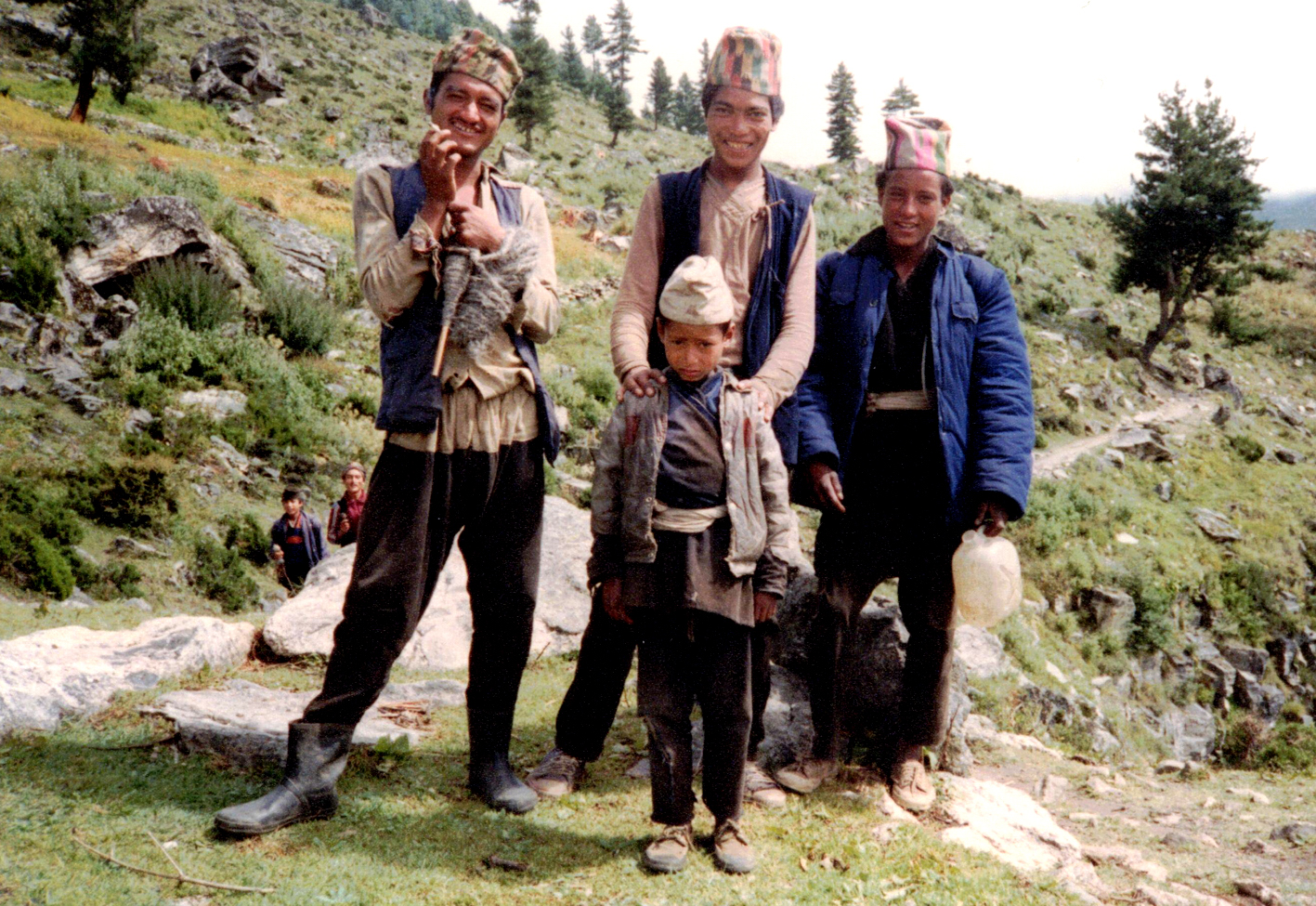
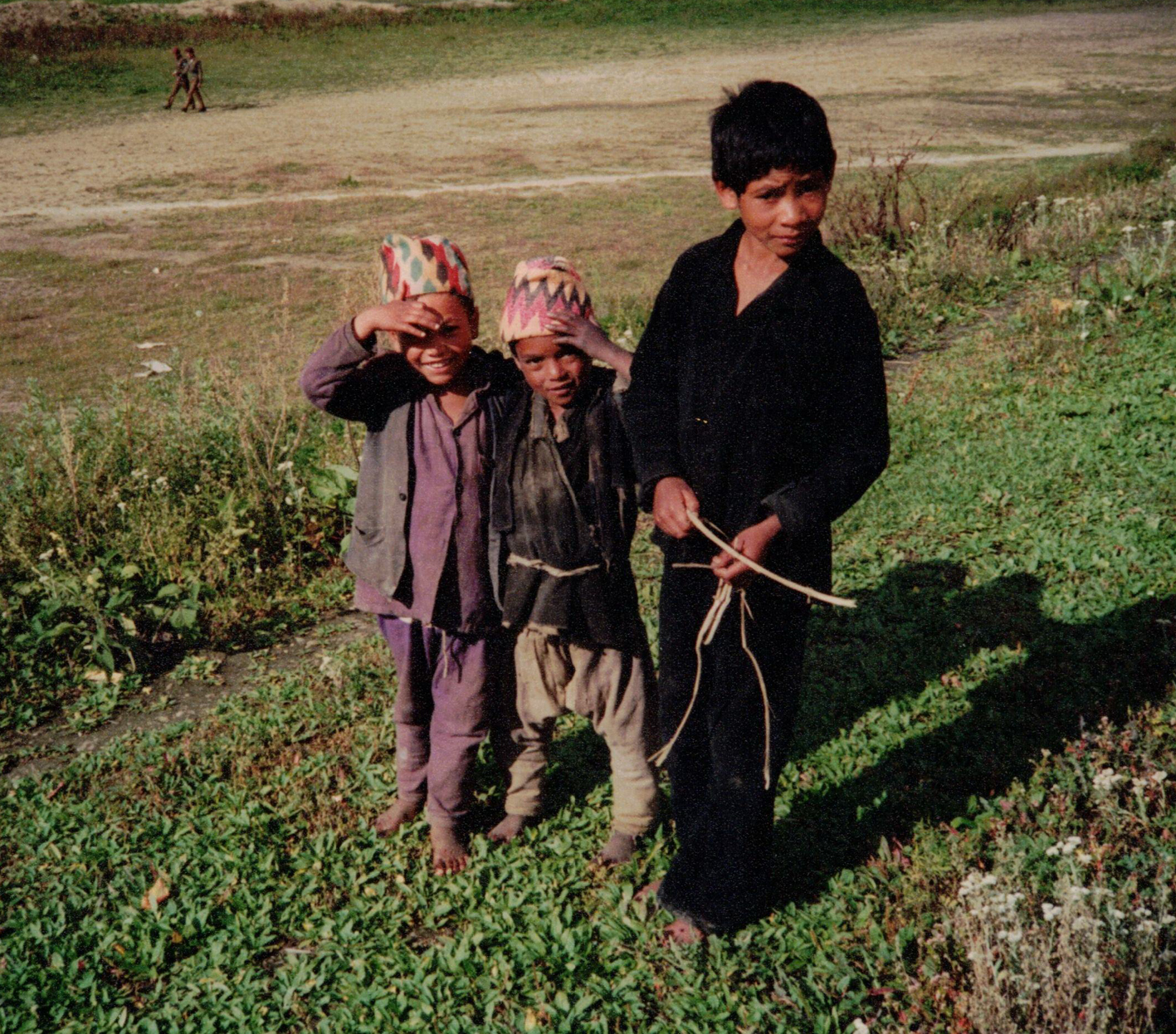
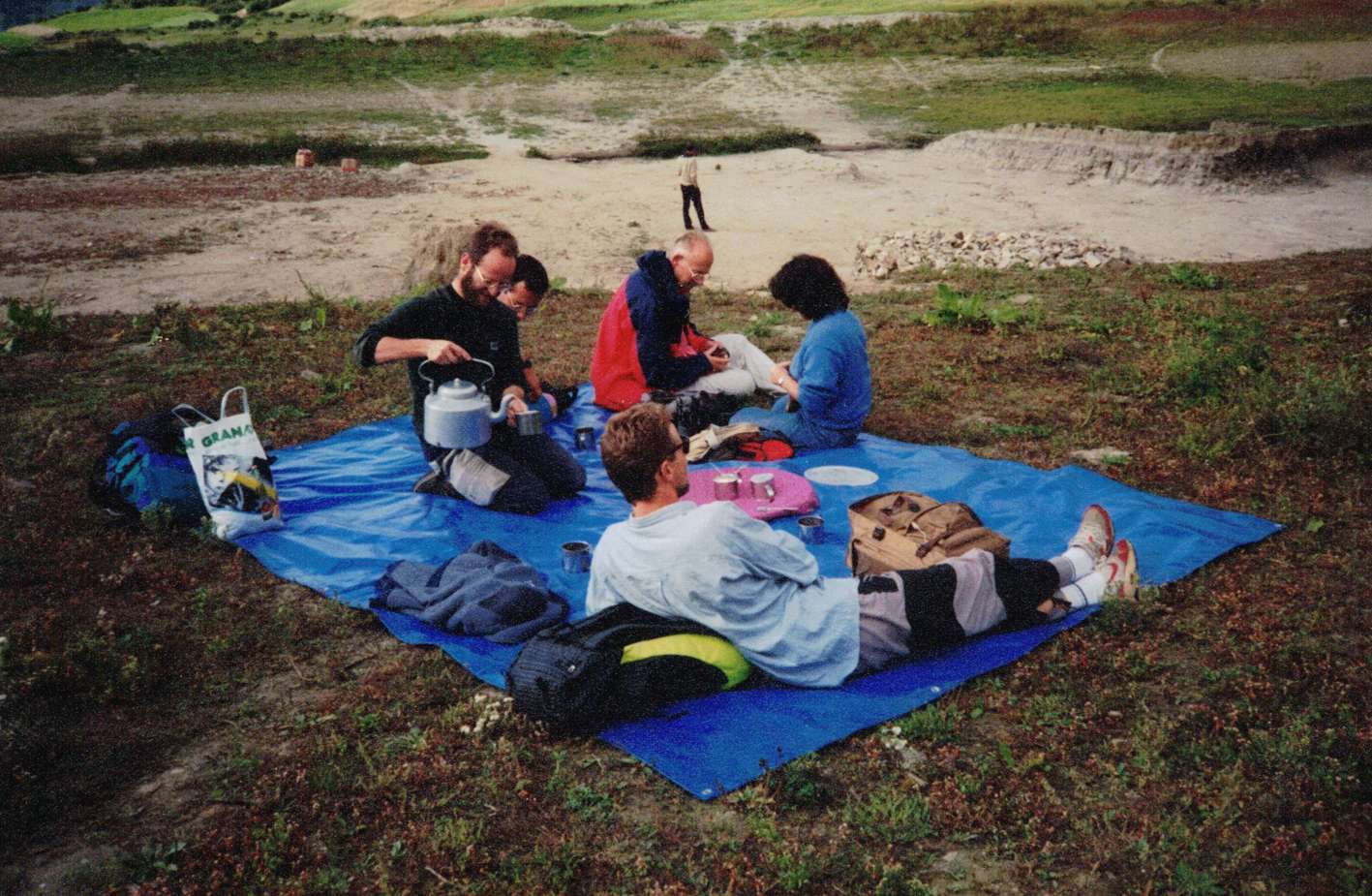
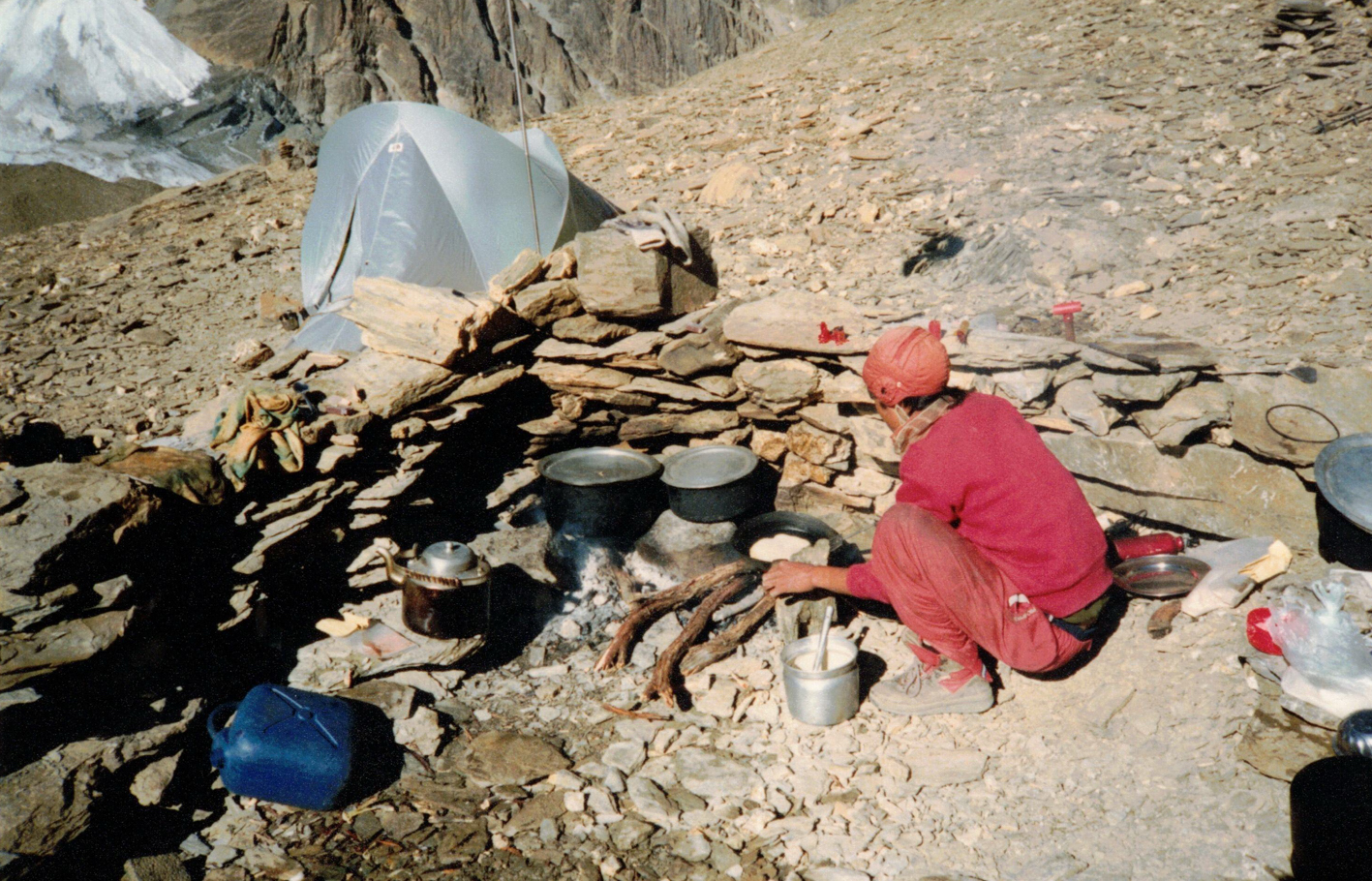
The kitchen is full of smoke. A large plastic sheet has been spread out to welcome us with traditional tea.
Our tents are pitched. The seams have been waterproofed, and the zips have been treated with soap to make them run more smoothly.
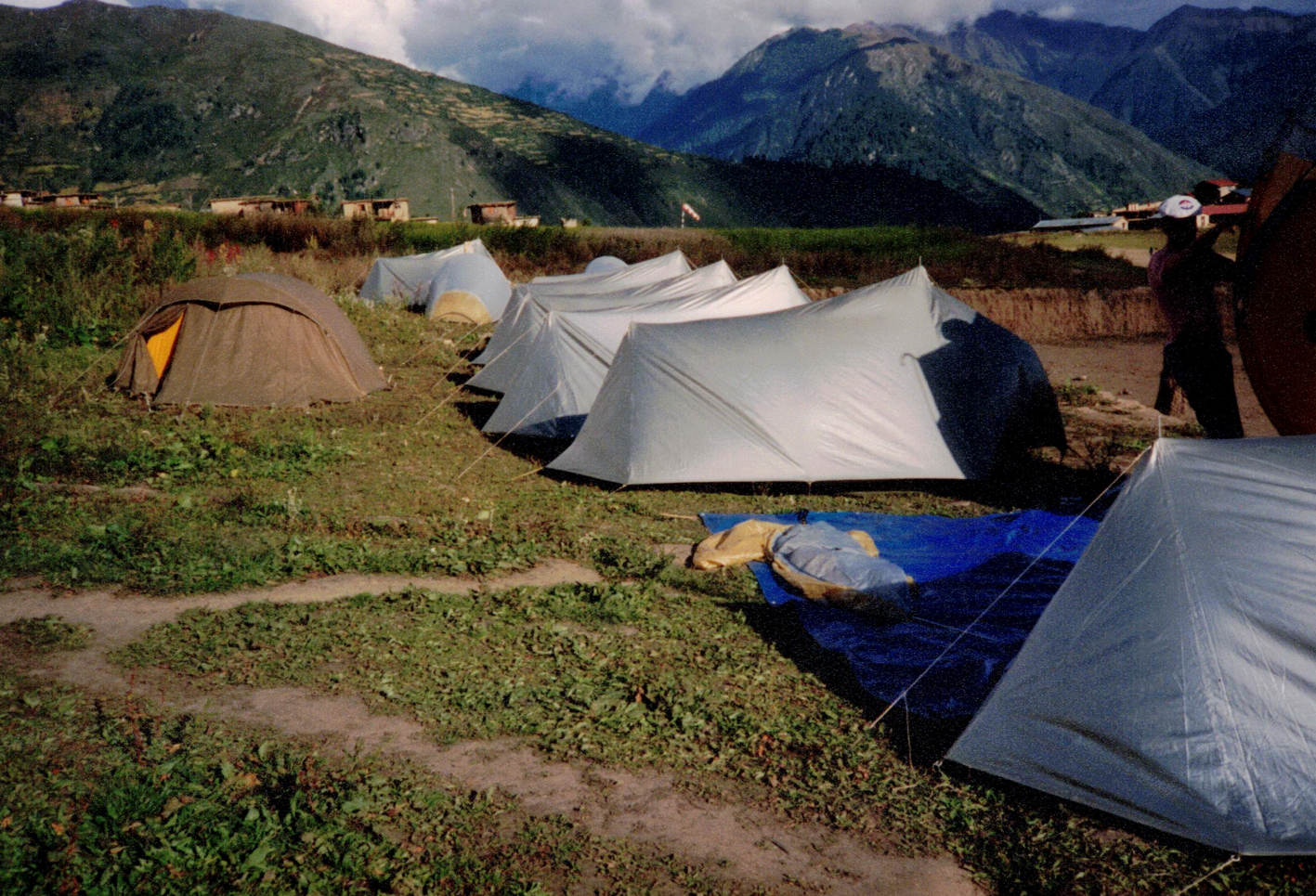
Dinner is served in the mess tent by the light of a kerosene lamp.
24 September
Breakfast served by the Nepalese staff at the entrance to the tent. I accompany Alex to the village well to do some laundry and wash up. In the afternoon, we visit Simikot and take a walk to a ‘chörten’ (one of the symbols of the Buddhist religion). The long-awaited yaks still haven’t arrived.
25 September
We woke up at 6.30 am. The yaks were there. We packed up our tents and set off.
Seeing the chaos caused by a lack of organisation, Georges ran off, followed by Geneviève, our nurse. I soon followed them.
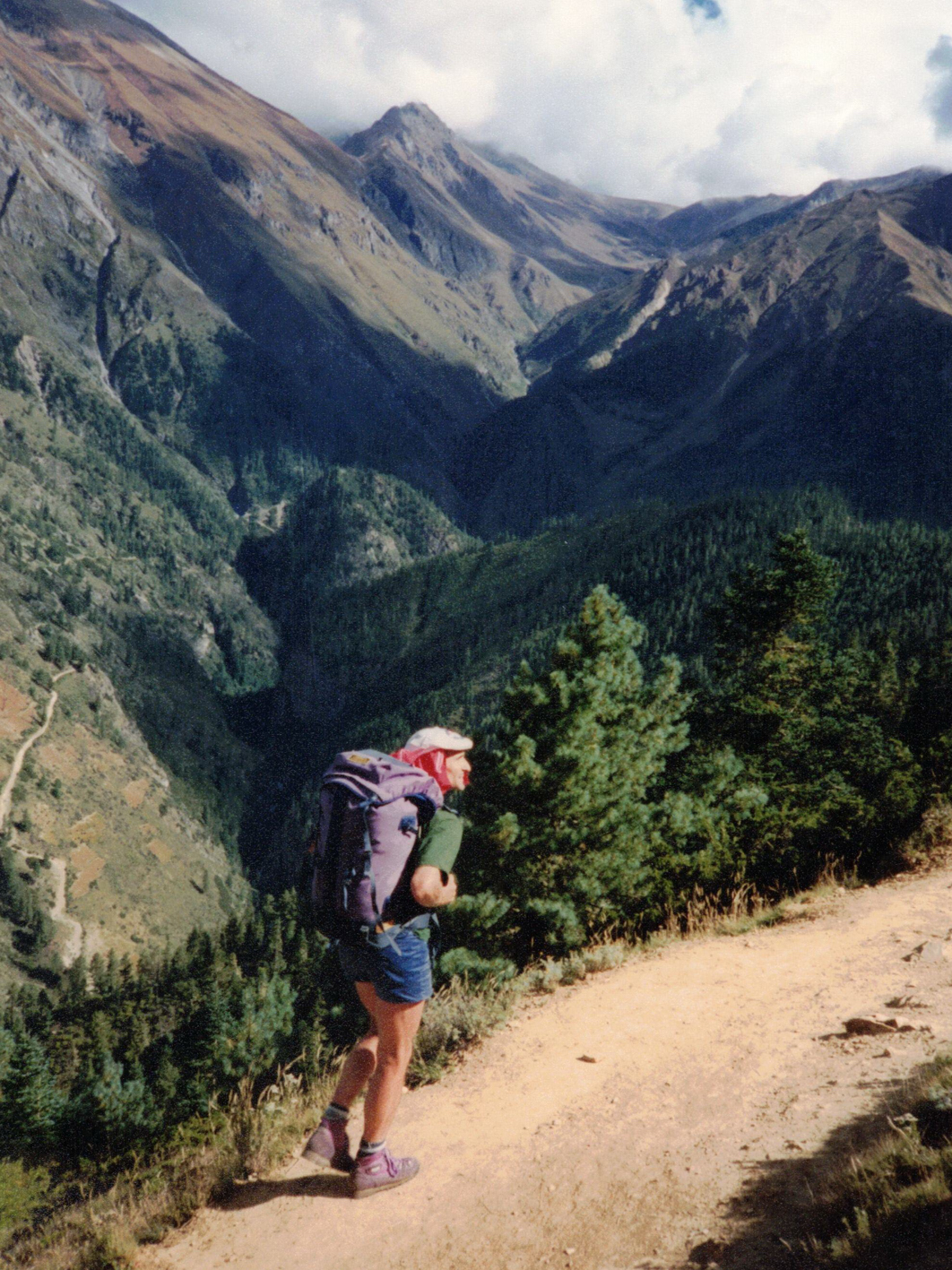
A very steep descent to the bottom of the valley. We take the lower path, whilst the yaks take the upper one, which is longer but easier.
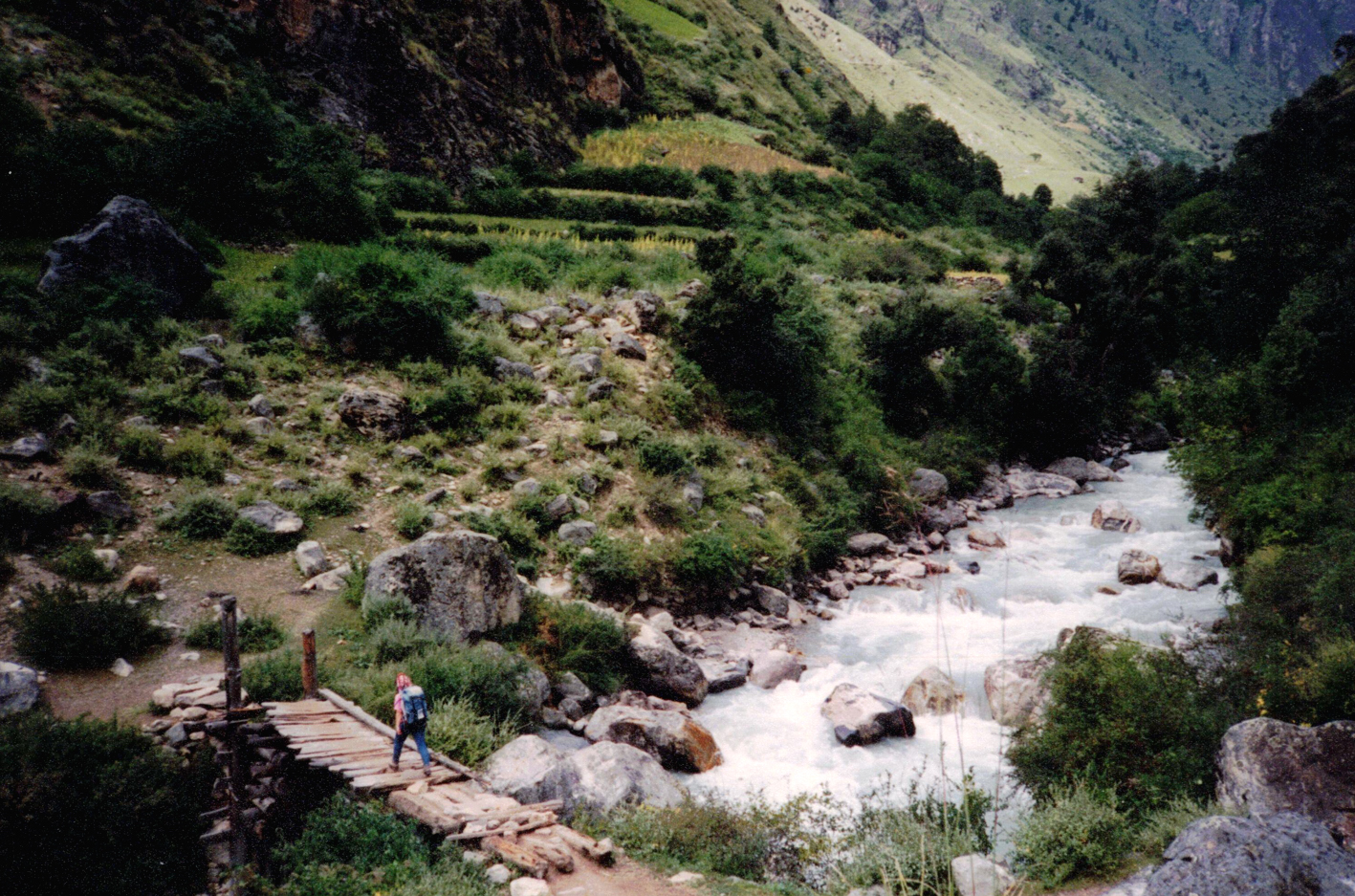
As we passed through a hamlet, Geneviève gave the rest of her picnic to a little girl. The girl’s mum gave us some delicious jacket potatoes.
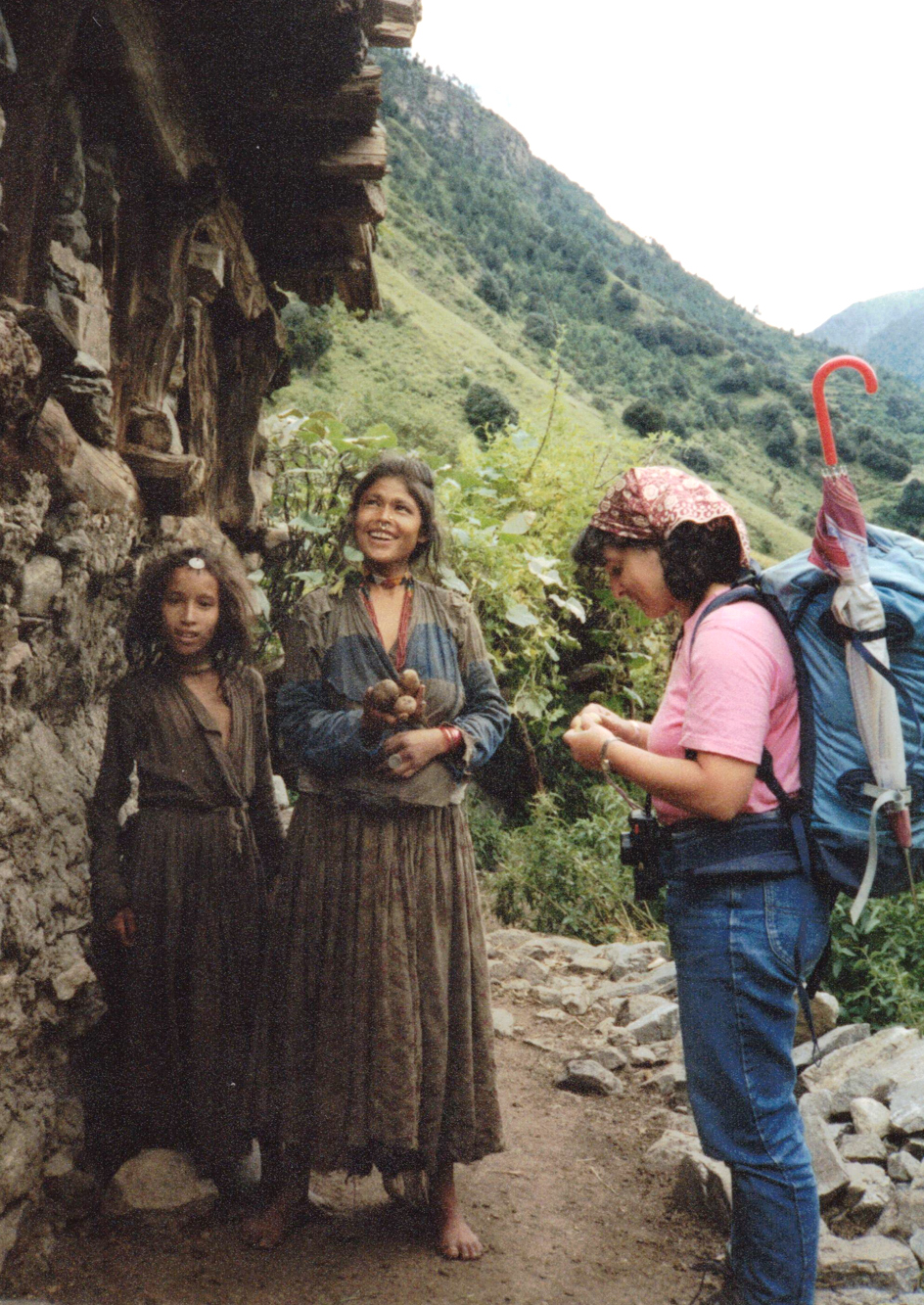
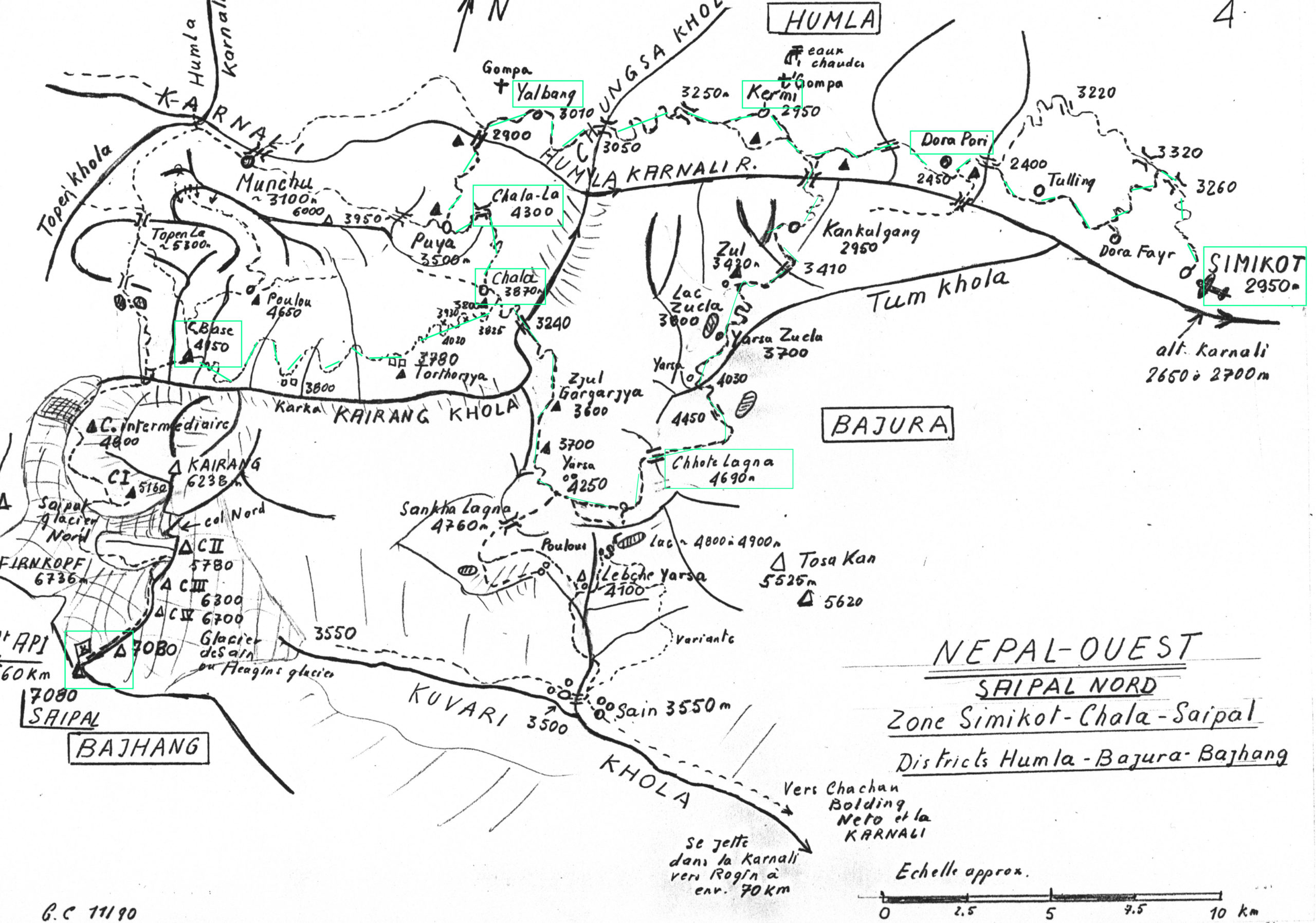
In Dara Pori, we come across a girl of about 7 or 8 carrying a 20-litre water jerrycan.
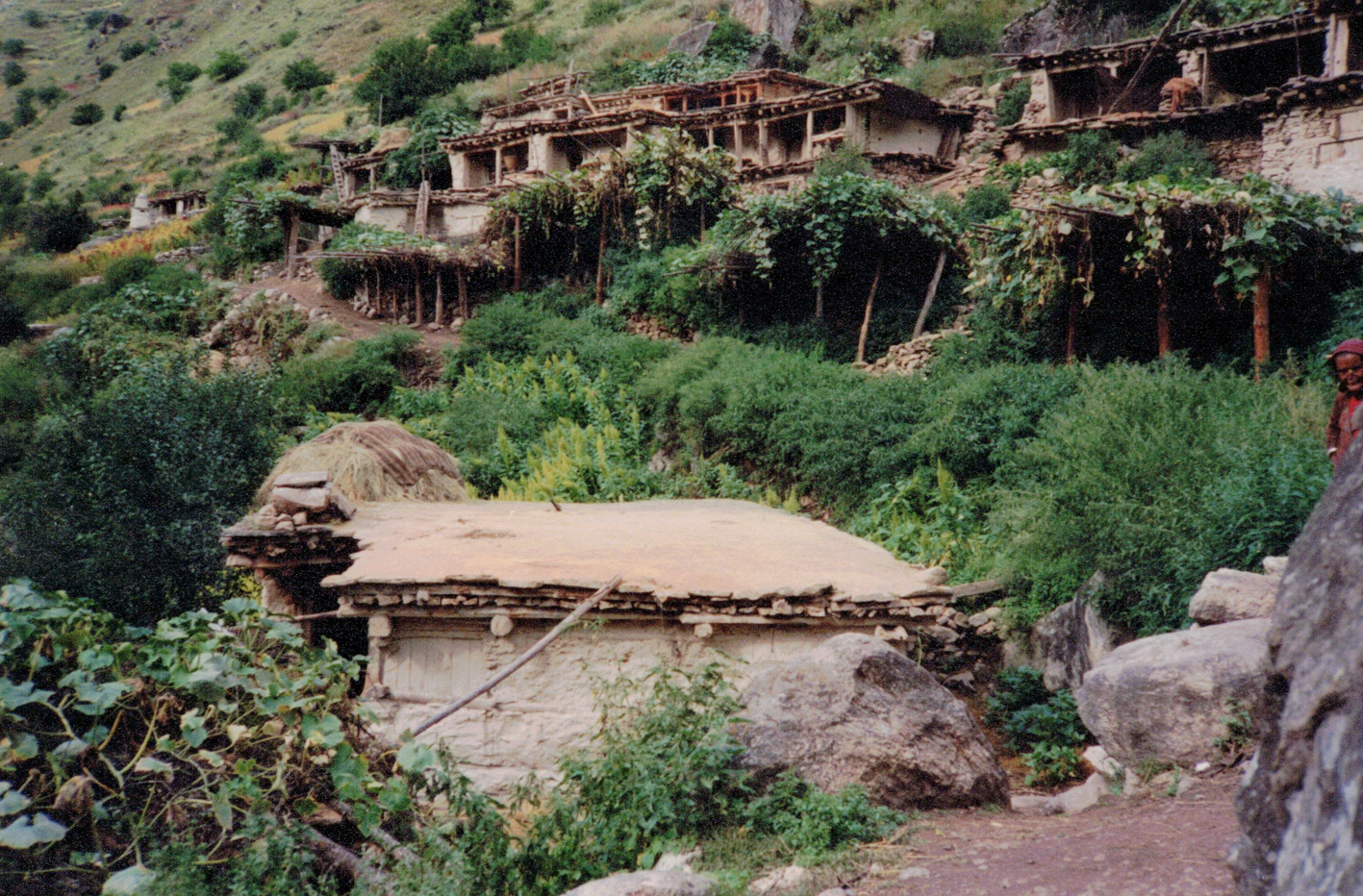
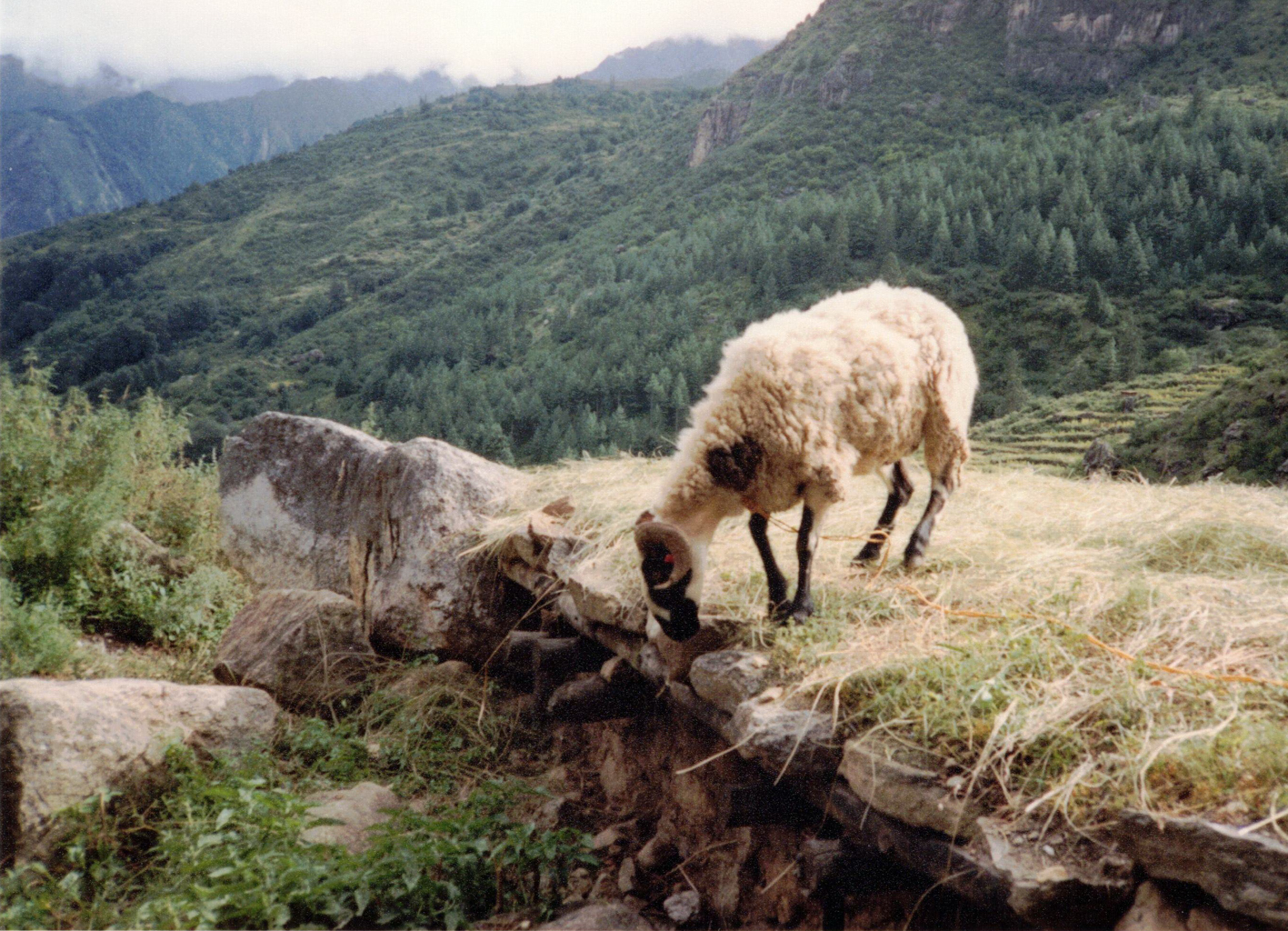
Roofs are used for grazing
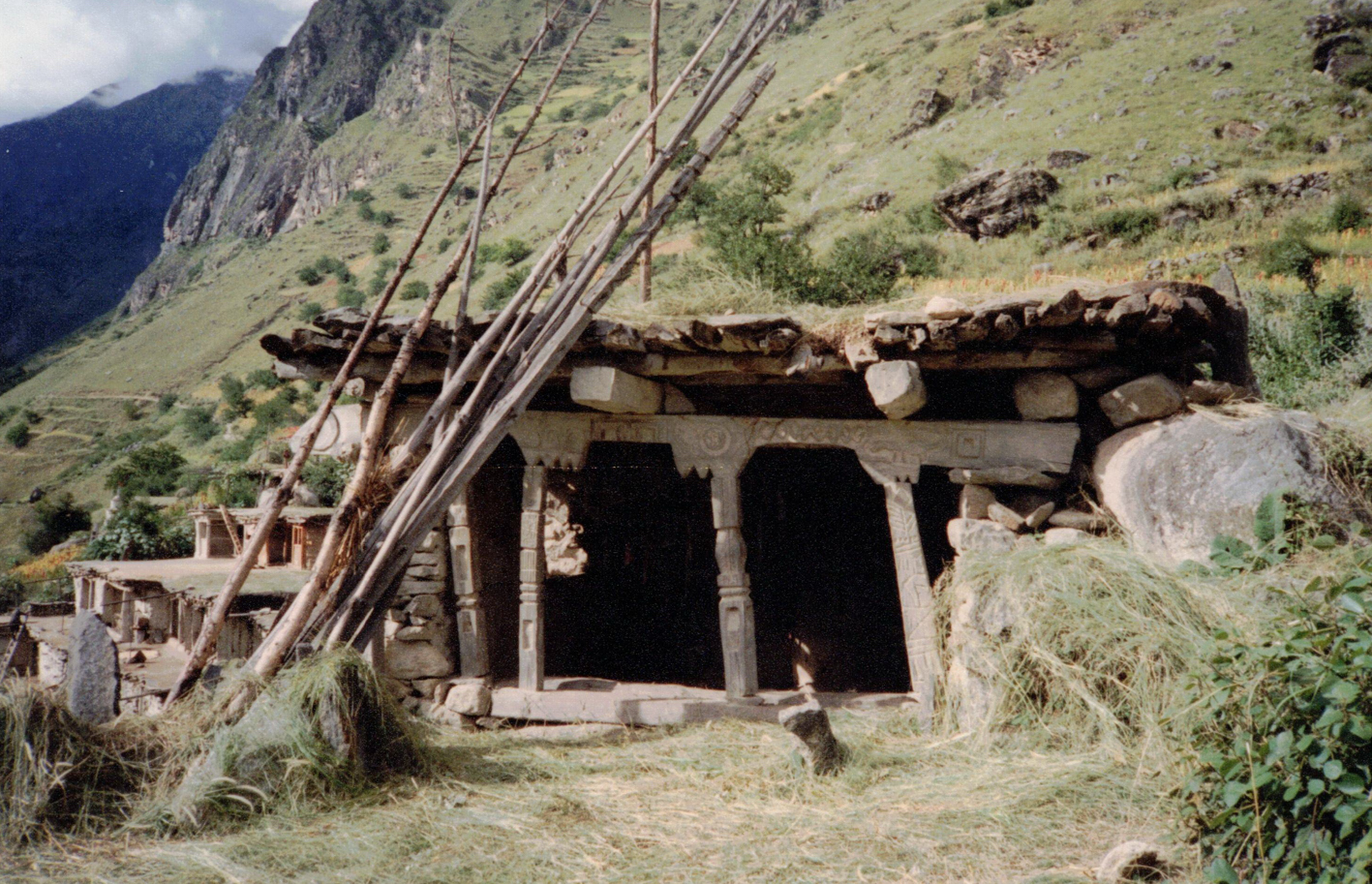
The village’s Buddhist temple
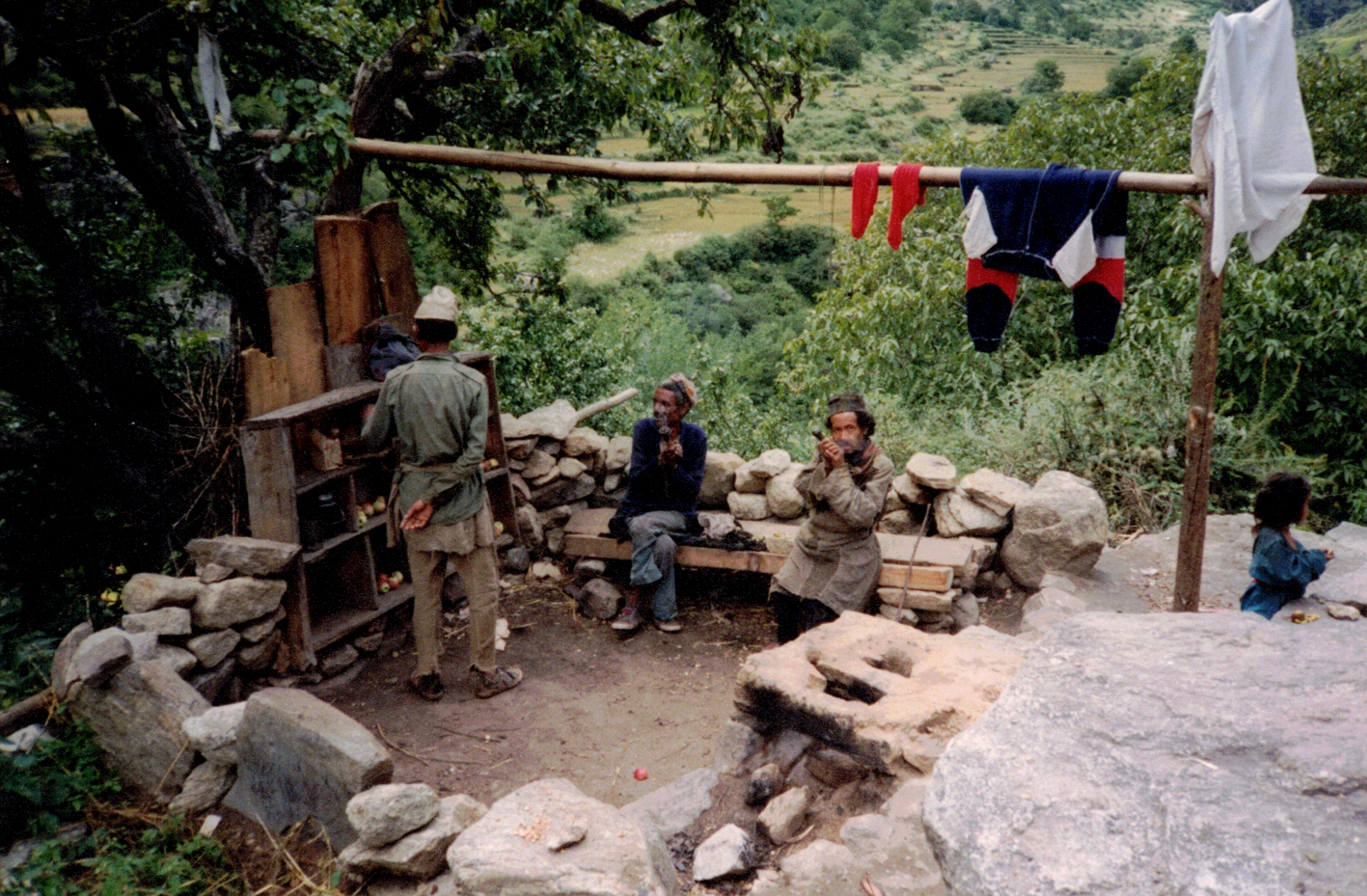
The village shop
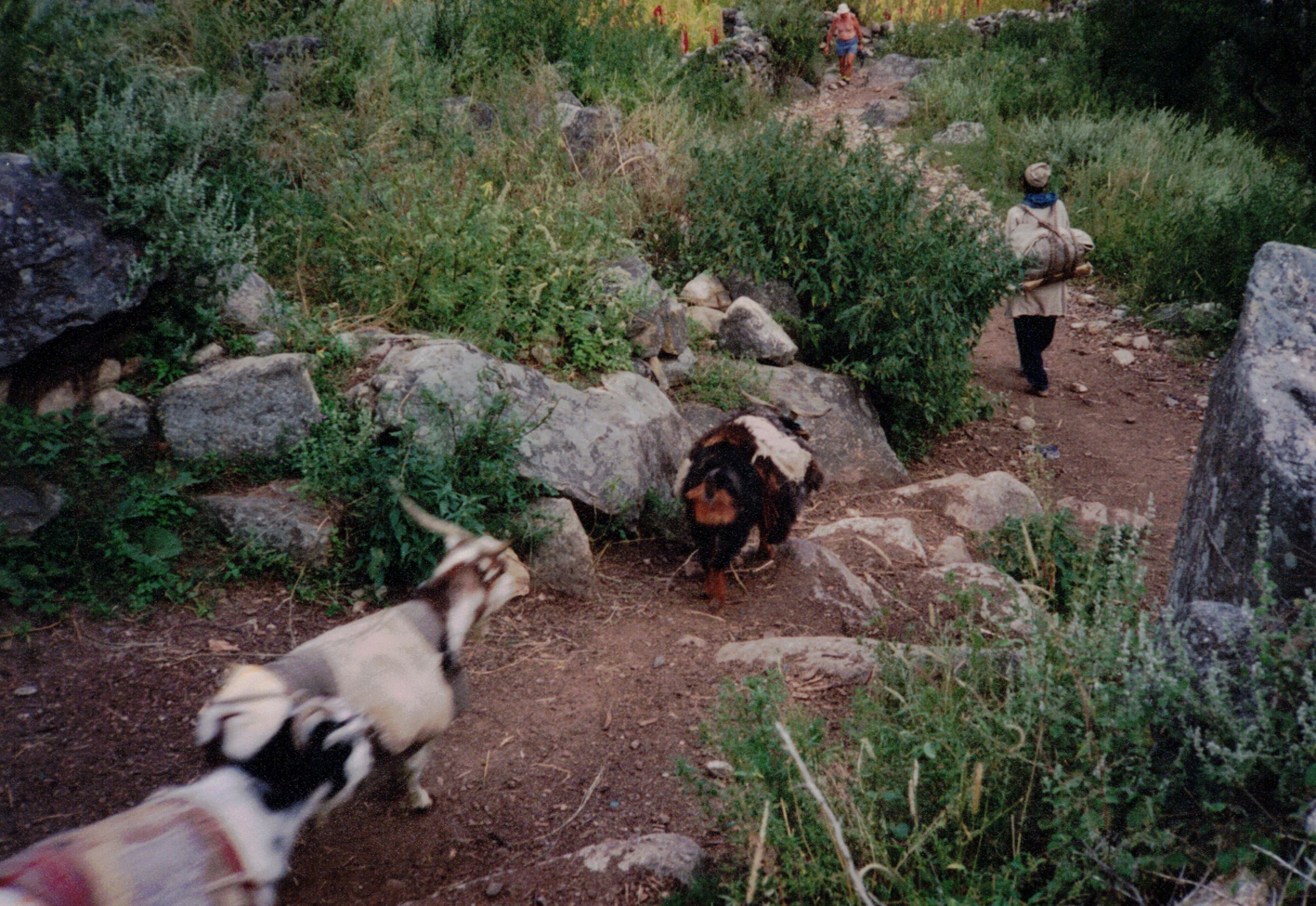
We come across a caravan of goats travelling back and forth between Nepal and Tibet.
The caravan comes down from Tibet carrying salt, and then heads back up with rice… an essential barter trade.
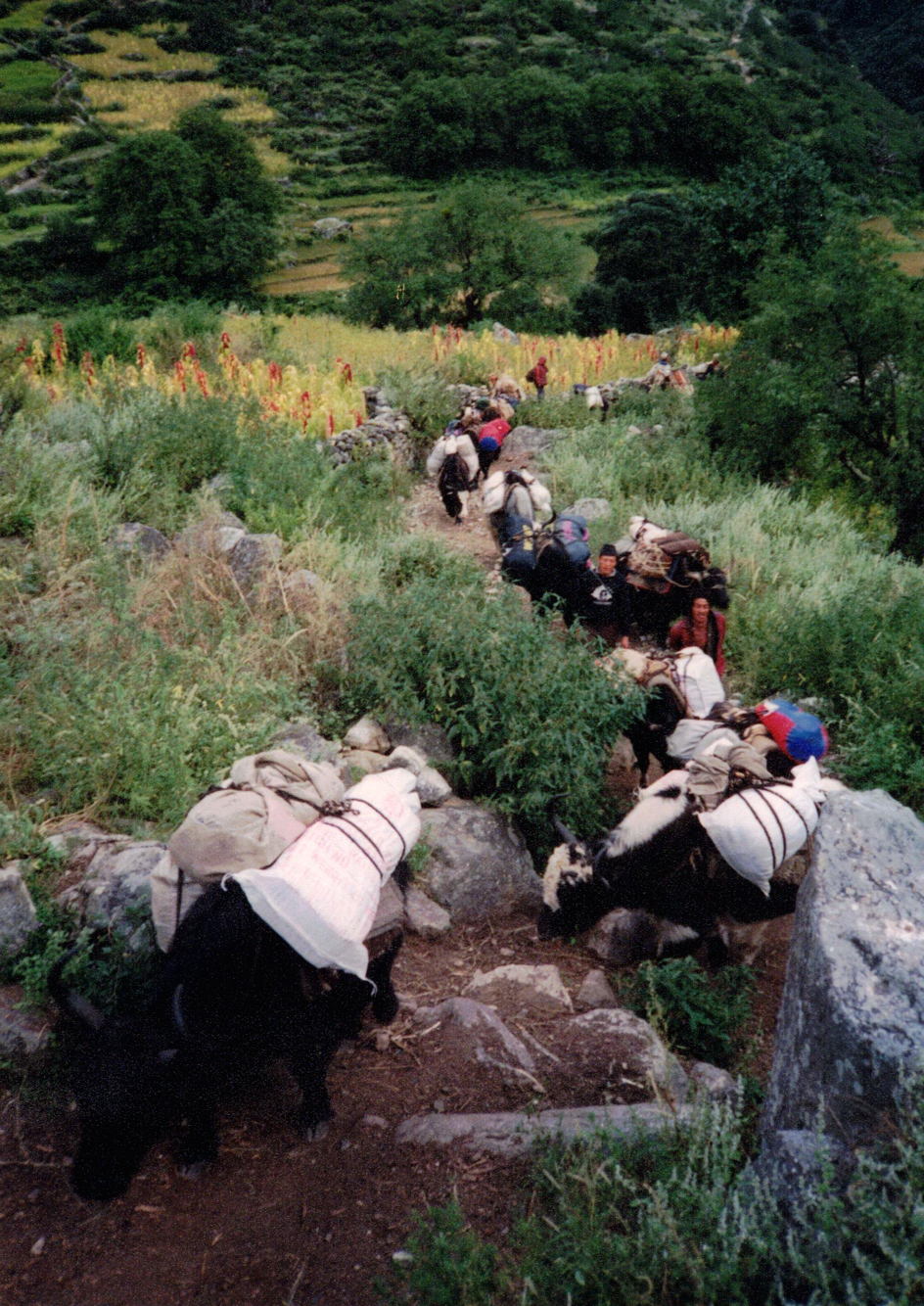
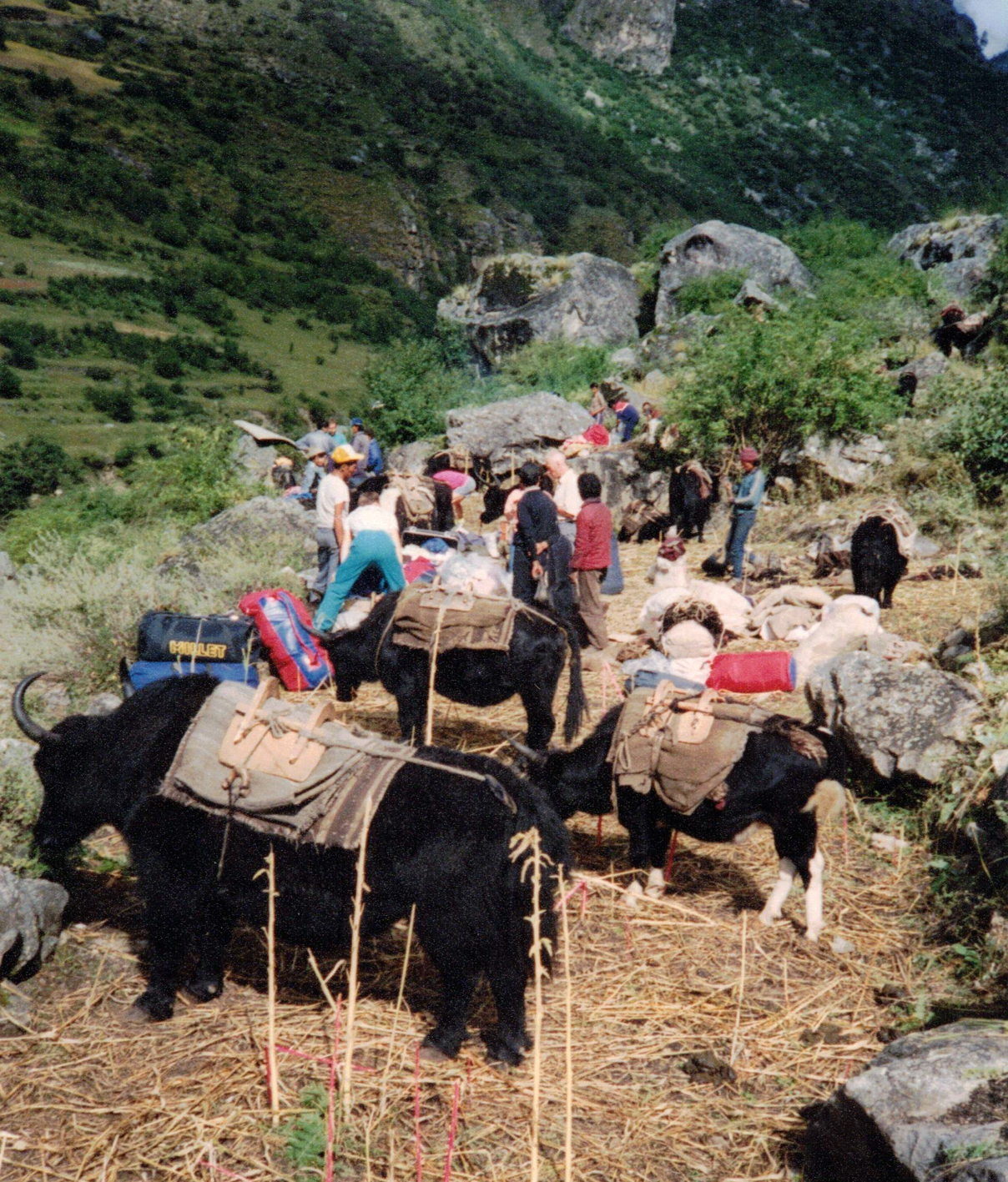
Meanwhile, our yak caravan is making its way up to the next camp, which will be set up near the Karnali River.
26 September
The day before, we lost a yak.
Also today: Jacques gives the yak herders a telling-off and orders them to form six groups of yaks, keeping a respectable distance between them.
The loads carried on the yaks’ backs suffer less.
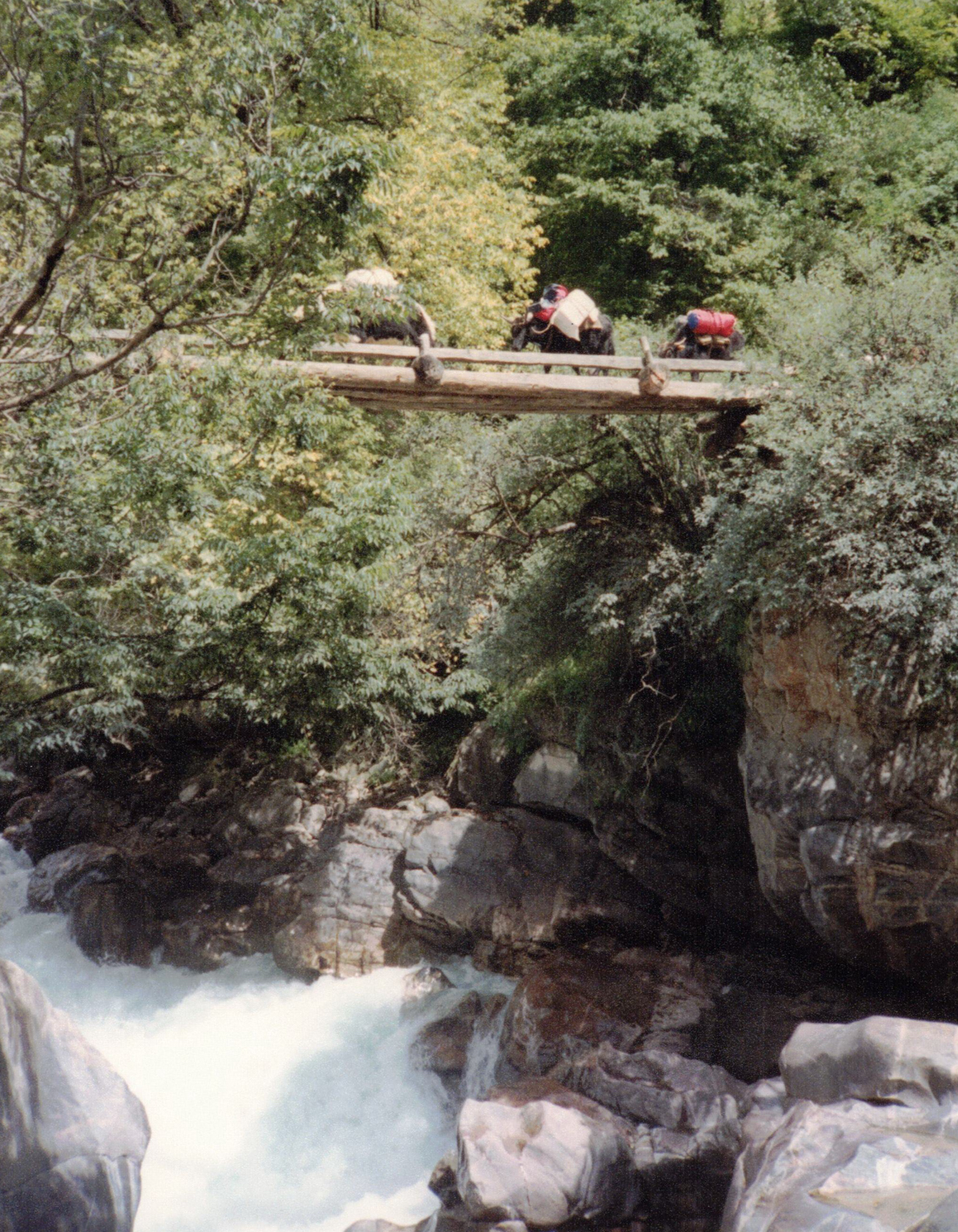
We return to the right bank of the river
and climb about 500 metres to the village of Kangalgaon.
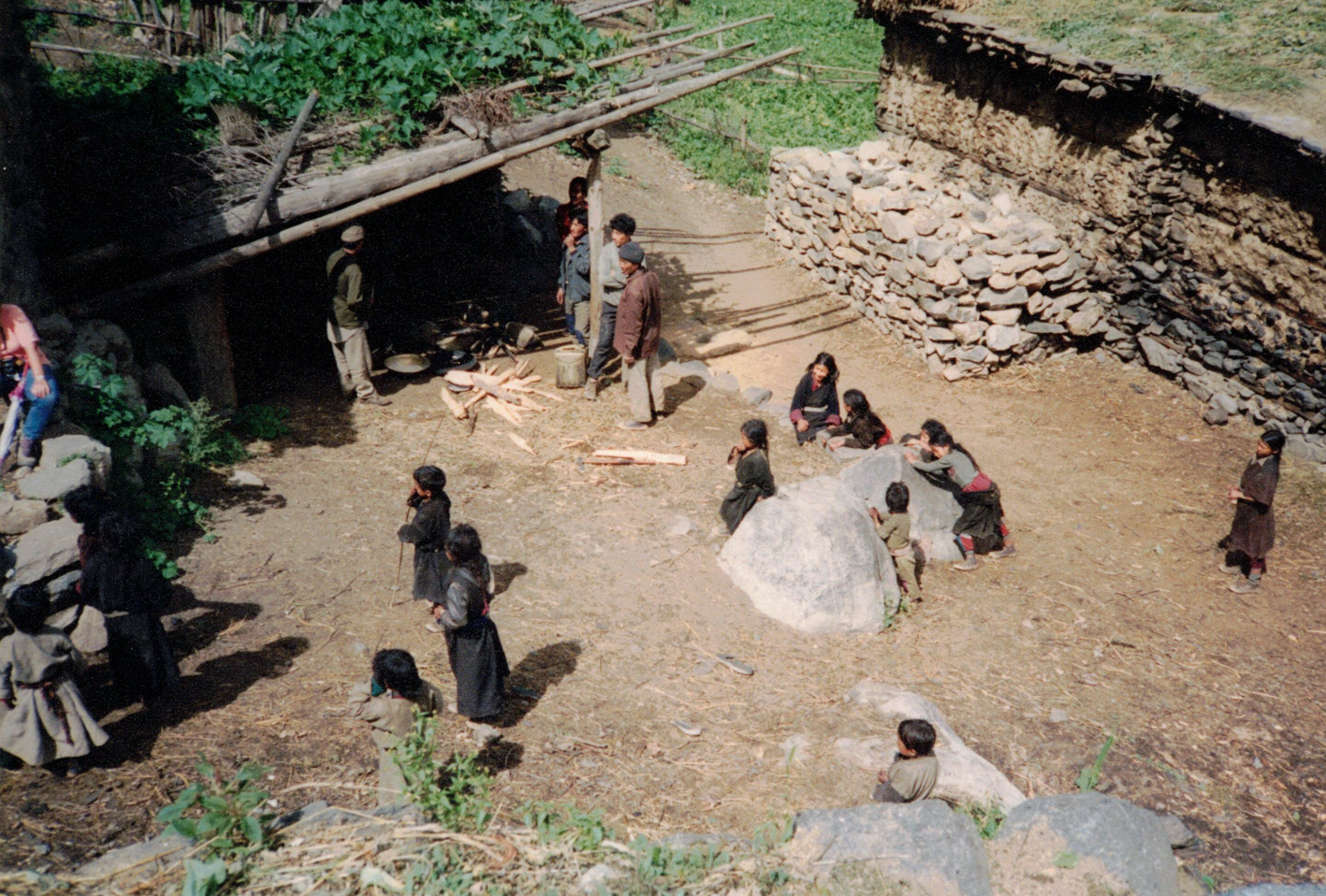
We have lunch at the entrance to the village, surrounded by children.
Once inside the village, we are warmly welcomed and invited to climb onto the roofs of the houses.
Jacques tells us that the people living there
haven’t seen any white people for five years.
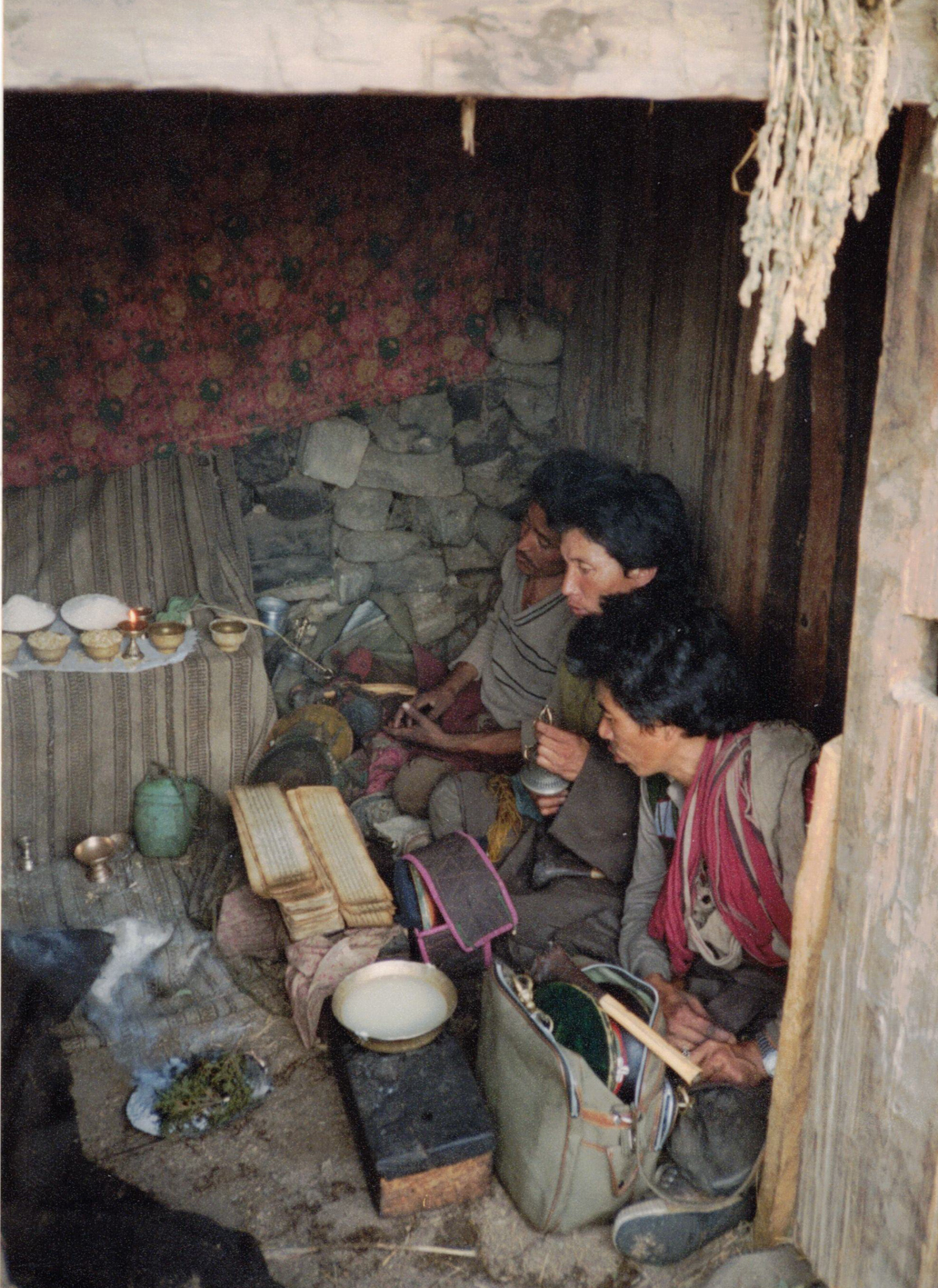
We are also invited to attend a religious service in a small room.
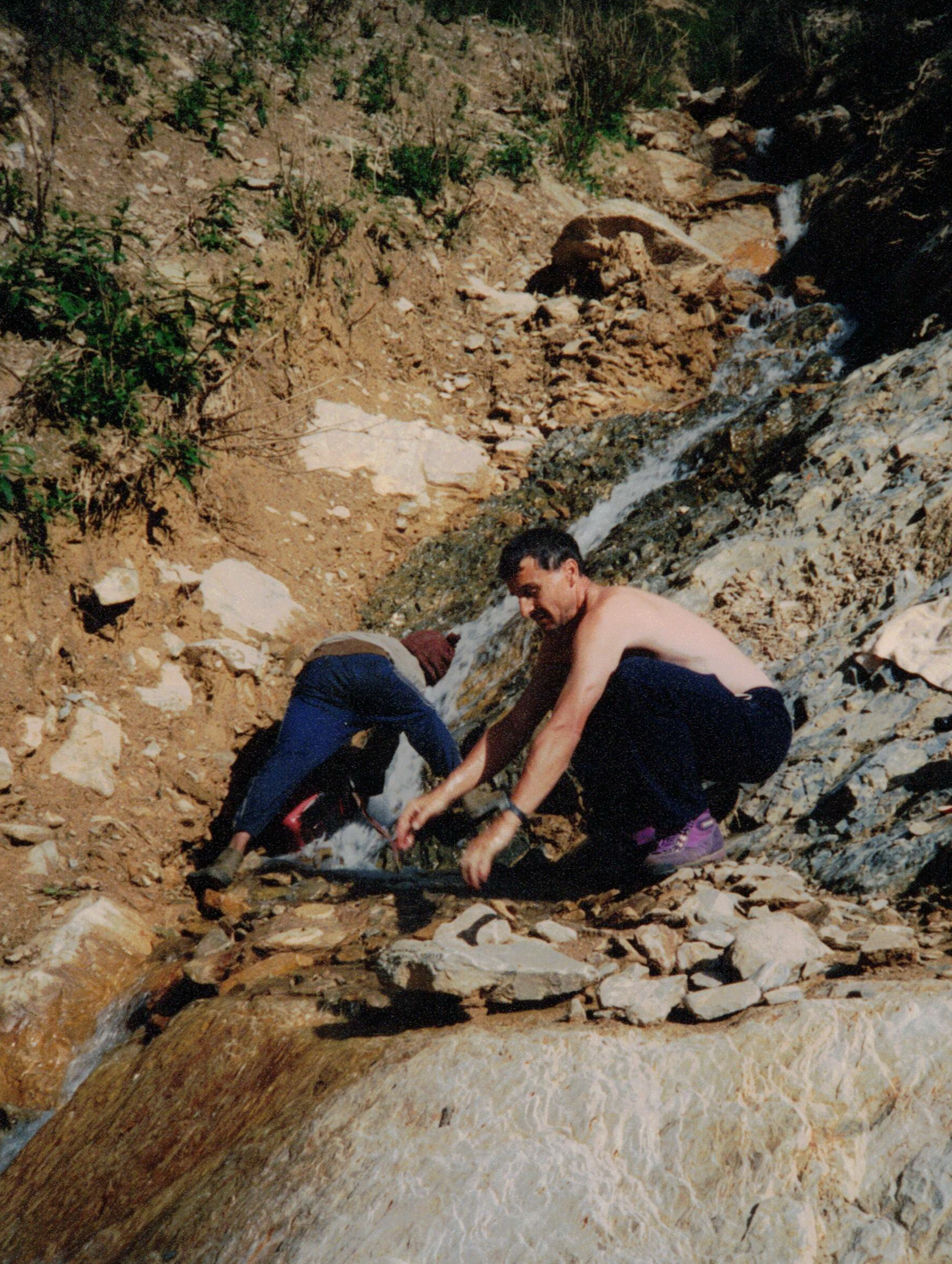
⇐ A (nearly) complete toilet in a stream
A steep climb to reach our camp for tonight
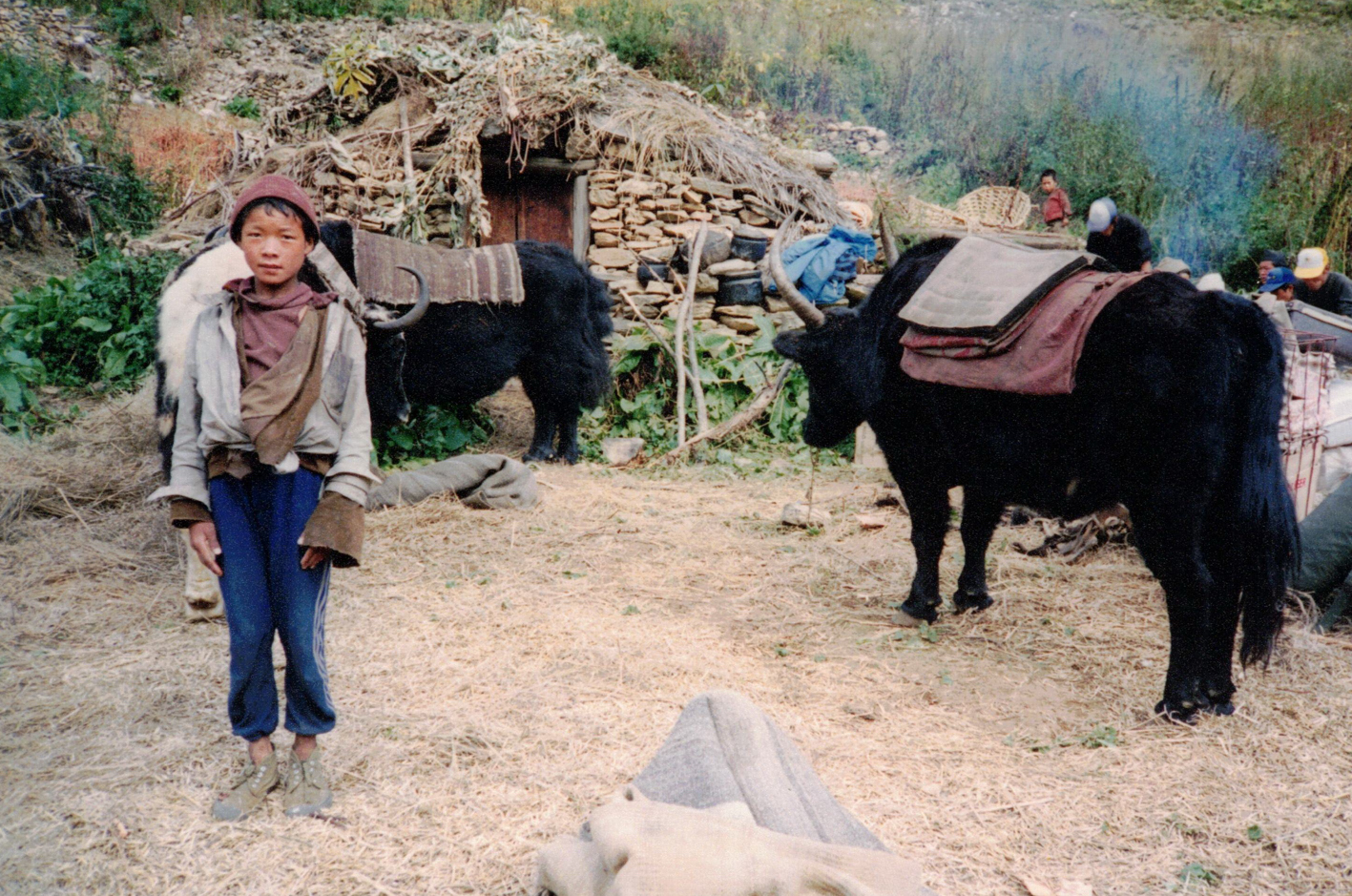
A young yak herder
We finally reach Jumla,
after crossing the Jumlakolagna Pass.
During the ceremony, the officiants played the trumpet,
carved from a human shinbone.
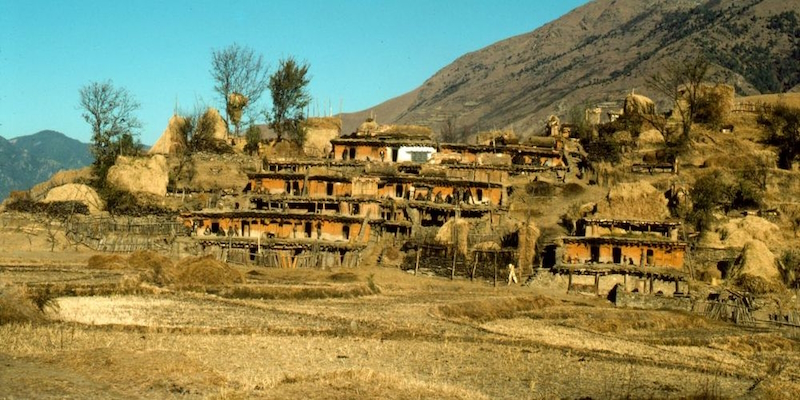
27 September
The Jumla camp has been renamed the ‘camp of the snake and the two eagles’.
In fact, Georges woke up to find a magnificent viper in his tent, coiled up some 30 cm from his head.
Last night, like the nights before, it rained. This morning the weather is fine.
As we emerge from the forest, we are greeted by three Tibetan women living in a shelter made of canvas and branches.
They offer us Gorgour Tchaï and whey. We give them red chillies in return.
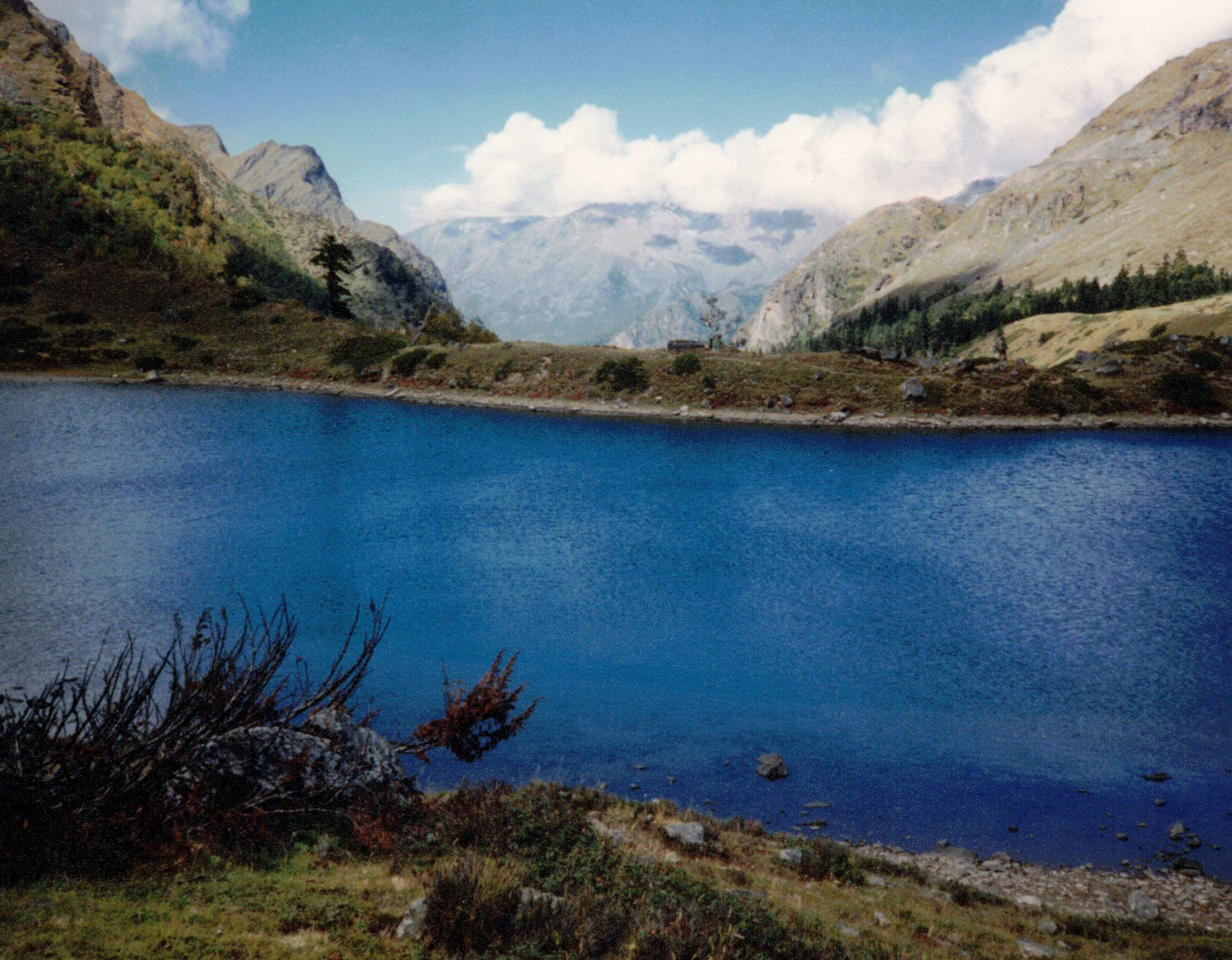
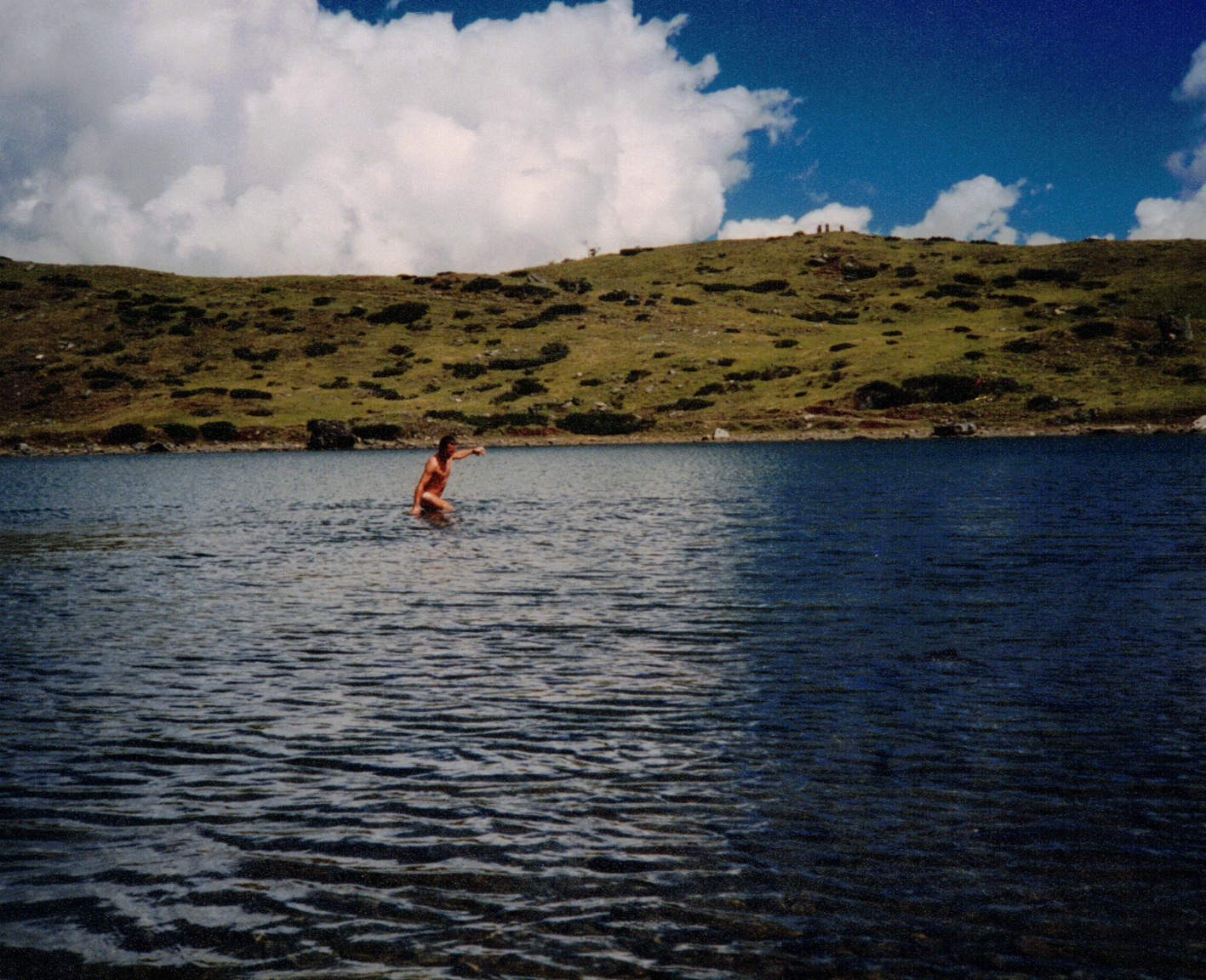
Meals and ablutions
by the shores of a lovely lake.
La montée au col Chhotelagna est long. Nous sommes, Geneviève et mois, distancés. Je suis les traces et me repère aux jumelles sur Georges qui apparaît par moment au loin.
Arrivés au col nous sommes à 4690 m. La descente est vertigineuse. Nous arrivons au camp à la nuit tombante. Shanka Lama nous aide à tailler les terrasses pour nos tentes.
28 septembre
Le matin je découvre que le flacon de shampoing s’est ouvert dans ma trousse de toilette…. Tout a été nettoyé, sauf mes cheveux.
Il fait beau. Rude descente vers le pont qui traverse la Kairang Khola. Nous passons près de Chala et faisons une longue traversée jusqu’à Tothorya.
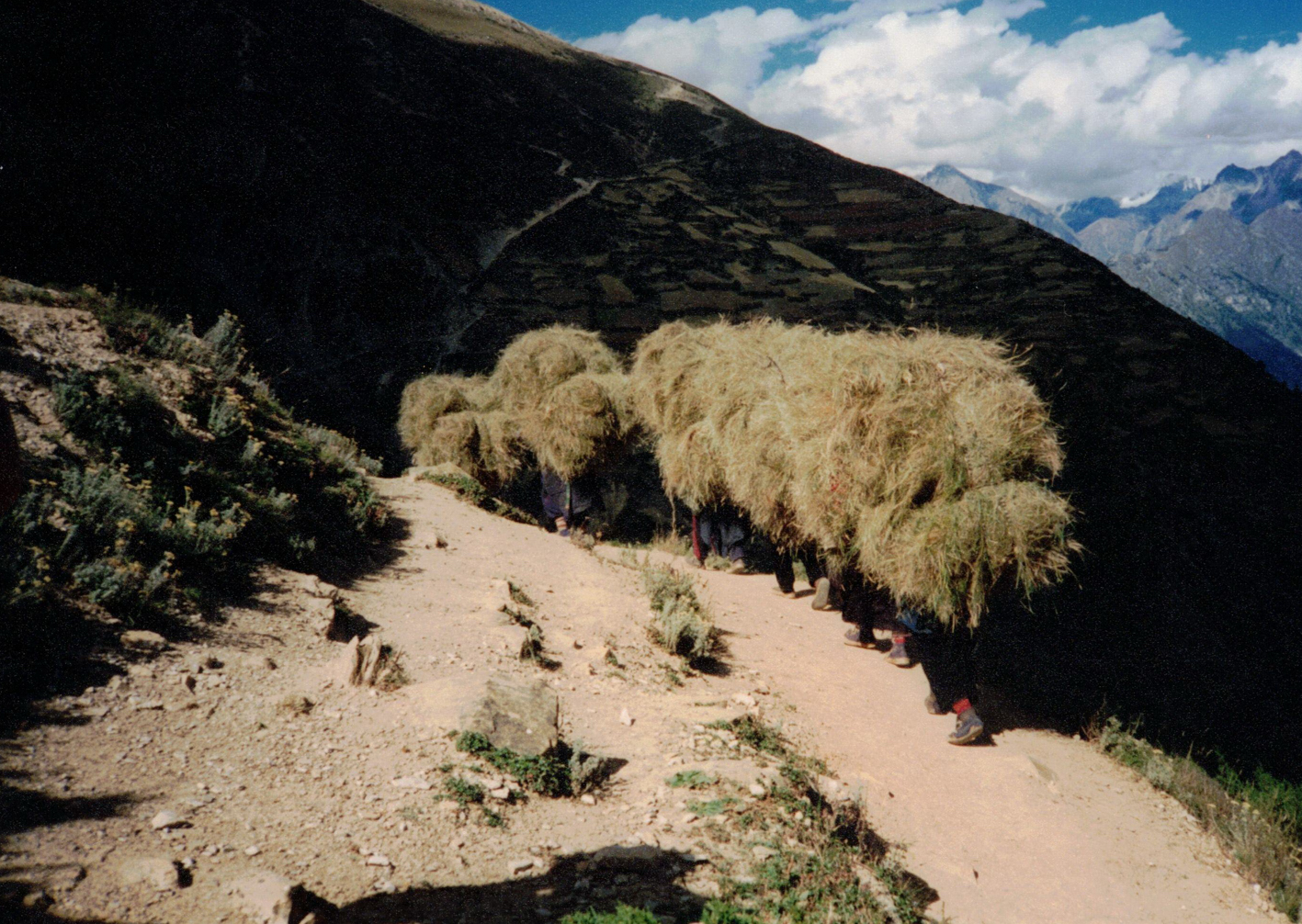
We come across women carrying hay…
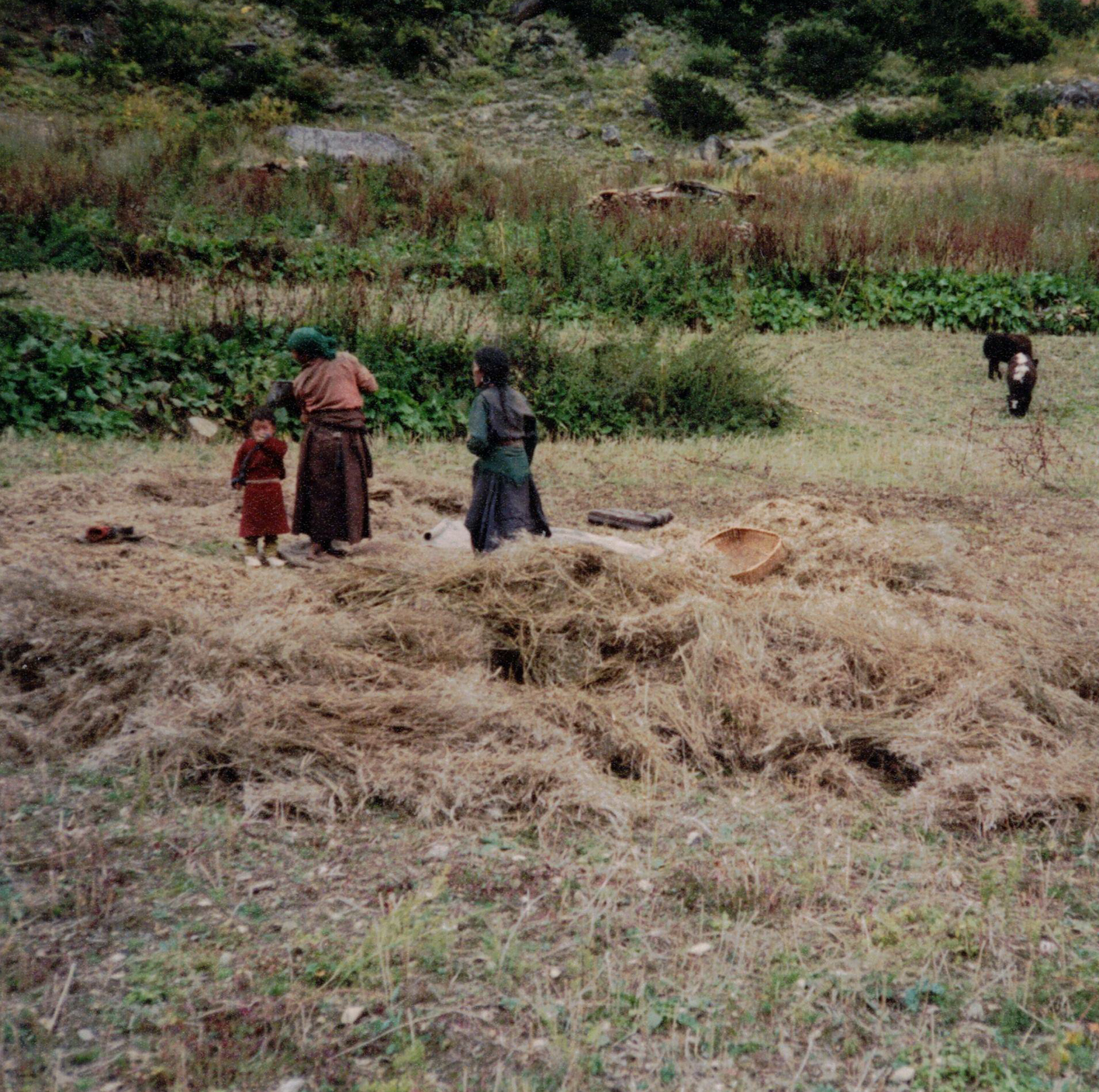
…and two women threshing buckwheat with their feet.
The lost yak has returned…
but without its load!
29 September
The liaison officer fasts until 10.15 am and then organises a small ceremony to celebrate Dashain. Dashain is the biggest festival celebrated in Nepal. The festival lasts for around 15 days.
After the ceremony, we set off again for the final stage of the journey, which will take us to base camp. The going gets tougher, especially for the yaks. At one point, the Sherpas have to cut a path about thirty centimetres wide into the side of the moraine. We have a picnic by a torrent under the birch trees. We reach base camp at around 3.30 pm.
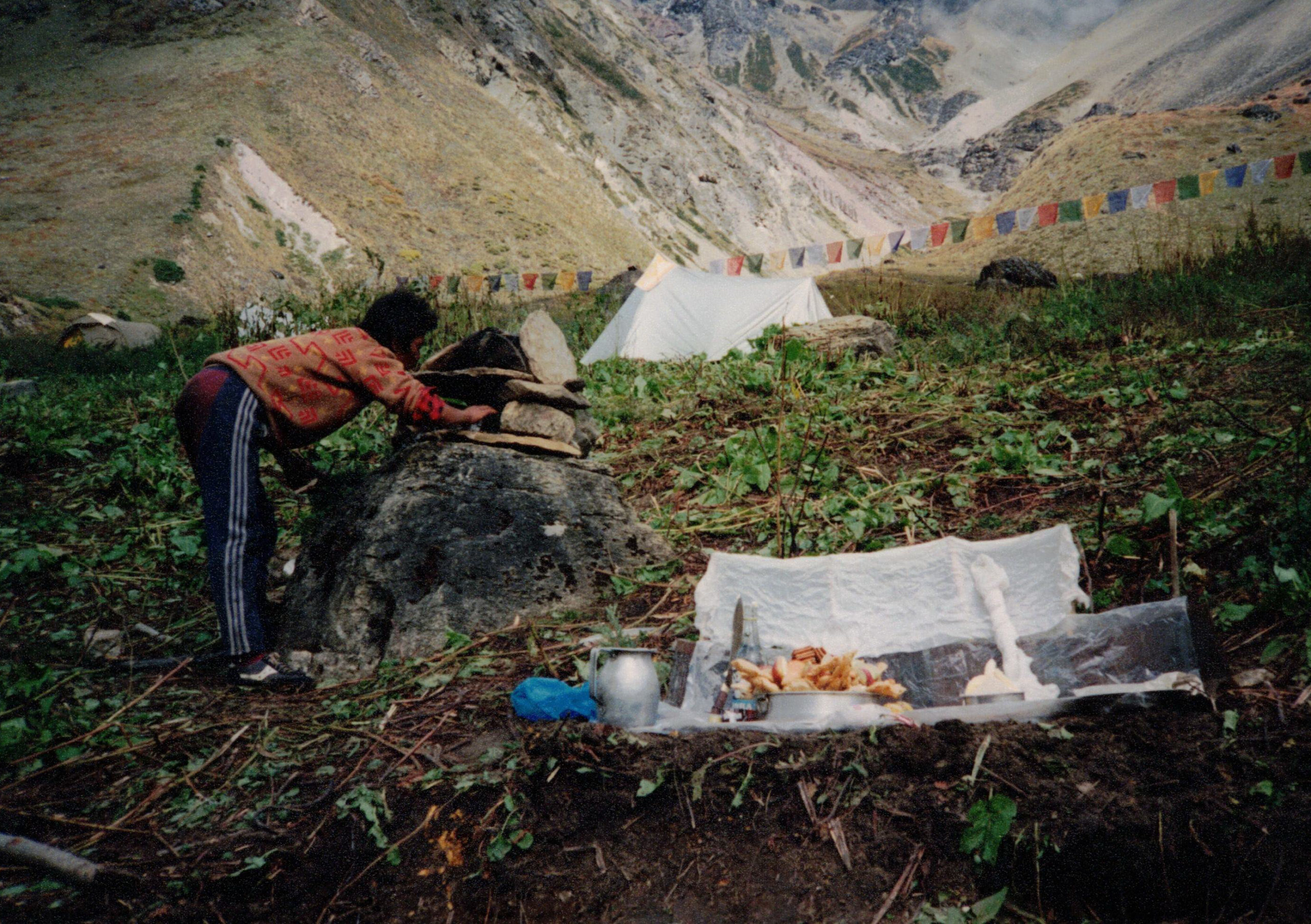
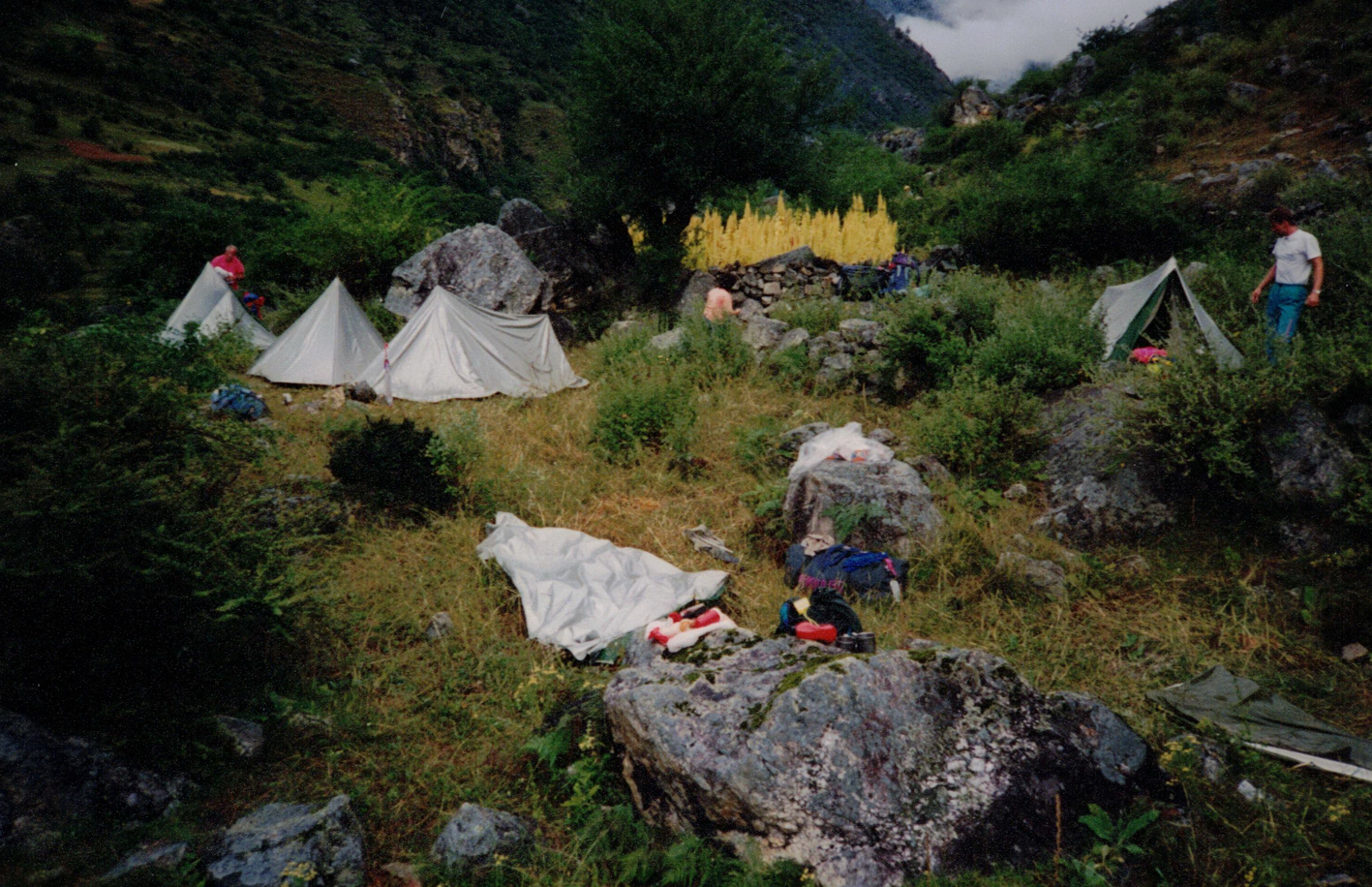
Everyone prepares a spot for their tent.
I carve out a platform with my ice axe,
and prop it up with a few large stones.
The going gets tougher, especially for the yaks. At one point, the Sherpas have to cut a path about thirty centimetres wide into the side of the moraine. We have a picnic by a torrent under the birch trees. We reach base camp at around 3.30 pm.
30 September
Reveille is at 8am. The sun is already warming the camp. The yak herders are paid, and we give each of them a packet of cigarettes. They leave the camp with all the animals, and we suddenly feel isolated in the middle of the Himalayas. Everyone goes about their business: laundry, writing letters, setting up camp…
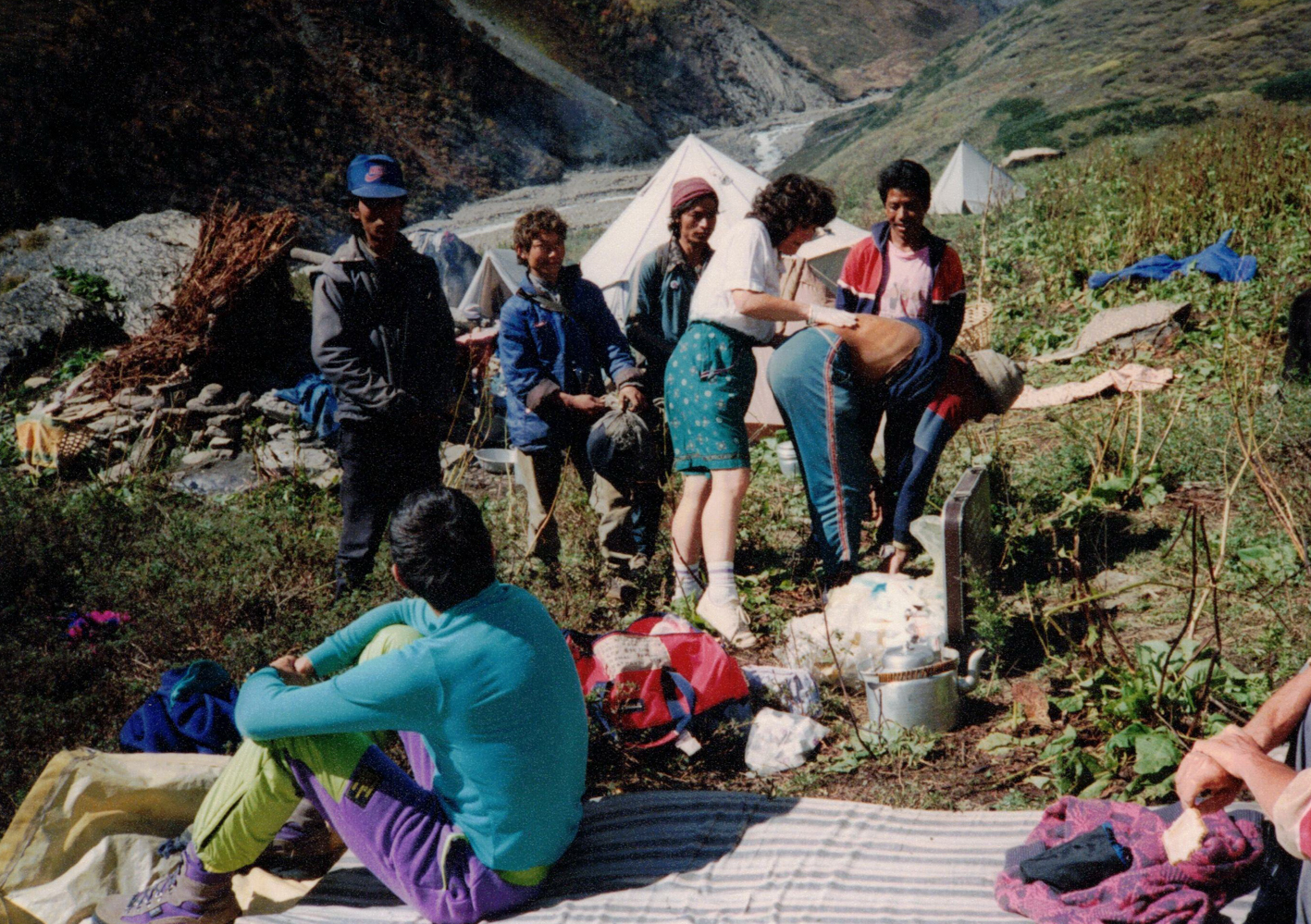
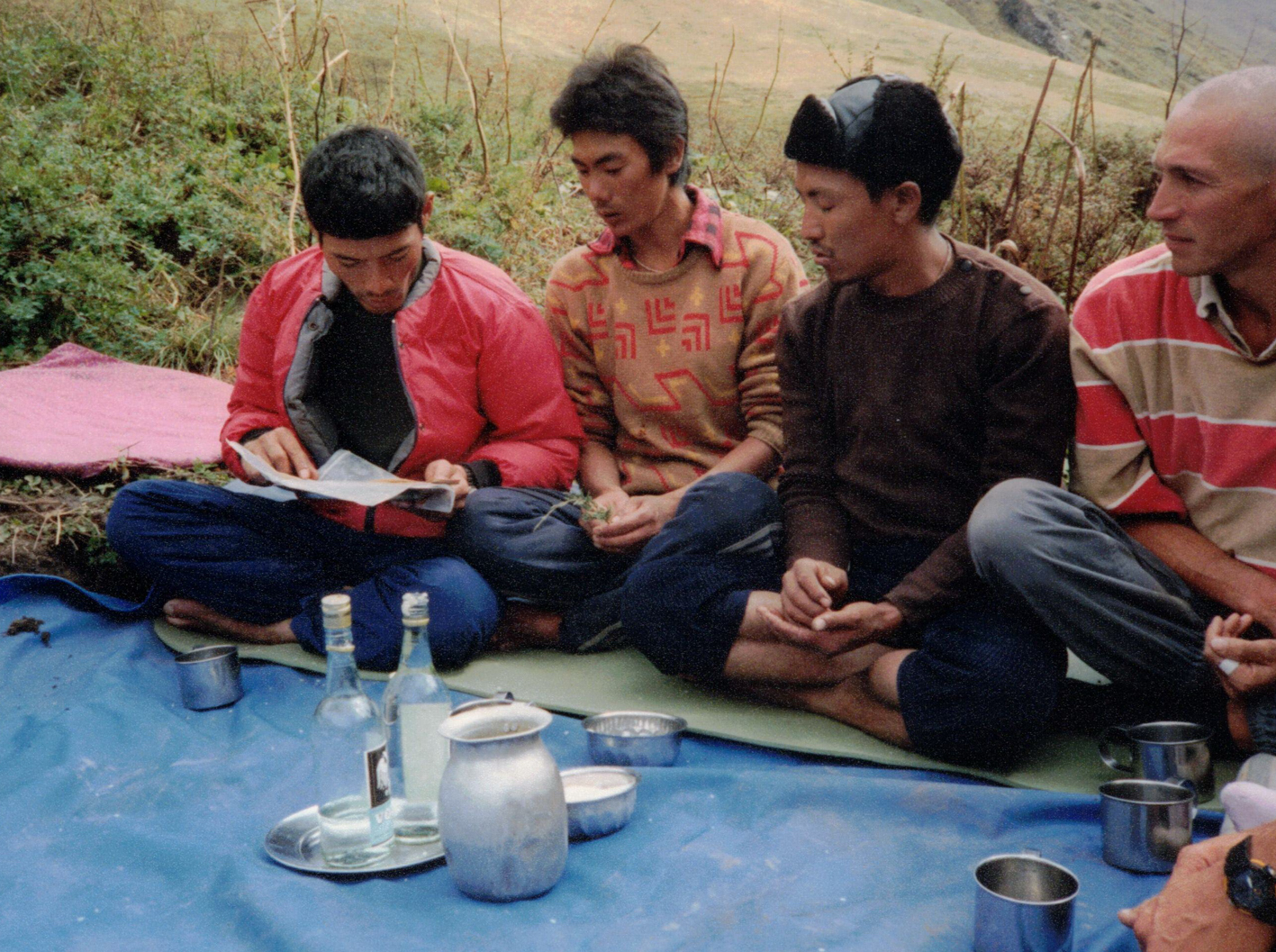
Geneviève, the nurse, is providing some treatment.
I am myself being treated for a minor infection on my left index finger.
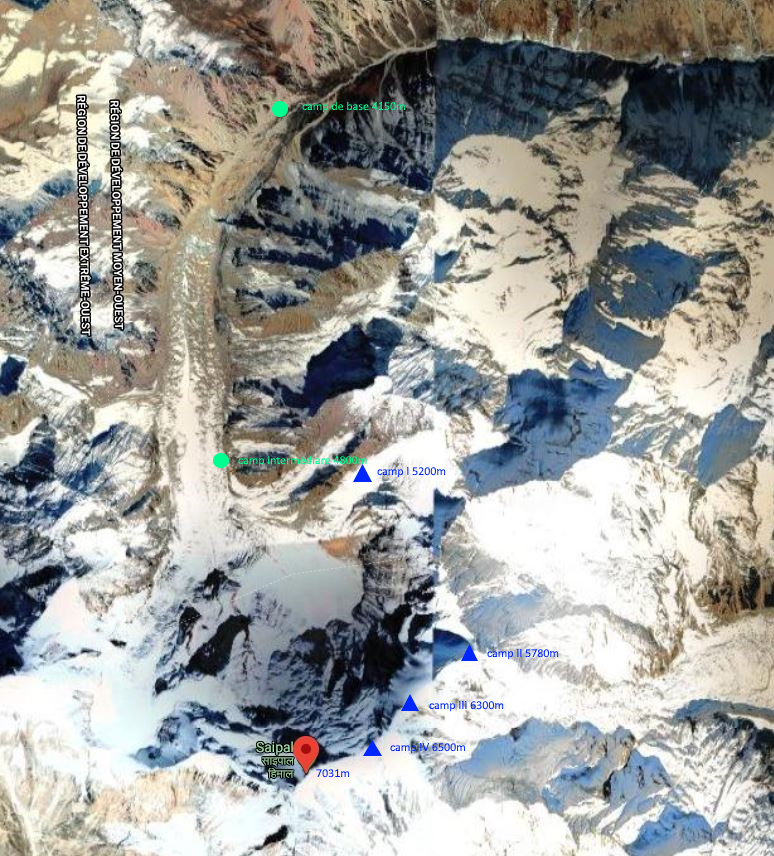
Base camp (4,150 m) and
the ascent
1 October
At 7.30 am, a Sherpa brings us a cup of tea in our tent. A lovely tradition that I’ve always enjoyed on all my expeditions and treks in Nepal. A hearty breakfast in the mess tent: omelettes, paratha flatbreads and tsampa (roasted flour), served with tea.
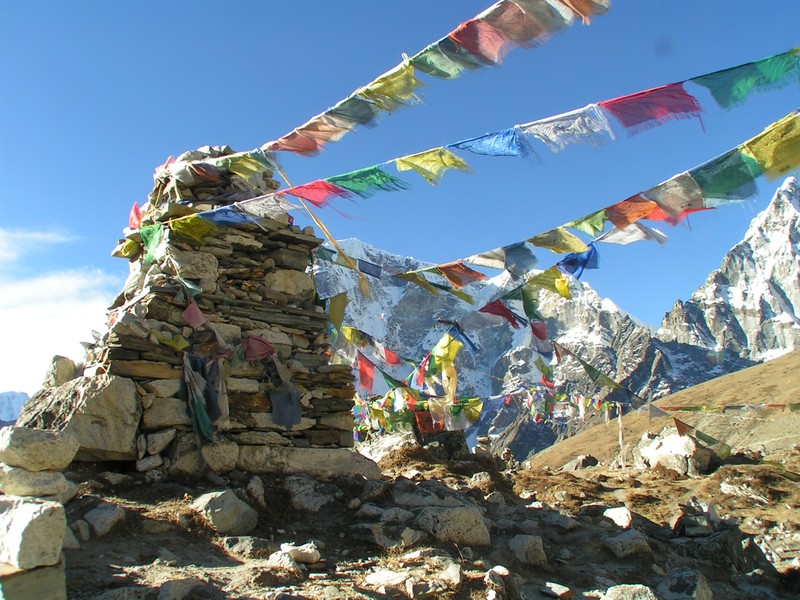
At 10am, the Nepalese hold a ceremony to ward off misfortune and appease the mountain gods (Himalaya = mountain of the gods). They set up a small altar and hang small squares of fabric in five different colours (representing the five elements) above the camp. These are prayer flags.
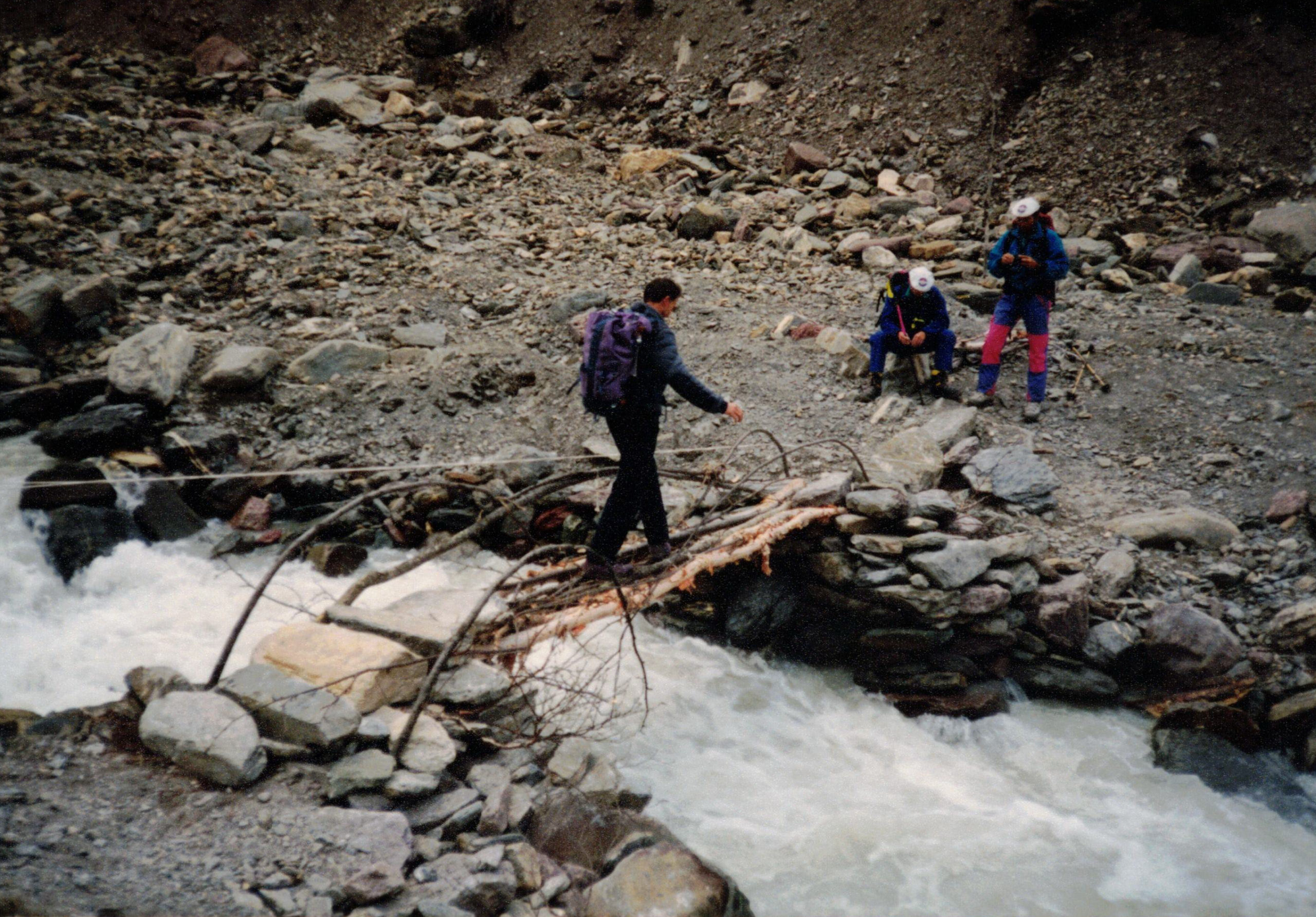
The afternoon is spent preparing the equipment for the high-altitude work and building the two bridge piers by fitting together large stone blocks.
The following day, these piers will be joined by a beam taken from the kitchen.
Prayer flags are small, colourful, printed rectangular pieces of fabric hung at mountain passes, on mountain peaks, at crossroads, on the roofs of houses, on bridges and outside temples. According to followers of Tibetan Buddhism, the wind that blows, gently brushing against the printed sacred formulas as it passes, scatters them into the air and thus conveys them to the gods and to all those it touches on its journey.
2 October
Overnight, the temperature dropped and snow began to fall at around 4,500 metres.
We are starting to carry equipment up to the high camp (4,800 m). This includes tents, food, firewood for cooking, and the technical equipment needed for the ascent of Saipal.
Along the way, we are building cairns on the scree and moraine to mark the route in case of fog.
A long climb with a particularly heavy rucksack. My ankles are aching. The fatigue and the cold are upsetting my digestion. I’m ill, and I’ve had a restless night due to vomiting and diarrhoea.
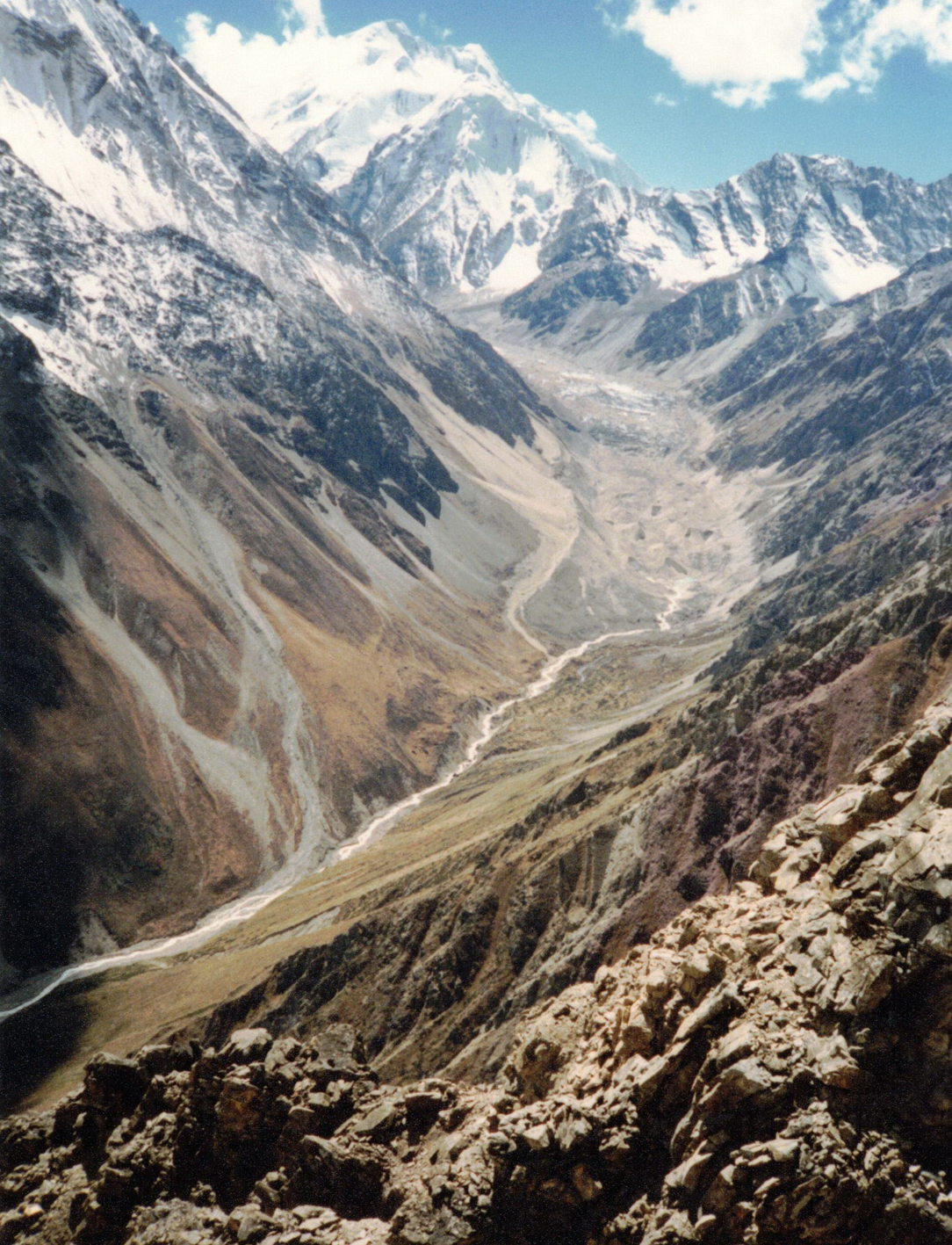
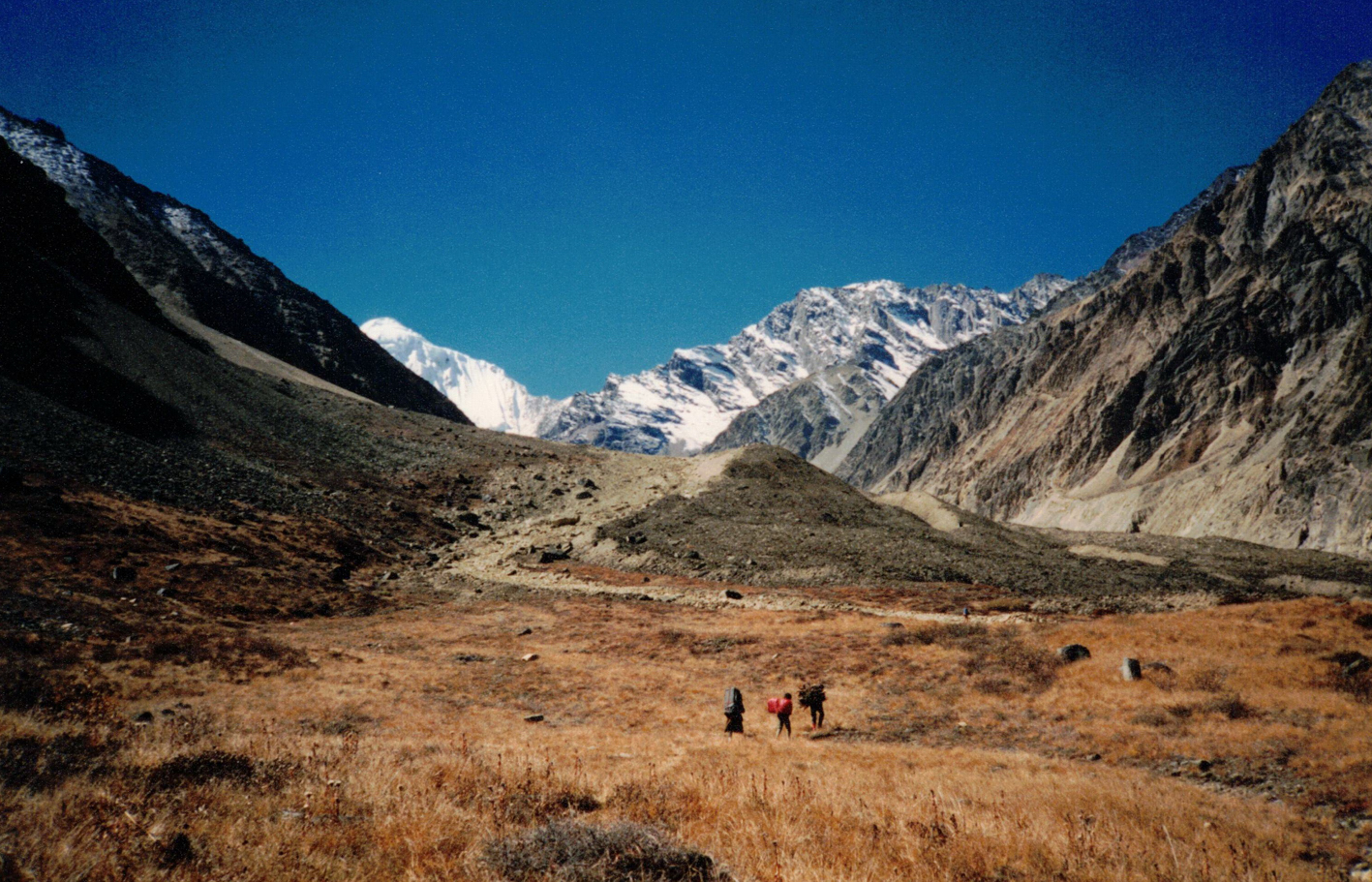
3 October
I’m not feeling up to it, so I’m staying at base camp with Geneviève and Georges. The others are heading up to spend the night at the intermediate camp and will then continue setting up Camp I at 5,200 metres.
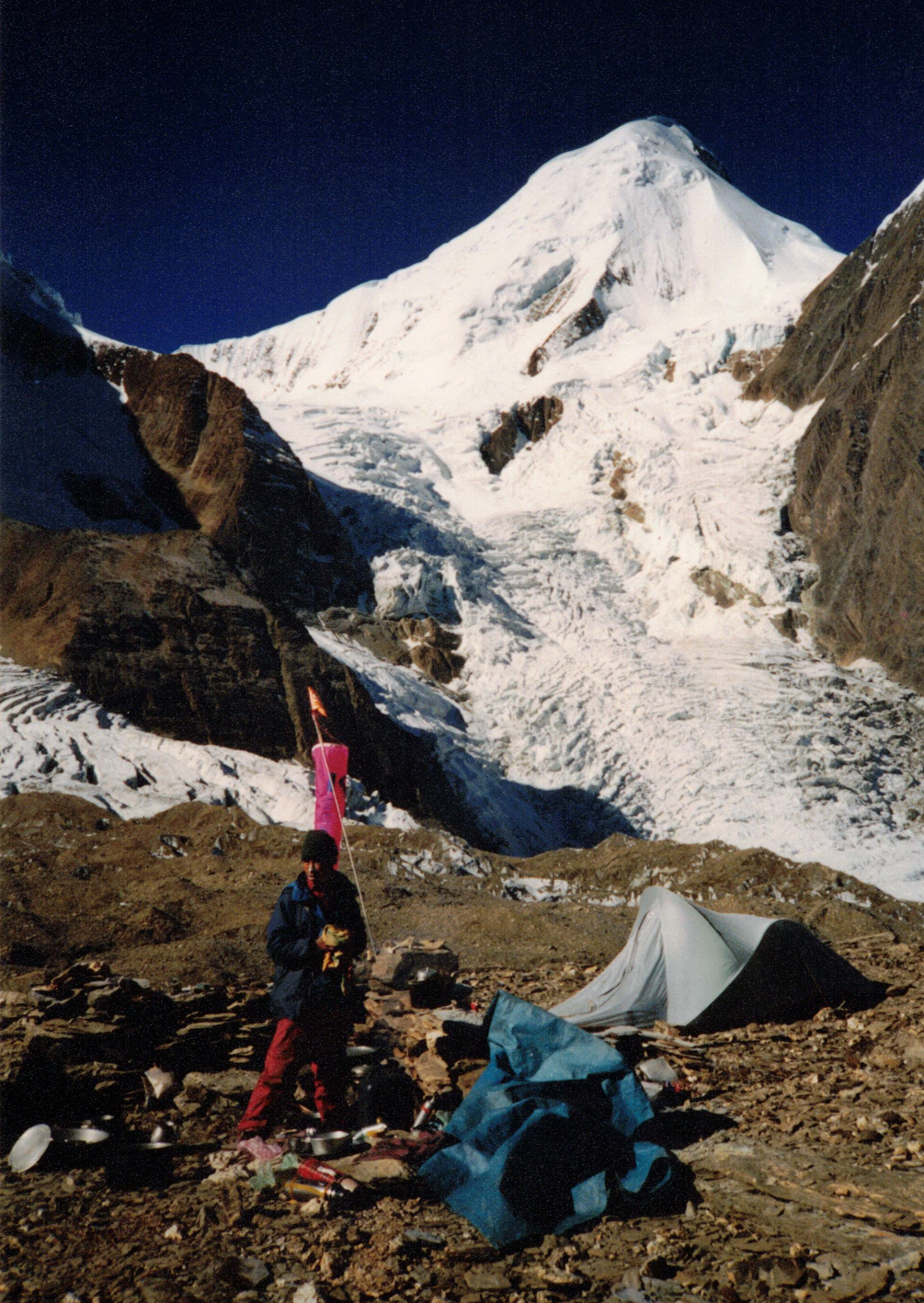
Our goal is becoming clearer
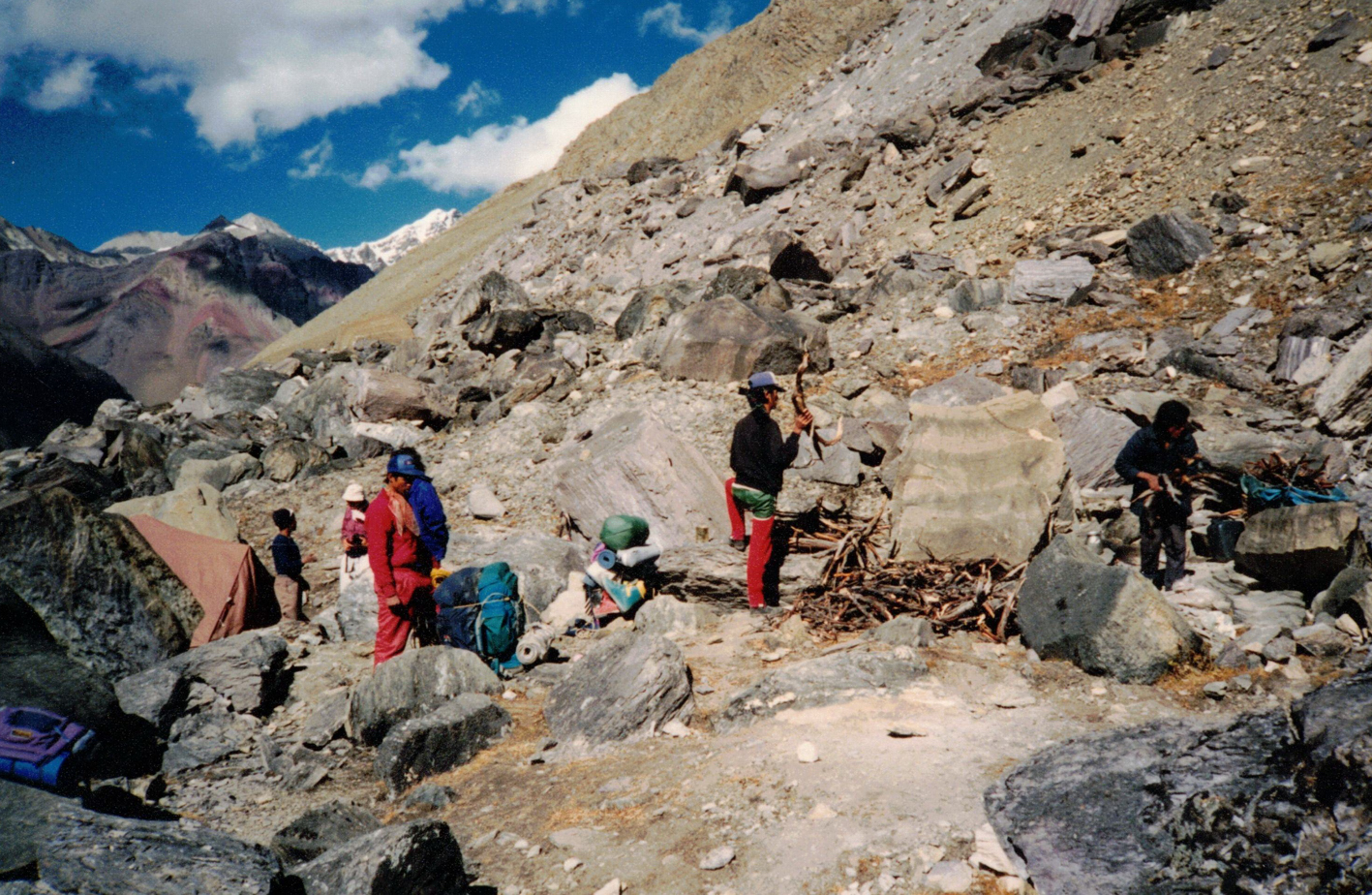
Intermediate camp
4 October
I’m feeling better. The weather is fine but cold. I set off on a reconnaissance trip northwards with Geneviève and Georges with a view to a possible ascent, then I leave them to climb one of the nearby peaks. The rock is so crumbly that I have to give up at 4,900 m. On the same day, a Sherpa accompanied by the assistant cook and two porters climbed up to Camp I with equipment and supplies. We are keeping three porters from Shala for a few days to resupply Camp I with firewood and food. Geneviève had prepared medicine kits with explanatory notes for each of the higher camps.
The scheduled radio checks (using walkie-talkies at fixed times) between base camp and the subsequent camps take place at 12 noon and 6 pm and are working very well.
5 October
Beautiful weather. I decide to make a supply run to the intermediate camp and head back down the same day. Set off at 9.30 am, arrived at 1.30 pm. Alex and Christophe are there; the others are at Camp I. Back at base camp by 4.30 pm.
6 October
A long procession sets off from base camp. Geneviève, Georges, Pimba the cook, three porters and myself. We reach the intermediate camp at around 1.30 pm. There we meet three Sherpas. After some hesitation, we decide to continue on to Camp I. That was a mistake. Camp I was still short of food. Furthermore, the only porter who had carried on gave up at the foot of the loose scree gully leading above the moraine. As a result, neither firewood nor cooking utensils reached Camp I. We take refuge in the mess tent and have a picnic with whatever we can find.
On the same day, Gaston, Jacques and two Sherpas set up Camp II at around 5,800 m.
7 October
I decide to head back down to the intermediate camp. I take a packet of biscuits and leave Camp I around midday. When I reach the bottom: no one there. I check in with Alex at 2 pm, then 4 pm, and finally 5 pm. Still no one. Strong southerly wind. I draw water from a pool on the glacier and disinfect it. On the menu: dried beans, noodles found on site and half the biscuits.
8 October
Woke up at 6.30 am. Breakfast of hot fruit juice and the rest of the biscuits. At 7.30 am, the two Sherpas and Pemba arrive. We head back up to Camp I, except that they get there an hour before me! The route across the glacier is in the shade, over pebbles and broken rocks fringed with frost and slippery in places. When I stop for the 9 am break, a terrifying crack from the glacier echoes beneath my feet. I pack everything up in a hurry and make my way back to the moraine as fast as the twenty kilos in my rucksack will allow. I arrive at Camp I around 10.30 am. The four climbers have set off to set up Camp II, sleep there, and pitch the tents at Camp III the following day. The Sherpas eat and then carry equipment up to Camp II.
The evening of 9 October
There are seven of us huddled inside the mess tent, which is designed for three or four people. A very pleasant evening spent with the Sherpas for the first time on the expedition.
10 October
The Sherpas head back up to Camp II with equipment. At 10.30 am, Geneviève, Georges and I also set off for Camp II. We descend onto the glacier, skirt round the base of the moraine and climb up the valley behind it. At one point, I veer left to join the ridge of the spur, but Geneviève and Georges do not follow me. It turns out they found themselves in difficult and dangerous terrain. We will catch up with them on the descent.
I leave the spur and make a tricky traverse to reach a snowy ledge. The final 100 metres below Camp II are tricky to navigate. I meet three Sherpas there. It is 1 pm.
We watch our four colleagues, split into two rope teams of two, as they tackle the snowy face towards Camp III. We’re surprised they set off so late. After a while, Christophe leaves his rope team and heads back down. He’ll return to Camp I with the whole team. It’s 2.15 pm and I’m back at Camp I.
At one point, I veer left to join the ridge line, but Geneviève and Georges do not follow me. It turns out they found themselves in difficult and dangerous sections. We will pick them up on the descent.
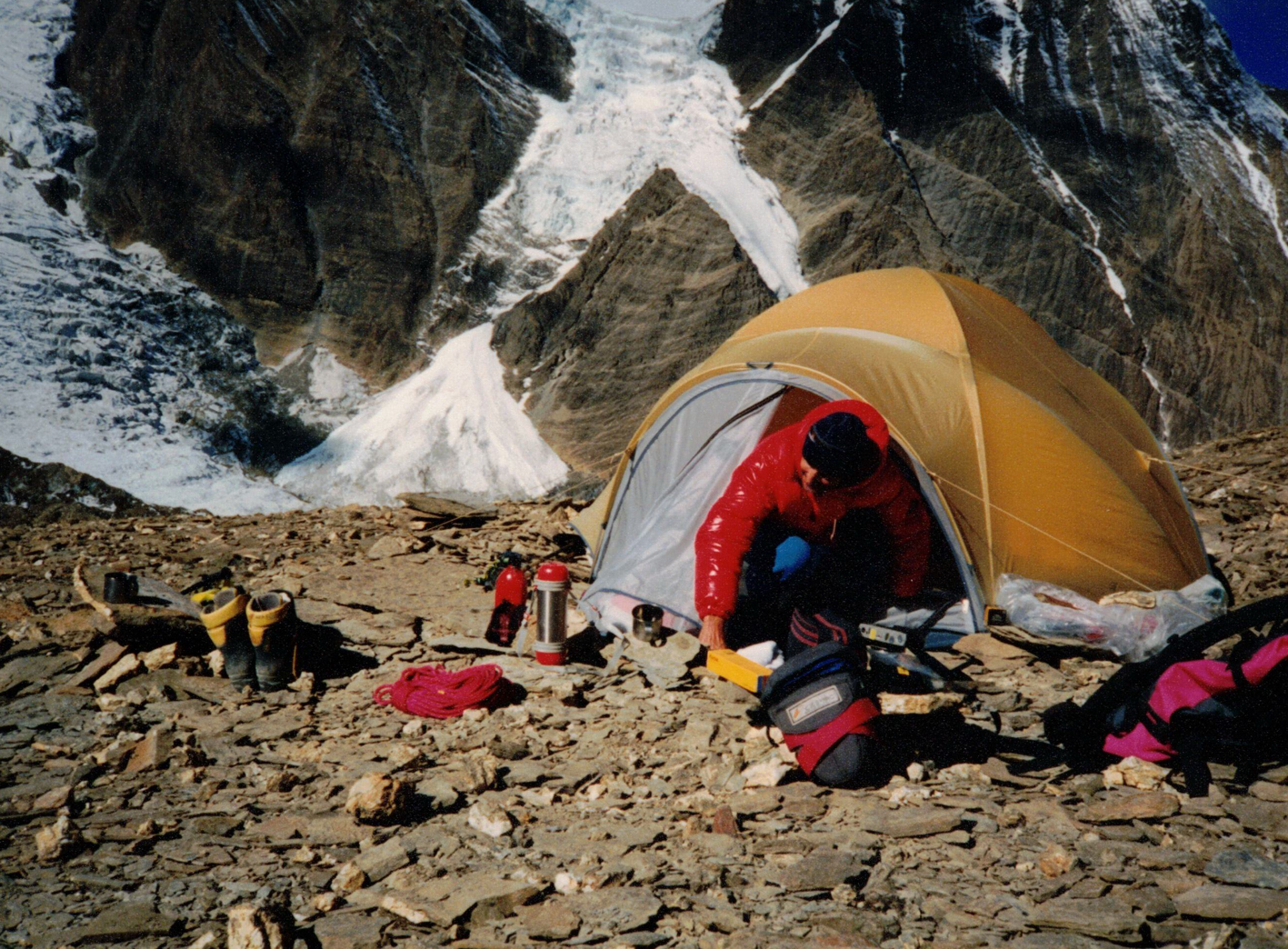
The author of the account at Camp I (5,200 m)
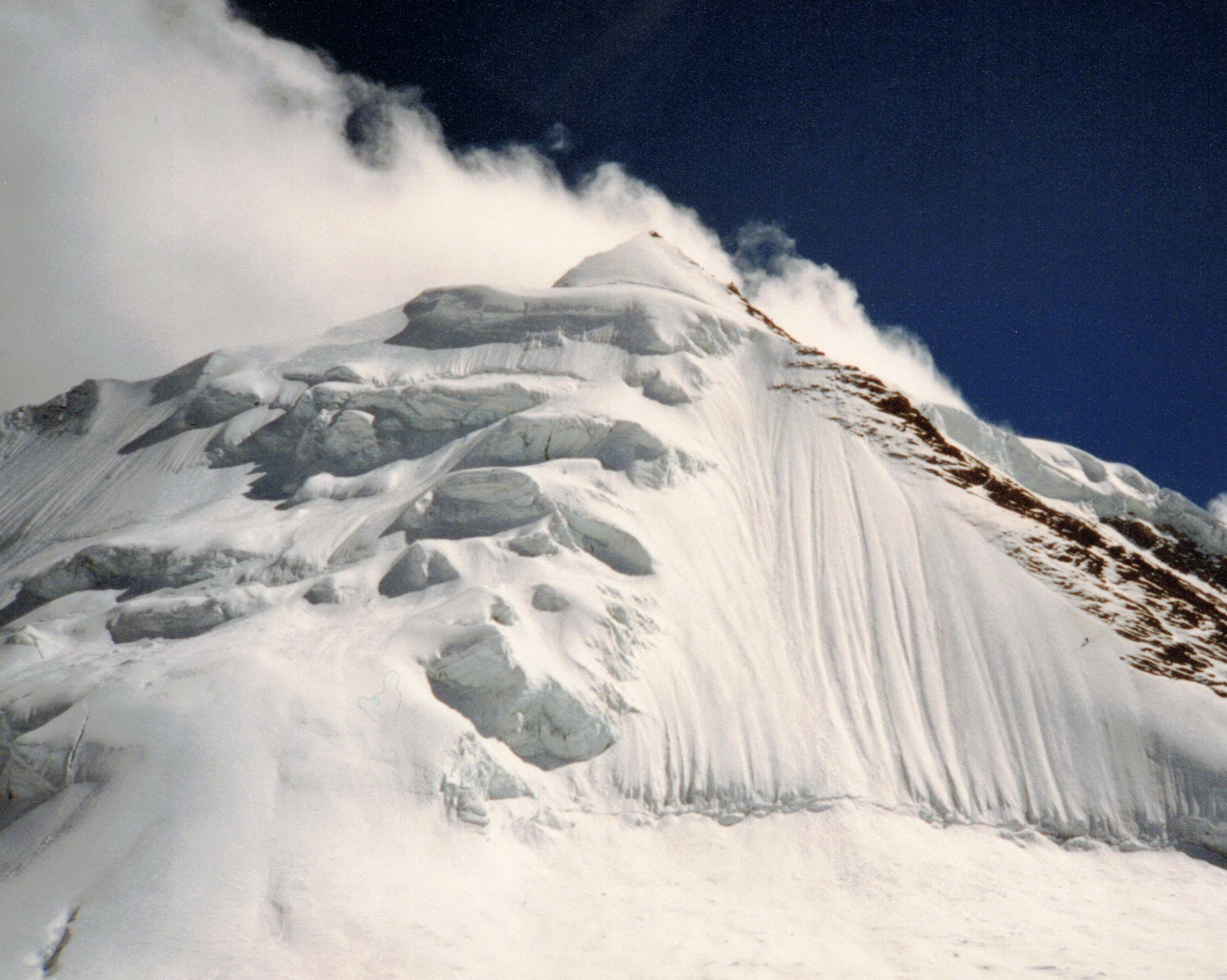
Saipal as seen from Camp I
Ringi, who went down to the depot this morning to fetch some wood, still hasn’t returned. He was also supposed to bring up my high-altitude gear. But I’ve been wondering for some time now whether I’ll actually need it. I’m not feeling particularly confident. Today, the lead team has secured the snow triangle that leads to the summit ridge.
11 October
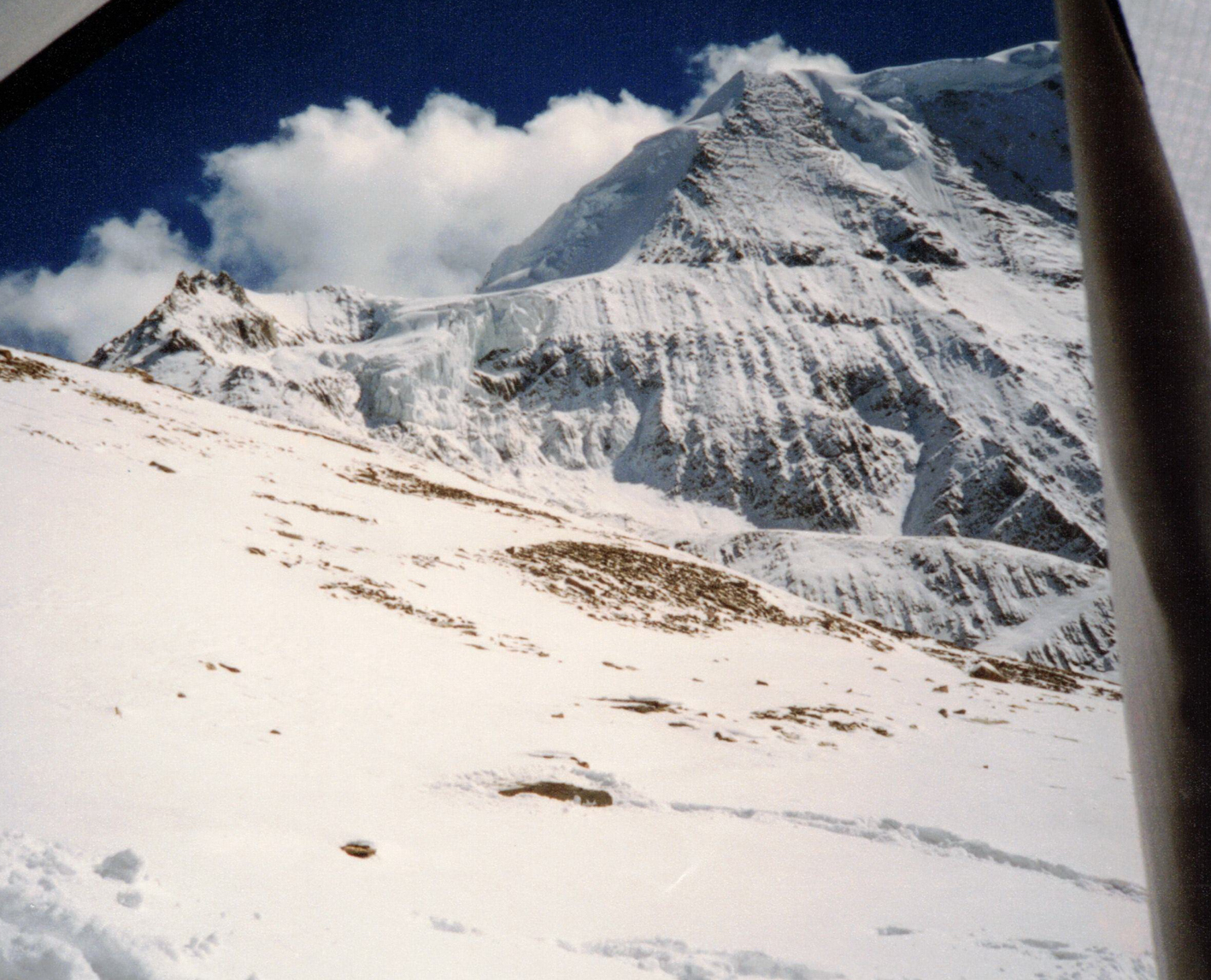
Through our binoculars, we watch five climbers heading towards the snow slope leading to the summit of the secondary peak. Below them, we can see Christophe climbing up to join them. This group of six climbers reaches the ledge at the foot of the second triangular step and then descends. We learn via radio that they are missing some fixed ropes. Alex and two Sherpas head back down to Camp I
12 octobre
Les trois grimpeurs du camp II partent pour une nouvelle tentative afin d’installer le camp III. Il est 16h15 et ils se trouvent à une longueur du sommet de la « Pointe de l’Aigle Blanc ».
Après réflexion, Alex décide de monter demain avec les deux sherpas et tout le matériel technique qui se trouve encore au camp I.
An Austrian expedition that arrived a few days ago, and which intends to repeat the route we are currently establishing, has agreed to provide us with the fixed ropes we are short of. By doing so, the Austrians acknowledge that they will benefit from the work the Geneva Section has carried out so far.
I lend my crampons to Danou – the sirdar – who has broken a strap on his own pair. At the evening briefing, we learn that Camp III has been set up on the ridge.
13 October
It started snowing during the night and is still snowing this morning. The entire mountain range is shrouded in clouds. Conditions are deteriorating rapidly.
We are asking the climbers at Camp III to retreat as quickly as possible. We do not know how long the storm will last. They only have enough food and gas to last two or three days. Twilight is falling. The snow is falling harder and the snowpack at Camp I is growing rapidly. Up there at 6,200 m, there is now between 80 and 100 cm of snow. Our anxiety is growing faster than the snowpack. At Camp I, we wonder how long we can hold out before the danger of avalanches cuts off our retreat to the lower camps.
14 October
Suddenly the wind drops and we can no longer hear the snowflakes pattering against the tent. I stick my head outside and see a starry sky. It’s a huge relief. The sun at 8.30 am confirms that the fine weather is back… but for how long? The altimeter shows a drop in pressure of 70 metres.
Camp III has finally been evacuated, but the two tents remain in place. Our companions are struggling to make headway in 1 metre of powder snow. It is 11.30 am and they should soon begin their descent down the face.
Camp III has finally been evacuated, but the two tents remain in place. Our companions are struggling to make headway in 1 metre of powder snow. It is 11.30 am and they should soon begin their descent down the face
At around 3 pm, our friends are at Camp III. At 5 pm, Passang and Ringi arrive at Camp I with firewood and provisions. That evening, Danou, the sirdar, suggests a climbing strategy which Alex and I think is a good one. Namely: the following day, 15 October, Alex and two Sherpas will climb to Camp II. Those at Camp II will descend to the lower camp. On the 16th, Alex will rig the entire face with fixed ropes and descend. On the 17th, Alex will ascend to Camp III, and those at Camp I will also ascend directly to Camp III using the fixed ropes. On 18 and 19 October, attempts to reach the summit.
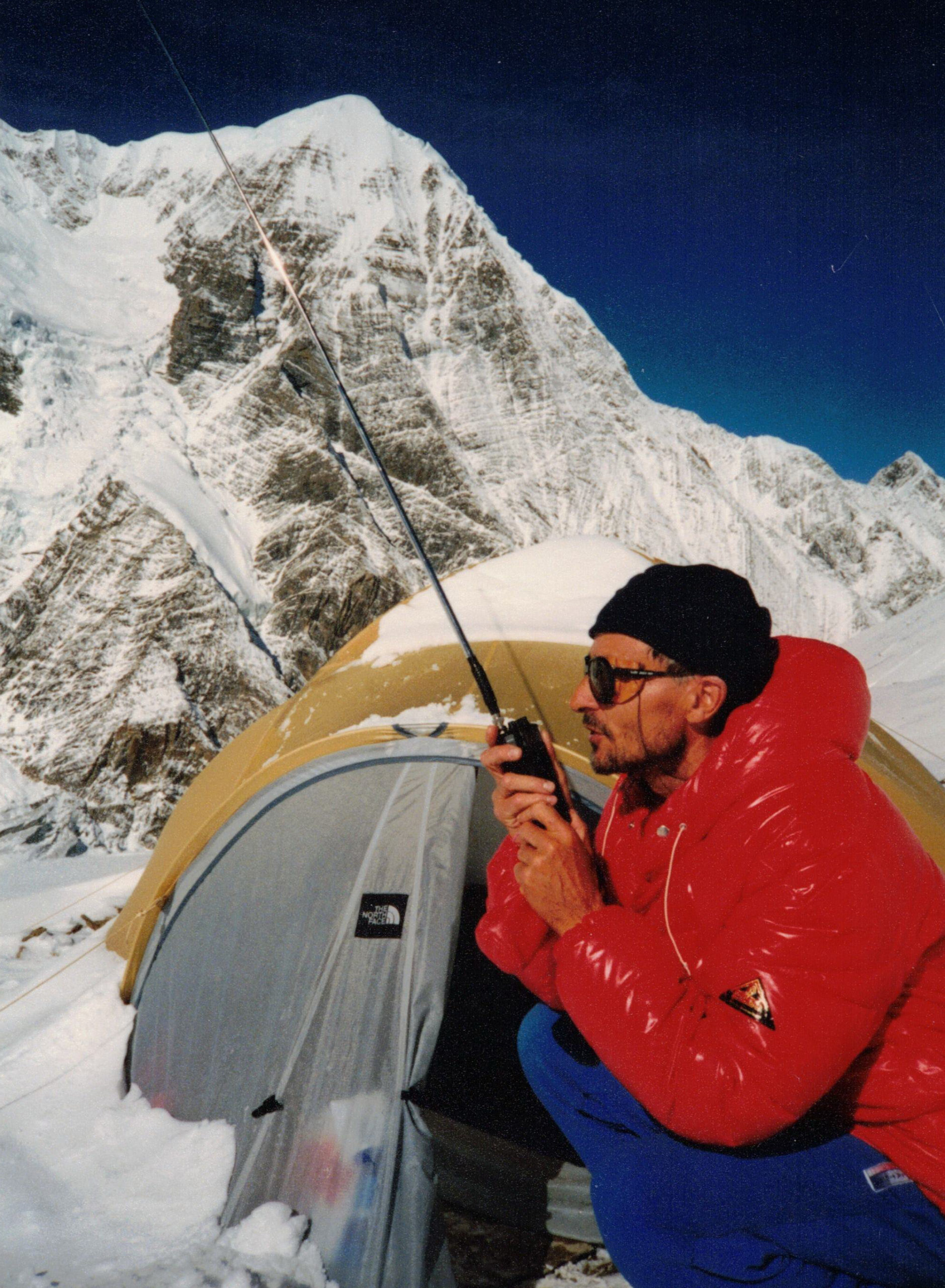
Walkie-talkie at camp I
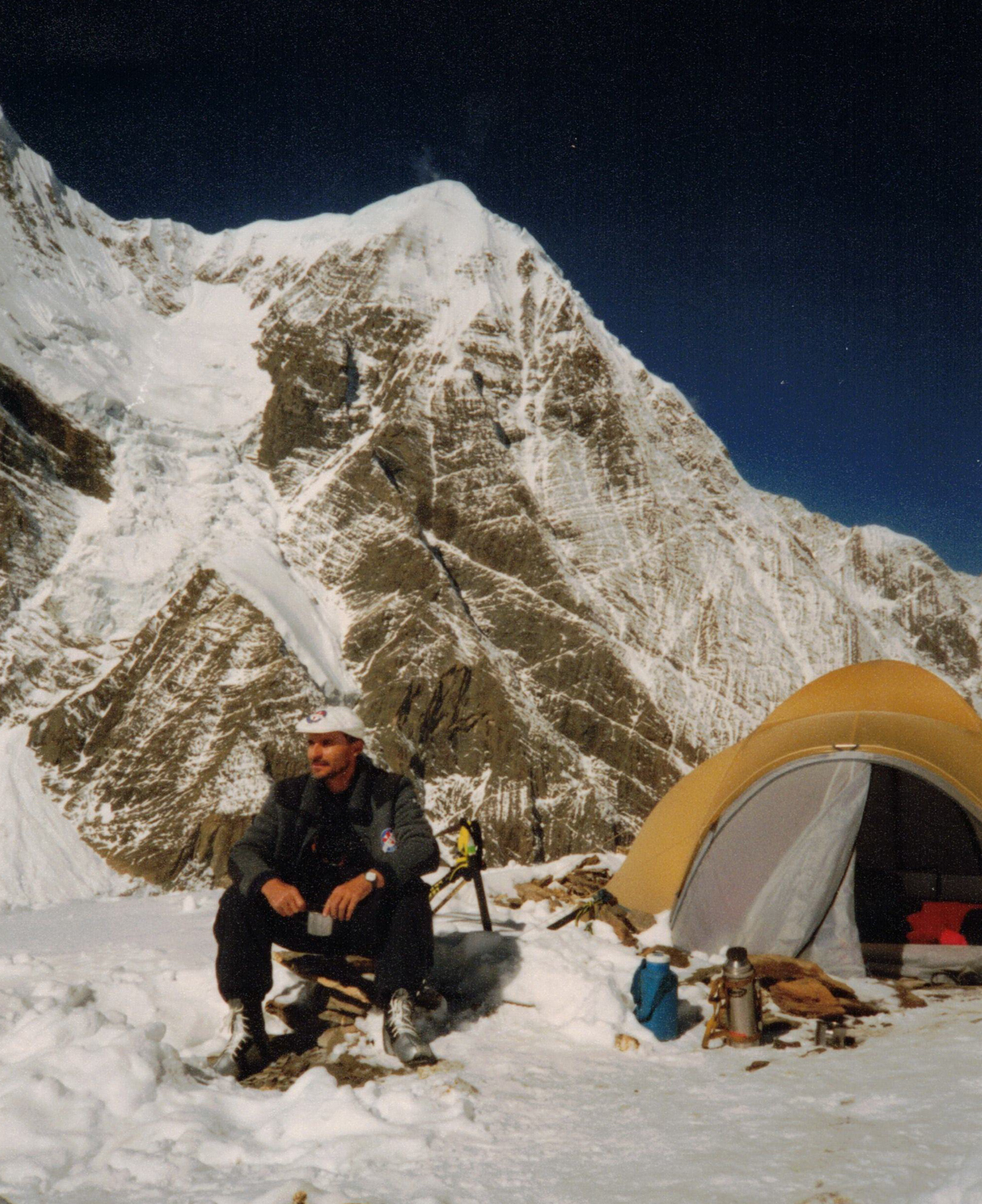
15 October
This morning it’s -10°C in the tent.
As soon as the sun comes out, the temperature rises rapidly.
at 11am I leave Camp I to go to base camp.
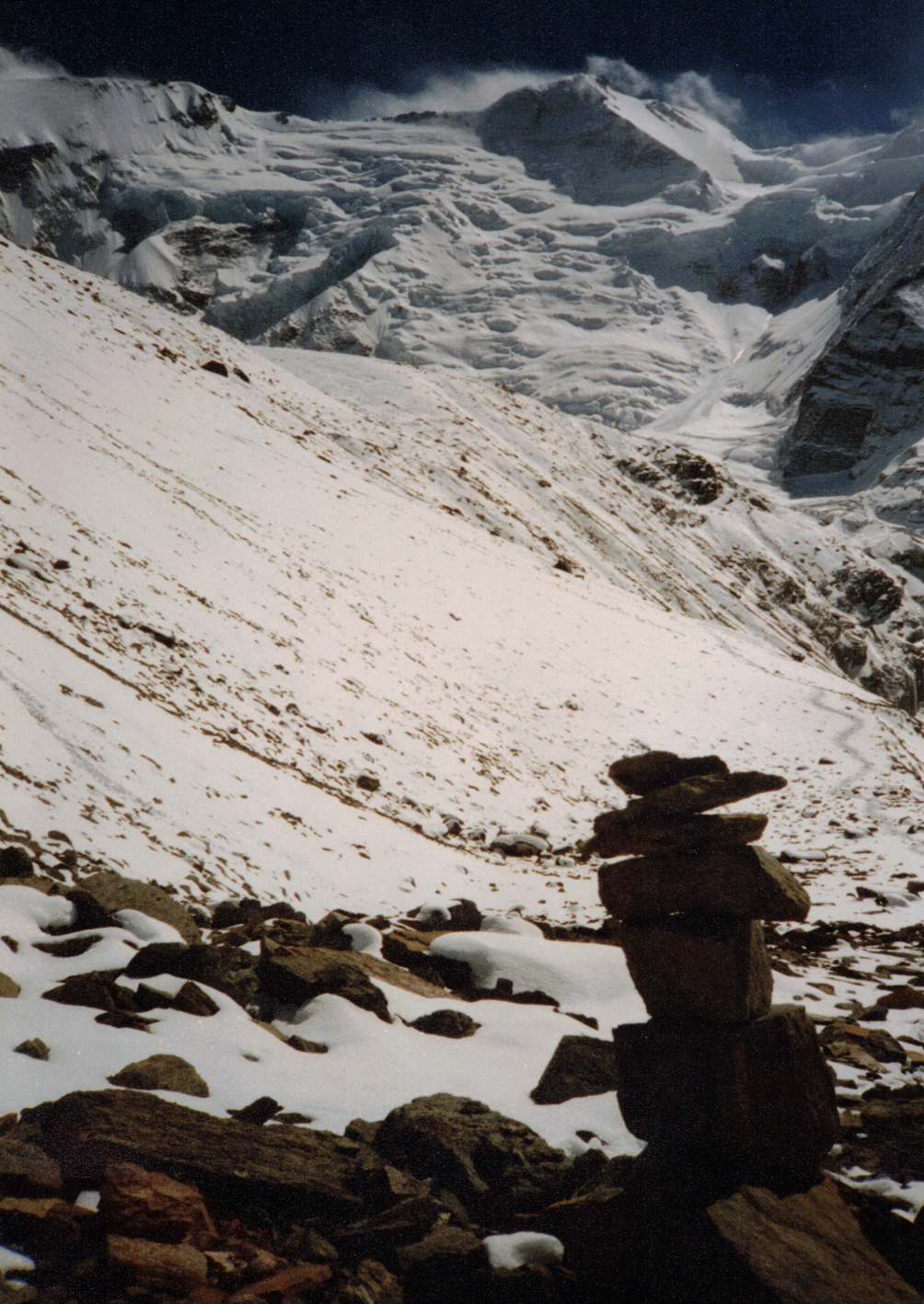
I feel a sense of nostalgia as I leave this place for good, “never imagining that I would be back here six years later”. I look back several times and take some photos…
I arrive at base camp at around 4.30 pm under threatening skies. Geneviève and Georges have gone up to set up a small camp 400 metres higher up, on the site of an old sheepfold that is now in ruins.
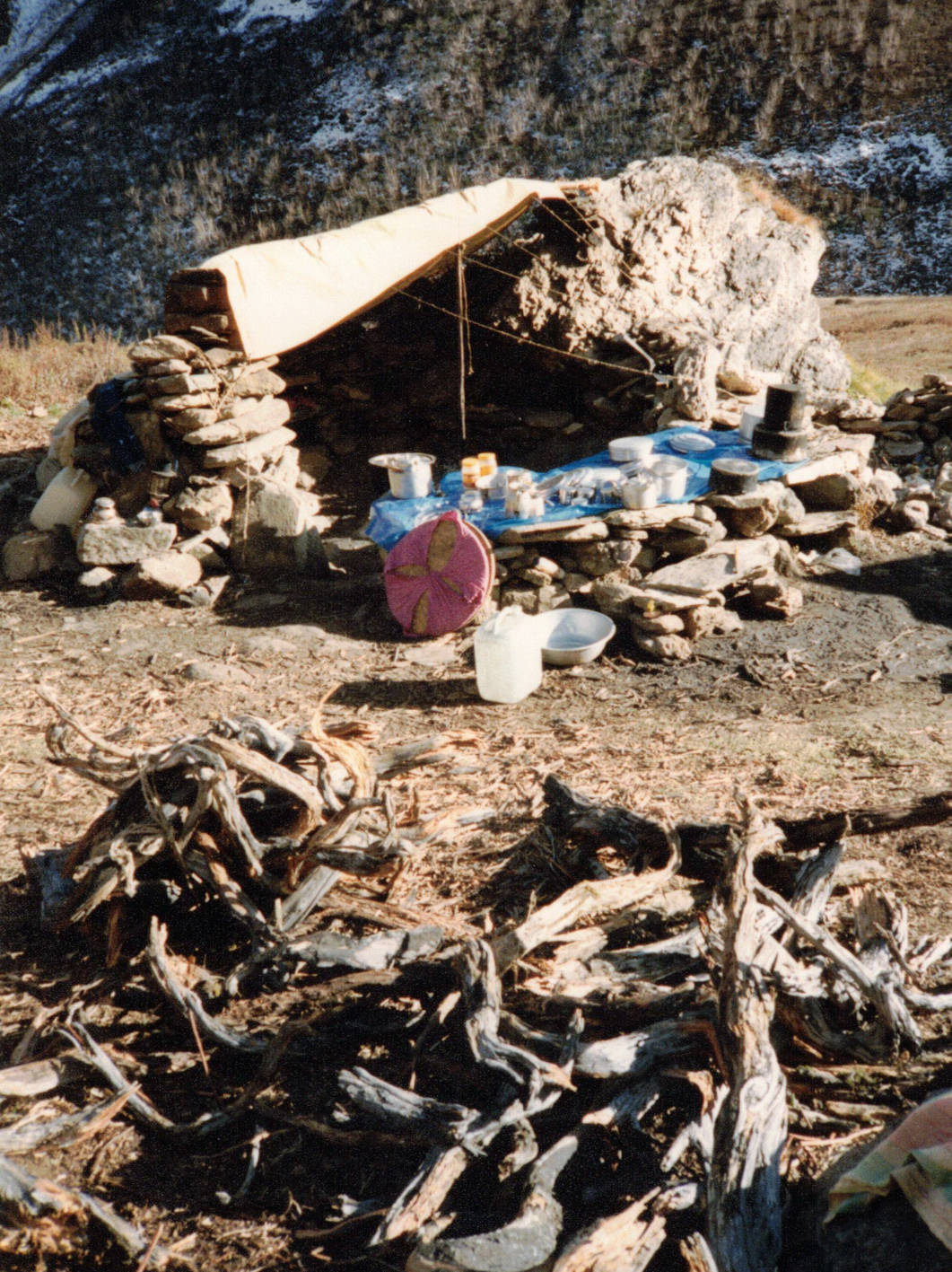
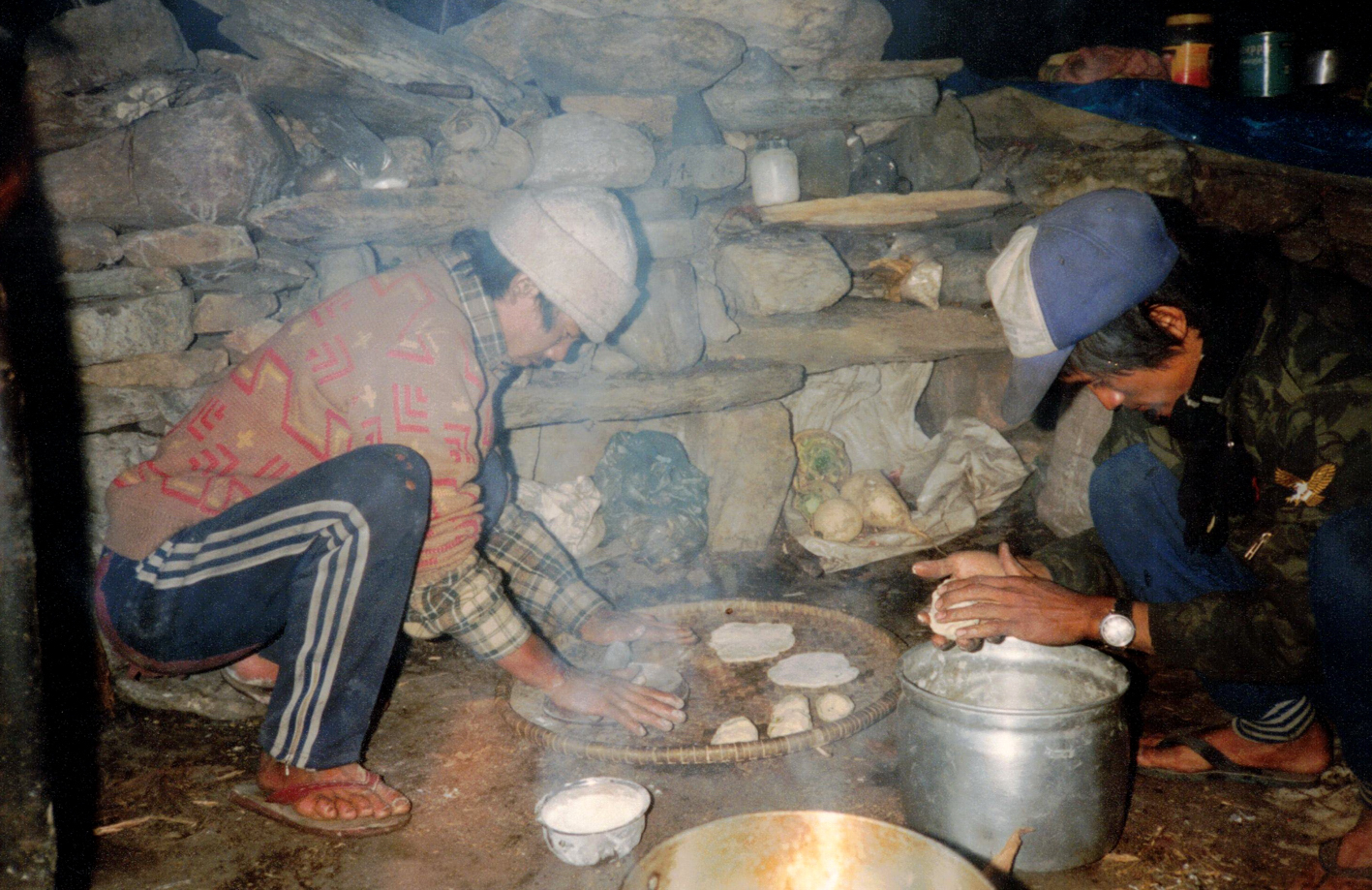
In the evening, the liaison officer and I are alone.
We have dinner together in the base camp kitchen.
16 October
I pack a bag with the last of the high-altitude rations so that Pasang and Shanka can carry them up. I give my winter boots to Shanka. He’ll have to pay 4,000 rupees for the ones he’s damaged. It breaks my heart for him, knowing that he sells a kilo of rice for between 4 and 5 rupees, and a kilo of bread-making grain for between 3 and 4 rupees. What’s more, his 13-year-old son’s school fees cost him 450 rupees a month and his 11-year-old daughter’s 350 rupees a month. Shanka works six months a year as a high-altitude sherpa, takes two months off, then works for four months on his land.
Whilst the cost of hiring Nepalese staff may seem low to us as Swiss people, for them the income they earn from a single expedition season is substantial. It enables them to support their families and, above all, to send their children to school. Those among us who claim that we are shamefully exploiting Nepalese staff are out of touch with the reality on the ground.
17 October
Pema has just set off for Shala to bring back the yaks for our return to Simikot. He has also been tasked with bringing back a sheep to celebrate the end of our stay at base camp and, I hope, the success of the climb. I have given him 1,000 rupees for this. The price of a sheep is likely to be between 700 and 800 rupees.
I’m in the tent, standing in a basin of hot water, intending to wash the lower half of my body (I’d washed the upper half yesterday), when Passang arrives with a letter from Gaston asking for wood, milk, sugar, batteries and toilet paper. Passang sets off again the same day with the supplies. We have dinner by the kitchen hearth in the glow of a paraffin lamp. A double-twisted wick made of toilet paper, soaked in paraffin, with one end sticking out through a hole in the centre of the iron lid of a glass jar.
18 October
Overcast skies and a cold wind. I leave camp heading NNE to join Geneviève and Georges at their camp. We have a picnic together and I help them carry equipment down to base camp. A message from Gaston asking once again for food and medicine for Christophe, who is suffering from a sore throat. He also tells us that the ascent could go on until 21–22 October, whereas the yaks have been booked for the 20th. Emergency meeting. Finally, one of the Nepalese from the Austrian expedition will go to Shala tomorrow to delay the yaks until the 23rd. Passang makes a portage to Camp I.
19 October
The washing hangs out to dry alongside the prayer flags. Georges brings me two books and I lend him mine. As happens every late afternoon, the sun disappears around 4.30 pm and the temperature drops by about ten degrees in the space of a few minutes. I put on tights, overtrousers, a down jacket and a hat, and slip into my sleeping bag whilst waiting for dinner. Meditations, dreams and plans fill my mind.
20 October
We leave camp at 10.30 am to head north up the valley of the torrent. The weather is glorious. The scent of plants wafts through the air with every step. A light breeze tempers the intensity of the sun. The slopes are covered in juniper bushes, forming patches of green against a carpet of vegetation in shades of yellow, ochre and russet. We reach a small, partially frozen lake at 5,200 m.
Suddenly, through my binoculars, I spot a group of Tibetans on a ridge some 300 m away from us. As I move towards them, they stand up and leave. I carry on in the hope of coming across a track.
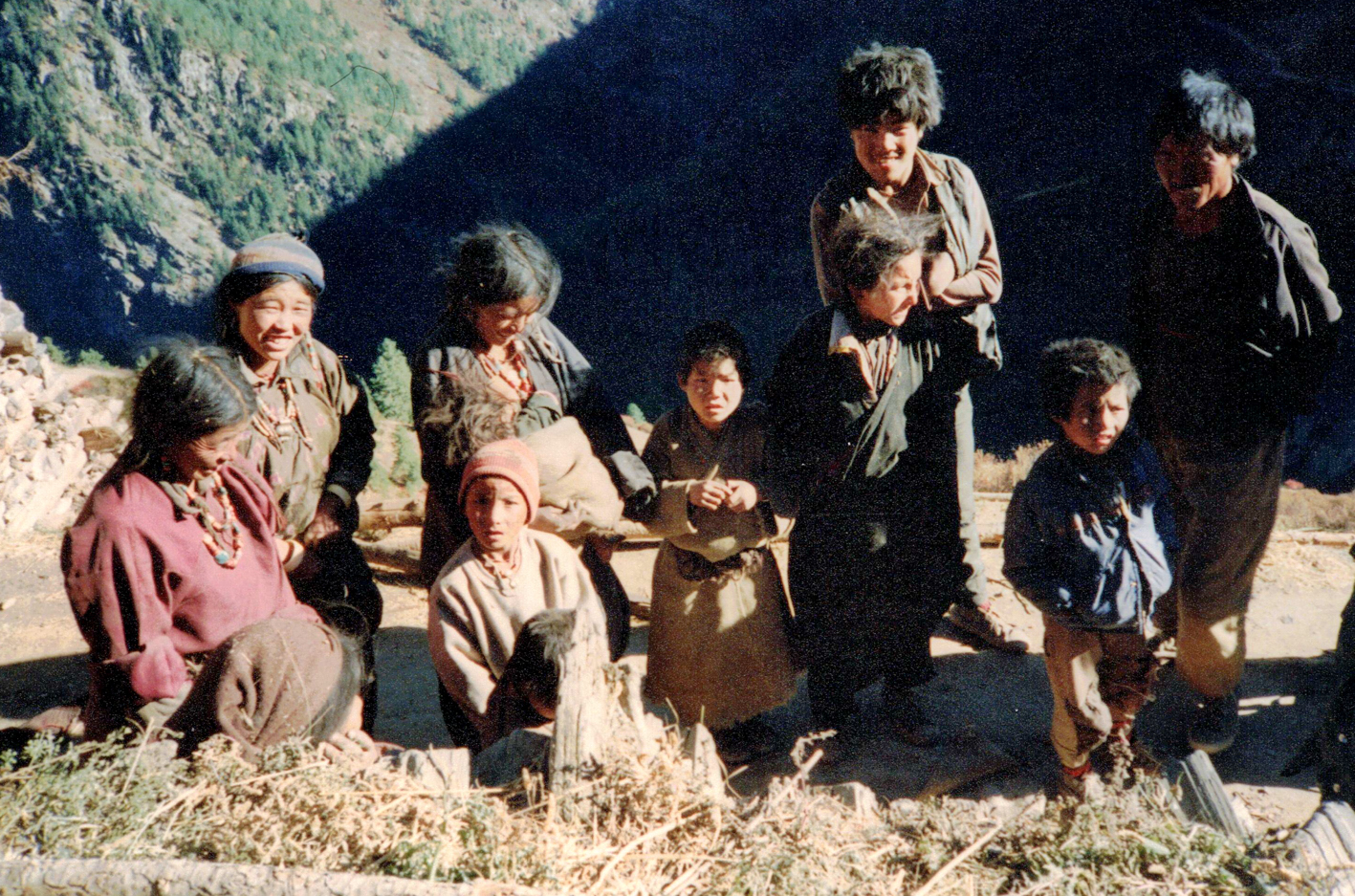
… There aren’t any, but I’m surprised to see a whole family turn up. They’re even more surprised than I am, especially to come across a white person in this spot.
We later learnt that they had passed close to the camp, whilst carefully avoiding it.
They were apparently Tibetans who had bypassed the Muchu checkpoint to enter Nepal illegally.
Back at camp, we see the yaks and an old goat, even though I’d paid for a sheep. I make my dissatisfaction known. That evening, I find out that the goat cost 950 rupees; that’s far too expensive, and I feel like I’ve been ripped off.
21 October
I reiterated my dissatisfaction to Pokharel. He told me that the goat would be paid for half by the Austrians and half by our sirdar and the cook, and that once we reached Shala, a sheep would be provided for us as requested.
At around 3.30 pm, our climbers return to base camp. The goat has been slaughtered and the meat chopped up to be made into momos, which I don’t eat. We plan our return route; we have 14 days left as the flight from Simikot is scheduled for 6 or 8 November. Gaston and Jacques reveal a plan to make another attempt on the summit of Saïpal in 4–5 days, whilst the rest of us would head to Saïna. The two groups would meet up in Shala around 30 October.
22 October
Gaston and Jacques decide to go ahead with the planned attempt. We take stock of our food supplies. We’ll have to ration our sugar, muesli and oatmeal. We plan to buy 40 kilos of potatoes, 25 kilos of flour, green radishes and dri butter (from female yaks) in Shala.
The Austrians ask us to take their two trekkers with us to Saïna. We agree, on condition that the trekkers bring their own food. They give us a bottle of kirsch.
23 October
It had been decided the day before that half of the food and all the high-altitude equipment would be left at Shala and collected there on our return from Saïna. We had difficulty persuading the liaison officer to go to Saïna as this destination was not listed on our trekking permit. Seeing his reluctance, but knowing that he was keen to return to Kathmandu, we managed to get him to let us go to Saïna; in return, we agreed to waive all claims if he entered the capital before us.
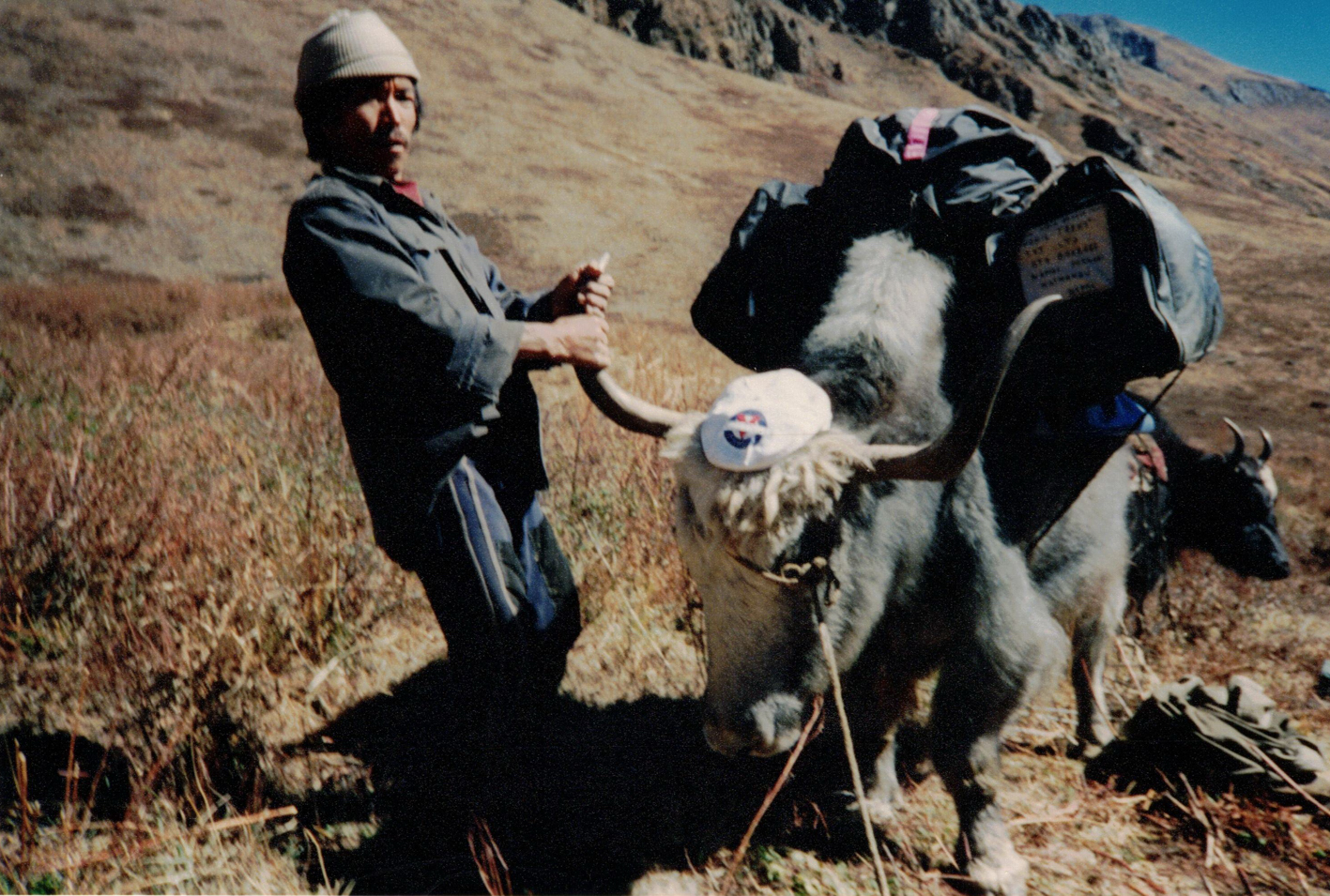
The yak herders, who have been here since 20 October, are starting to get impatient.
As usual, Georges is ranting about the Nepalese’s inefficiency. The camp is being dismantled and the yaks loaded in utter chaos.
The day before, Gaston and Jacques set aside enough food to last four days. Tonight, our two mountaineers, along with the Sherpas Tendi and Ringi, will have dinner and spend the night with the Austrians.
We’re finally leaving base camp – it’s 11.15 am!
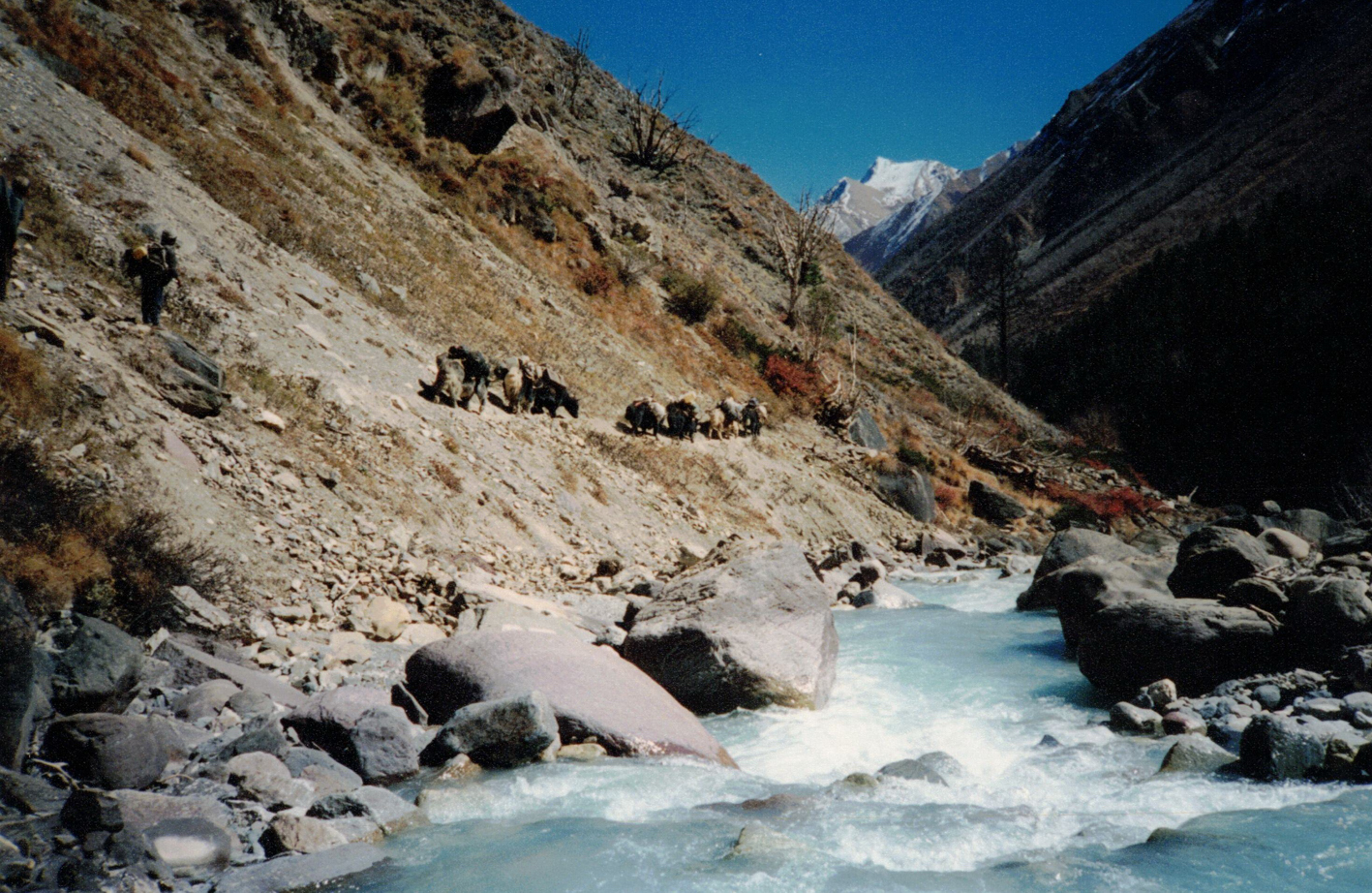
The plan was to stop at the grassy saddle an hour’s walk from Shala. But on the pretext that there’s neither water nor firewood there, the cook drags us all the way to Shala, simply because he can’t be bothered to go down and fetch water—a ten-minute walk—and firewood—a five-minute walk. Finally, as night began to fall, we arrived at a flat area on the left-hand slope of a gorge separating us from the village. We had been walking for almost six hours. After some steep descents and gruelling climbs, we had lost only 300 metres in altitude compared to base camp.
Geneviève is in charge of rationing the sugar, as we only have three kilos left for the next fortnight. As sugar is very scarce in the region, it is not possible to buy any.
Back
24 October
A day of rest spent exploring the village and the surrounding area. Shala is home to around thirty families, each comprising between four and twelve people; that makes a total of about two hundred inhabitants. A woman may have up to six husbands, but only one remains at home for six months to a year. The others leave, either to tend the herds or to take on odd jobs in other valleys further south.
Alex and Christophe are off paragliding. We watch them through binoculars. After a few unsuccessful attempts, off they go! The multicoloured wings fill with air and the villagers gaze in wonder. In the afternoon, Geneviève (carrying a rucksack full of medicines and medical supplies), Georges and I set off to meet the local people.
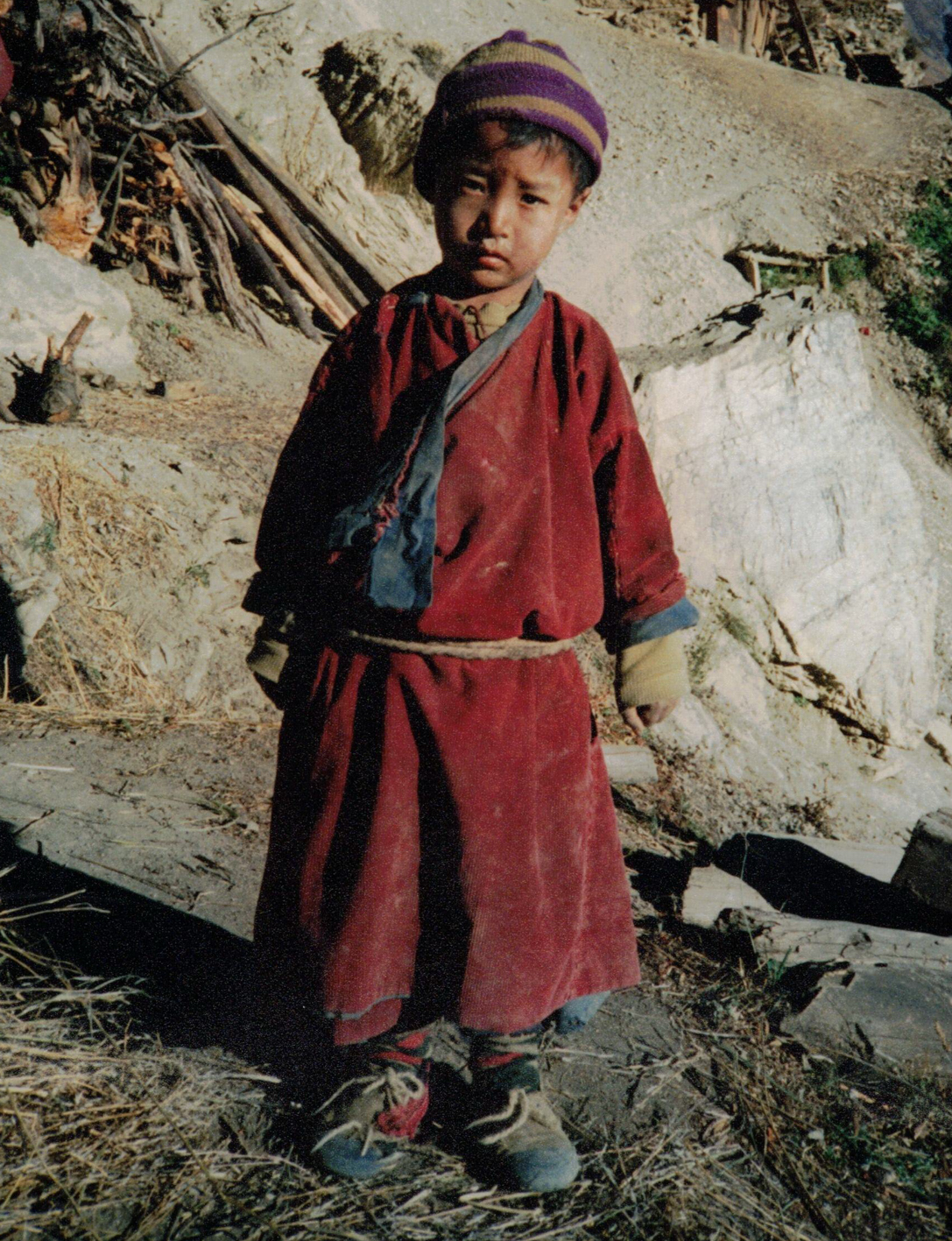
Geneviève provides care and hands out a few trinkets to the village children.
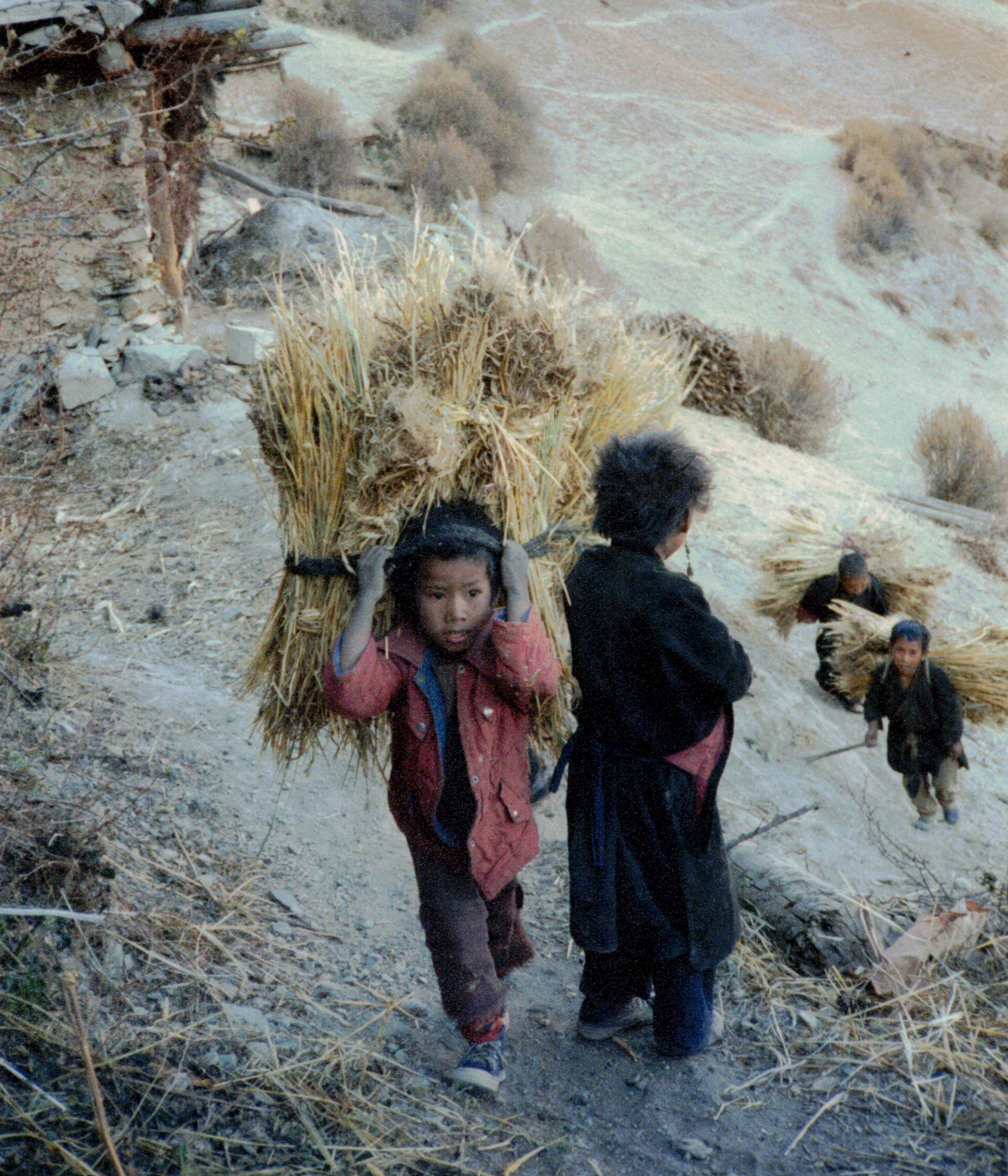
Some strike a pose, whilst others go about their work, as is customary in this subsistence-based economy.
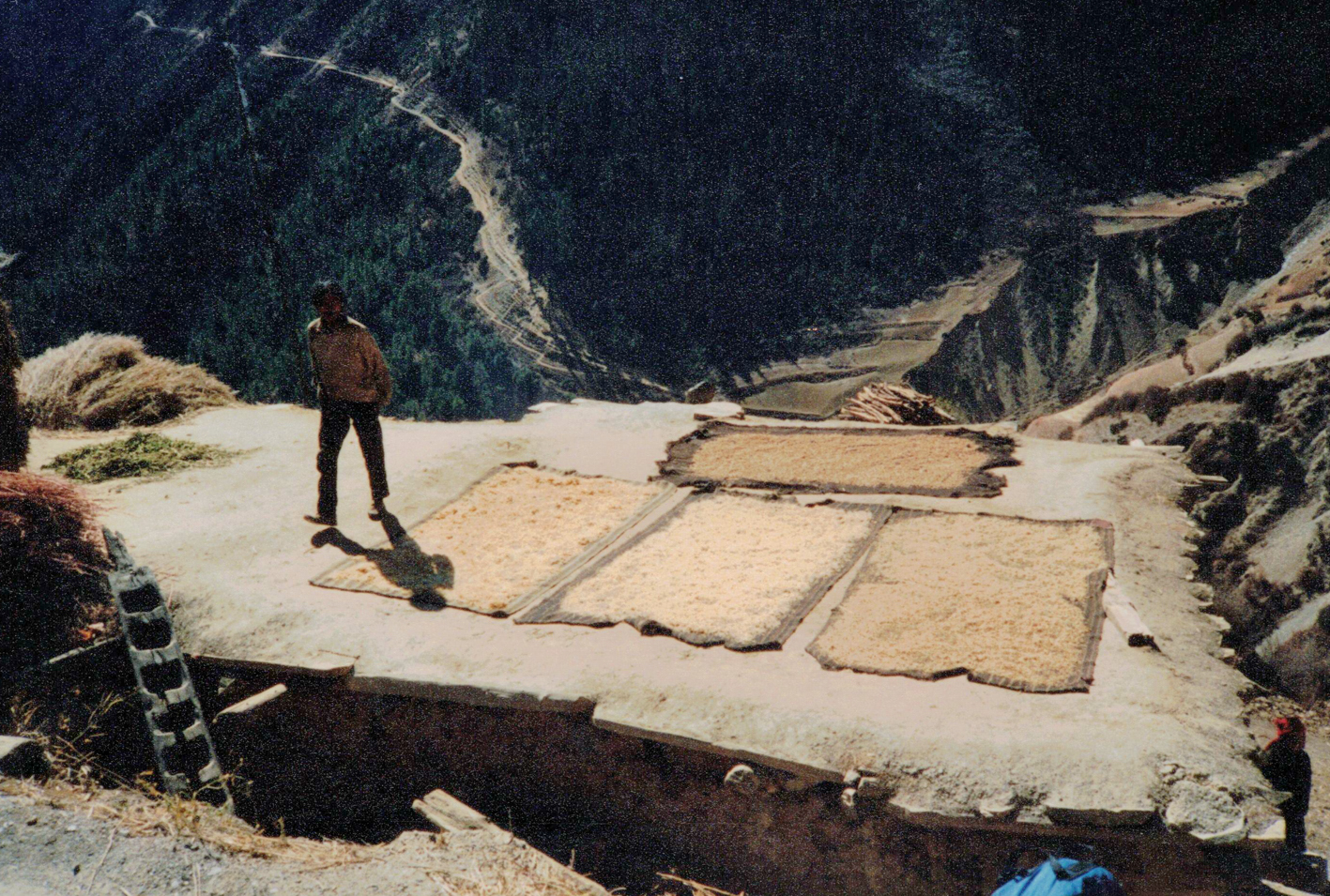
The roofs of adobe houses are flat. During the warmer months, these roofs are used to dry grain. In this region with its harsh climate, only barley and buckwheat can be grown in the valley floors. In winter, when snow covers everything, the inhabitants move from one house to another by walking across the roofs.
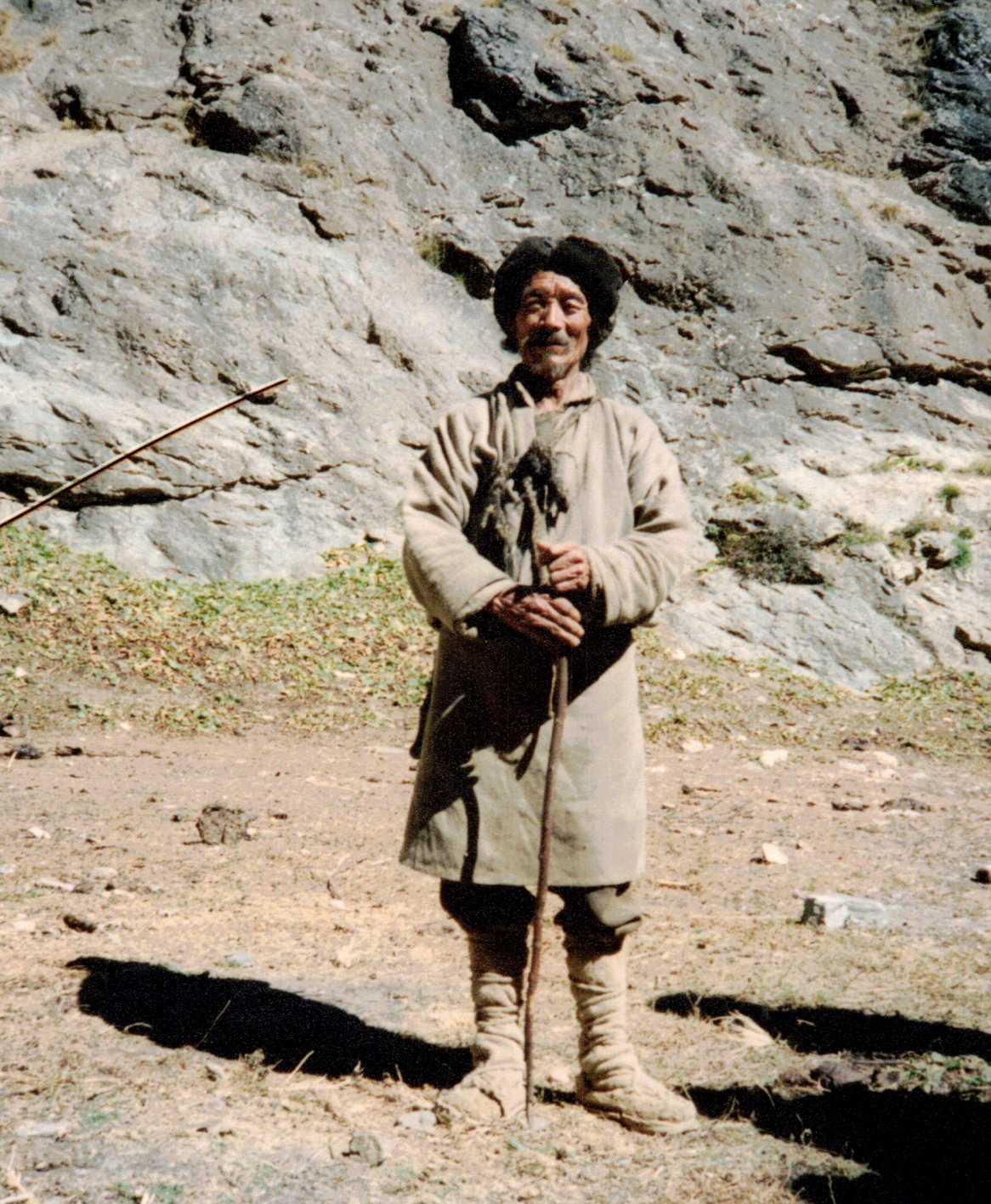
Mail runner
Pema tells us that he is going to entrust some mail to a ‘mail runner’.
A Nepalese man who is capable of covering long distances quickly to deliver letters and other documents. These people can run for several days whilst sleeping under the stars.
We hasten to write. We learn from Shanka that the sirdar has decided to leave the mess tent in the village. Anger grips the group.
Danou must have sensed the discontent, for we didn’t see him again that evening, as he was busy drinking with Pema and flirting in the village.
25 October
At last, the mess tent is packed up and loaded onto a yak. The route we took four weeks ago on the way here seems even more beautiful to me now.
The colours are magnificent: red bushes, dark green pines, fields of russet stubble and snow-capped mountains.

The river we’re walking alongside offers us a welcome haven of coolness. We stop there for a good two hours, feet in the water and heads in the sun, just like rice.
Saïna
It is here that Chala’s yak caravan, returning from the pastures of Saïna, passes us.
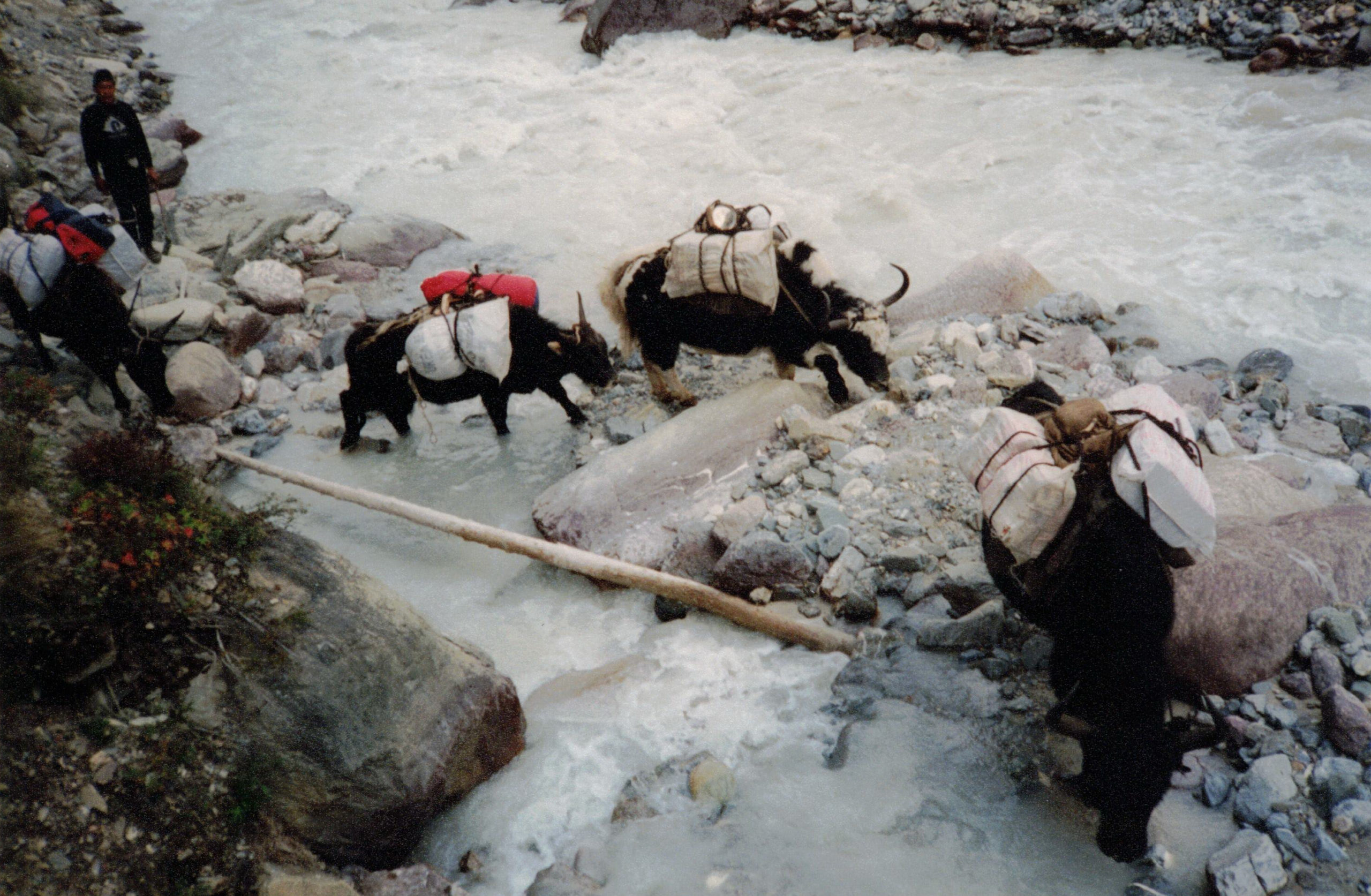
A few young yaks are struggling to cross the ford.
To prevent them from being swept away by the current, adult yaks position themselves downstream and use their bulk to provide a foothold for the young ones.
Men, children and even (young) women are happy to pose for photos. To thank us for giving them an ‘Instamatic’ photo, two young girls offer us three handfuls of tiny balls of very hard cheese to suck on.
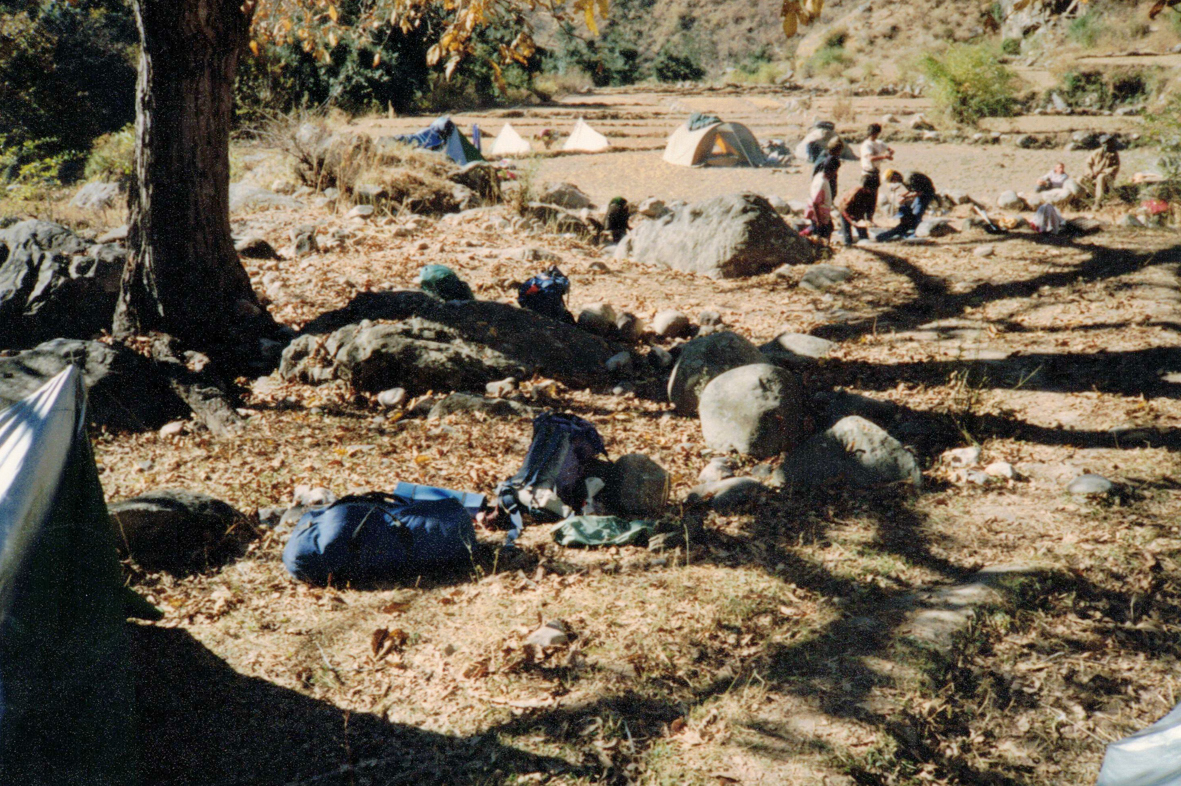
After a three-hour walk, we reach the Tothorya mountain pasture. The yaks, laden with their loads, arrive a good hour after us.
Fortunately, Passang had brought the kitchen hood with him, which meant we could have a cup of tea whilst we waited.
26 October
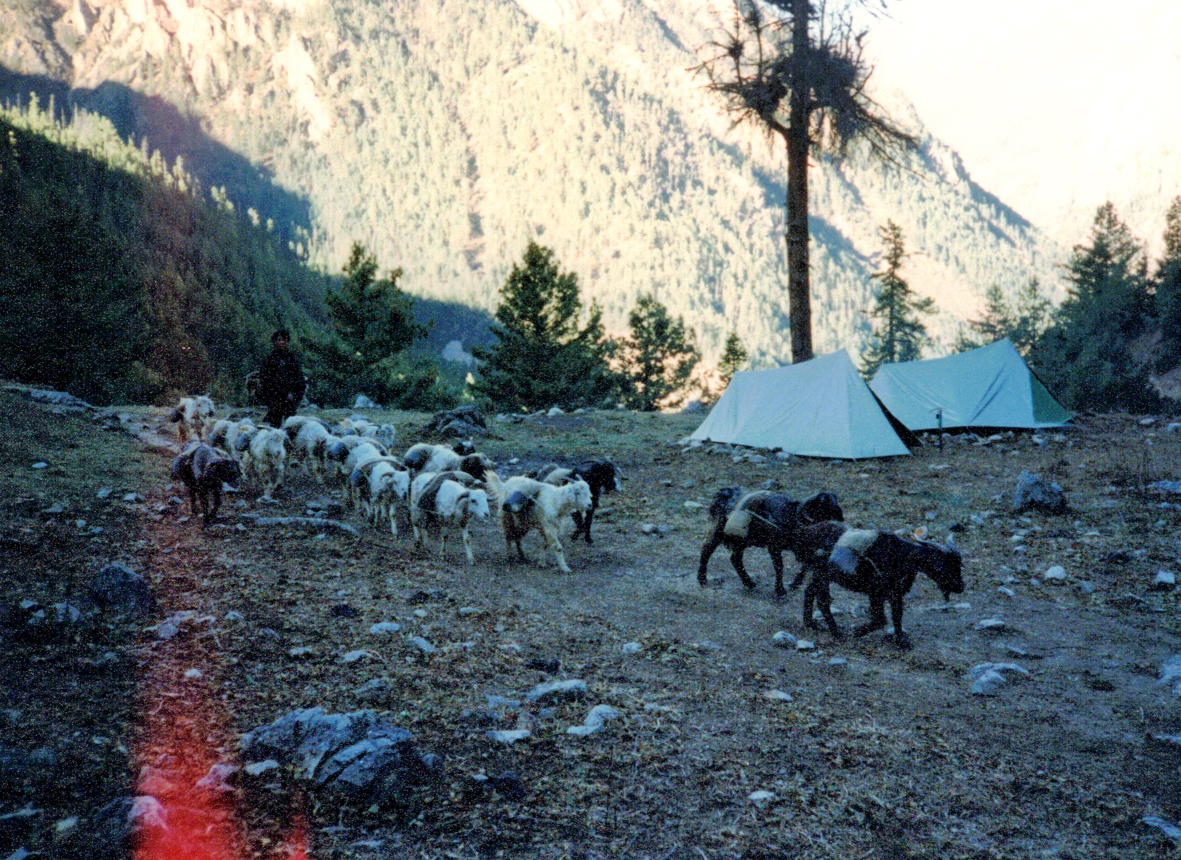
The sound of bells draws me out of the tent. It is yet another procession of goats, each carrying a small jute sack with a leather bottom, filled with salt, on either side of their flanks.
Once the salt reaches the south, it will be exchanged for rice, which will then be sent north.
We are at an altitude of 3,650 metres and we will have to cross a pass, the Chanka-Lagna, at over 4,700 metres.
To give us some strength, the cook prepares a ‘dal bhat’ at my request. A dish made of white rice and lentils.
400 m below the pass, we stop at the top of a ridge, near four stone houses with missing roofs. This is where we are joined by Danou, who spent the night in Shala drinking Chaang (a kind of local beer). The camp is set up on the edge of a vast basin through which a branch of the torrent winds its way.
At 6 pm, a message from Gaston
tells us that Jacques Montaz,
accompanied by Tendi Sherpa,
reached the summit of Saipal at 3.15 pm.
The expedition was therefore a success.
The Geneva section of the CAS has opened a
new route in the Himalayas!
Read the story as a PDF
27 October
A day spent doing all sorts of washing. Georges, ever the forward-thinker, has strung a clothesline between some ski poles. At midday we set off for a walk on one of the grassy hillocks that ring the plateau. An icy wind is blowing from the south and we can see the Saipal shrouded in mist. An eagle circles above us. We also spot three mouflons. To the south-east, the view stretches for over 100 km and comes to rest against the imposing mass of Kengi Roba.
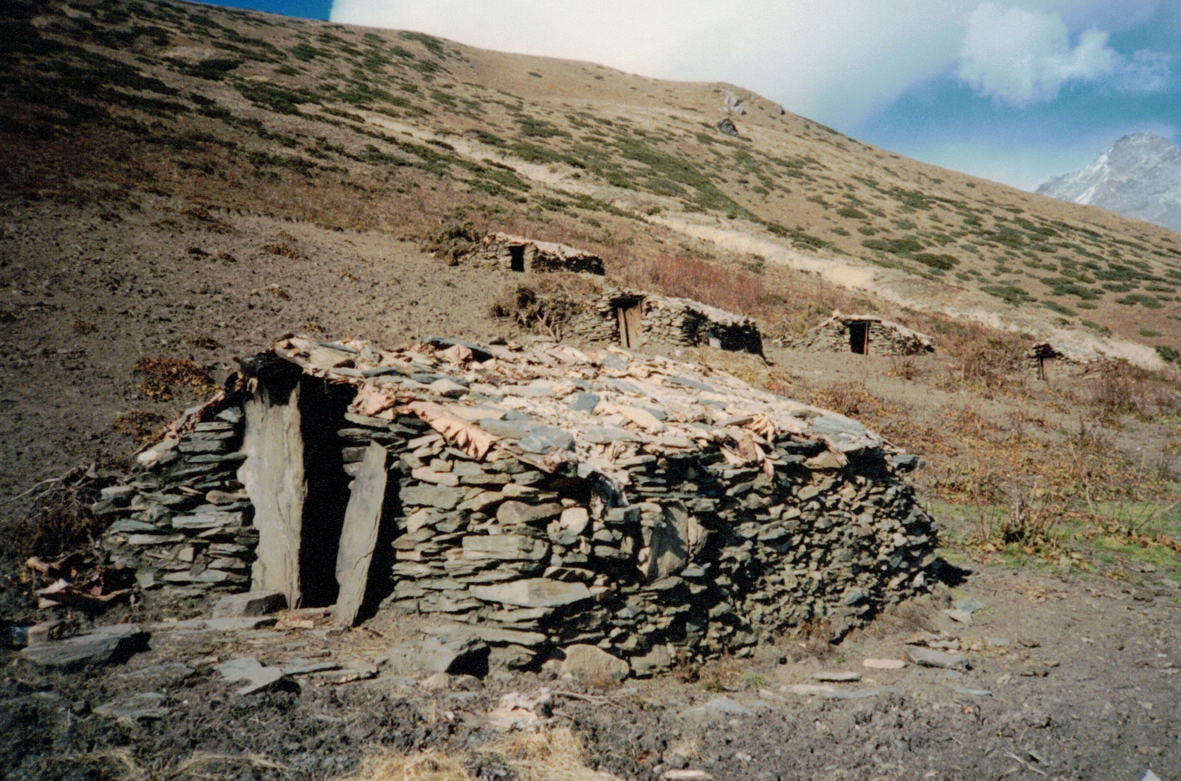
Some 1,200 m below us lies the Saïna plain. As I descend the crest of a moraine, I come across a flat area with yak herders’ huts. Low stone structures, with a door as their only opening, no chimney, covered with birch bark and flat stones
28 October
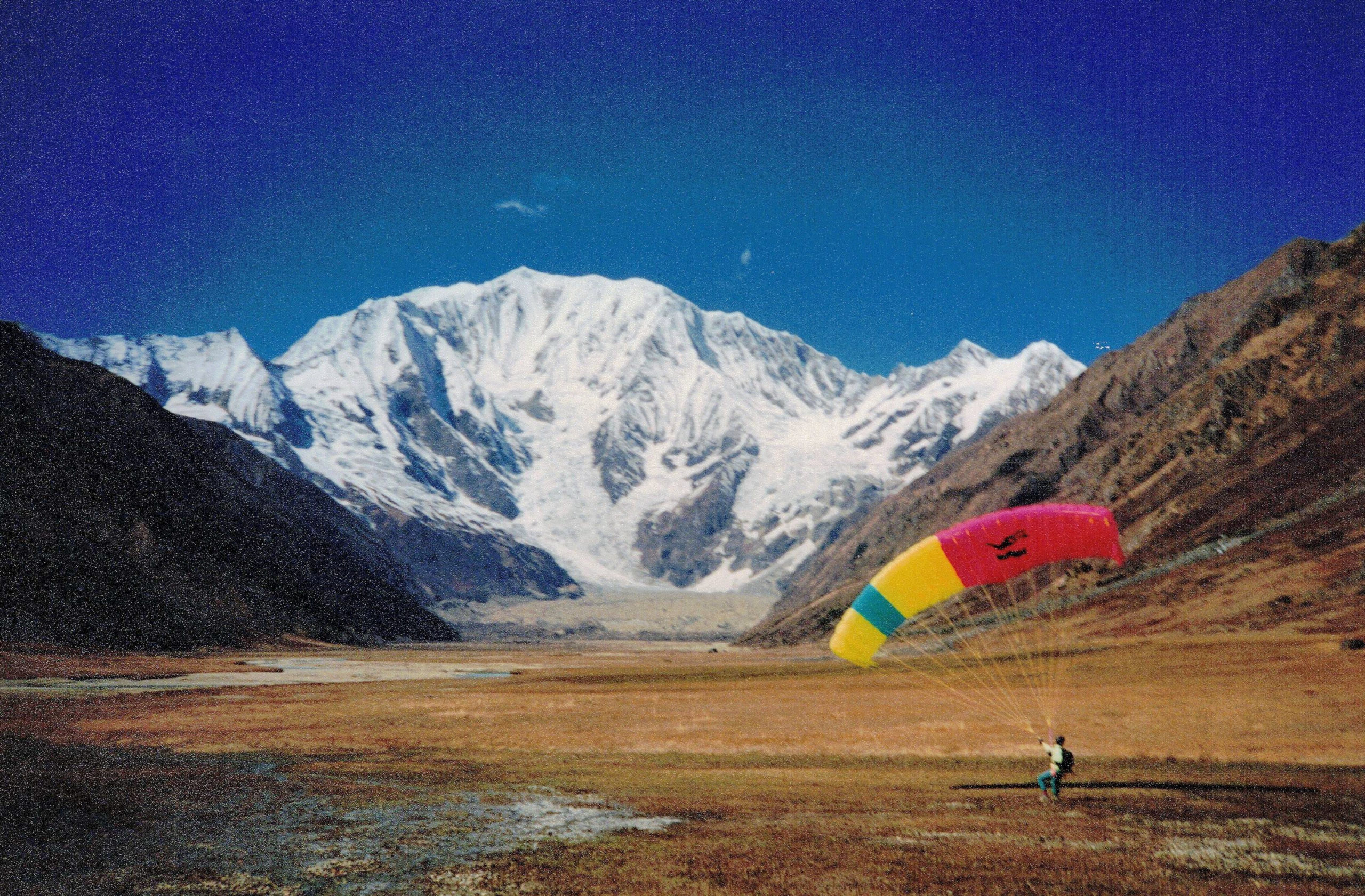
We decide to head down to the Saïna plain to observe the east face of Saipal. Alex and Christophe decide to climb up to join us by paraglider. We watch them practising their wing inflation so they can take off as soon as the wind conditions are favourable. They set off.
Alex descends quite quickly towards us, but a loss of lift 20 metres above the ground causes him to miss the landing area, and he lands in a marsh.
I rush over to him to help him fold up the glider, as the wind on the ground is so strong.
After a quick bite to eat, we set off back along the trail. Halfway there, I start to feel a sudden slump caused by low blood sugar. I munch on an energy bar, which gives me the strength to climb the dreadful goat track leading back to camp.
Shouts and bursts of laughter draw me out of the tent. Christophe is showing Danou and Shanka how to inflate the sail. The yakmen stand at a distance, looking rather uneasy.
29 October
The moon is waxing, and the half-moon bathes the landscape in a silvery glow. It’s 4.30 am and I’ve crawled out of my sleeping bag for an emergency. Later, Passang’s ‘morning tea’ struggles to rouse me from the arms of Morpheus.
After dinner, Alex organises a photo shoot for our sponsors.
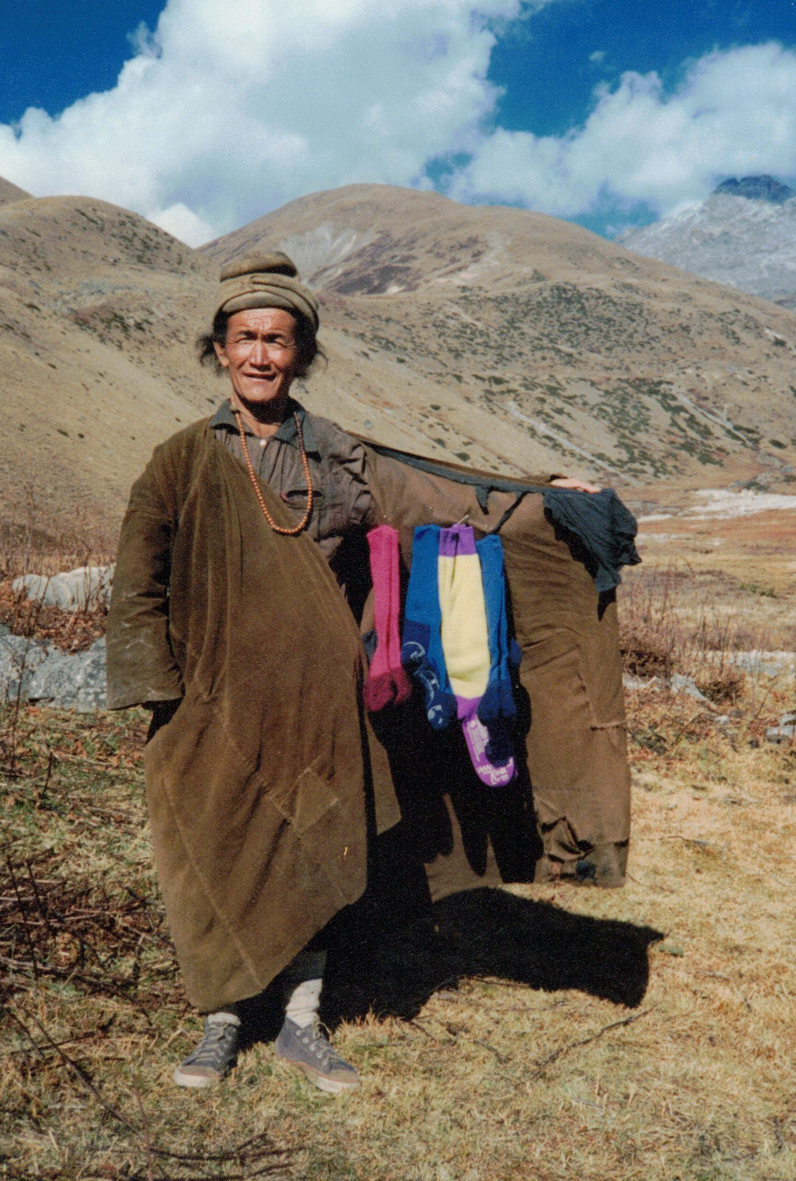
For Rohner, we hang socks on the inside of a yak herder’s coat.
He pulls the flap aside and shows us the goods in a flash!
We decide to set off for Shala tomorrow, a day ahead of schedule. That evening, Temba spots two headlamps coming down from the pass. We immediately think of Gaston and Jacques. It turns out to be a group of Tibetans with two Nepalese guides heading south.
30 October
Partly cloudy. Georges decides to head for the pass via the ridges. I resolve to follow him, thereby avoiding both the dust of the normal route and the company of the truly obnoxious Austrian liaison officer. We gain altitude quickly, but subsequently lose time zigzagging between dwarf bushes that make a sound like crumpled aluminium underfoot.
At the pass, the wind chills us to the bone and we immediately set off down the 1,200-metre descent that lies ahead.
We’re trying out a new route to avoid the yak track, which is incredibly steep, sloping, and covered in a fine dust that fills our nostrils and crunches between our teeth.
I’m the first to arrive at camp and treat myself to a very weak, sugar-free coffee that Passang had the good sense to make. This time, that’s it – the sugar supply is completely gone. I console myself by thinking of the little tin of Assugrin that I had the foresight to slip into my luggage when I left Geneva.
We struggle against a strong wind as we pitch the tents. As soon as the first peg is in the ground, the wind drops and the sun comes out again.
A few tentative remarks about the weather forecast have made me realise that my companions, just like me, are wondering whether we’ll be able to avoid any snowfall. According to the locals, if there is any snowfall, it shouldn’t be heavy. In fact, the really bad weather doesn’t set in until mid-December or even January.
From that point on, life comes to a standstill until April. The mountain villages stockpile wood and provisions for both people and animals so that they can live in seclusion for three to four months.
The contribution made by an expedition like ours is by no means insignificant.
A yak costs 300 rupees to hire – twice the price of a porter – because it carries two loads.
Ten days’ hire therefore brings in 3,000 rupees for the owner, which is enough to buy an extra yak.
It’s 5 pm and the cold is really setting in. Strangely enough, my ballpoint pen acts as a thermometer: the ink is getting thicker and thicker, and the pen is starting to skip. It’s time to put on my puffer jacket and hat. From this point on, my life at the camp follows a set routine.
Writing or reading whilst the fading light of day allows.
Once darkness falls, around 6 pm, I close the tent and, by the light of my head torch, prepare the flask for the evening’s hot water, the two aspirin tablets to take with my supper, the tissues for the night, and my earplugs.
With that done, I tuck my hands away in the warmth of my sleeping bag and wait for the soup to be ready.
Après le repas, je rempli la gourde avec de l’eau chaude et la place au fond du sac vers mes pieds.
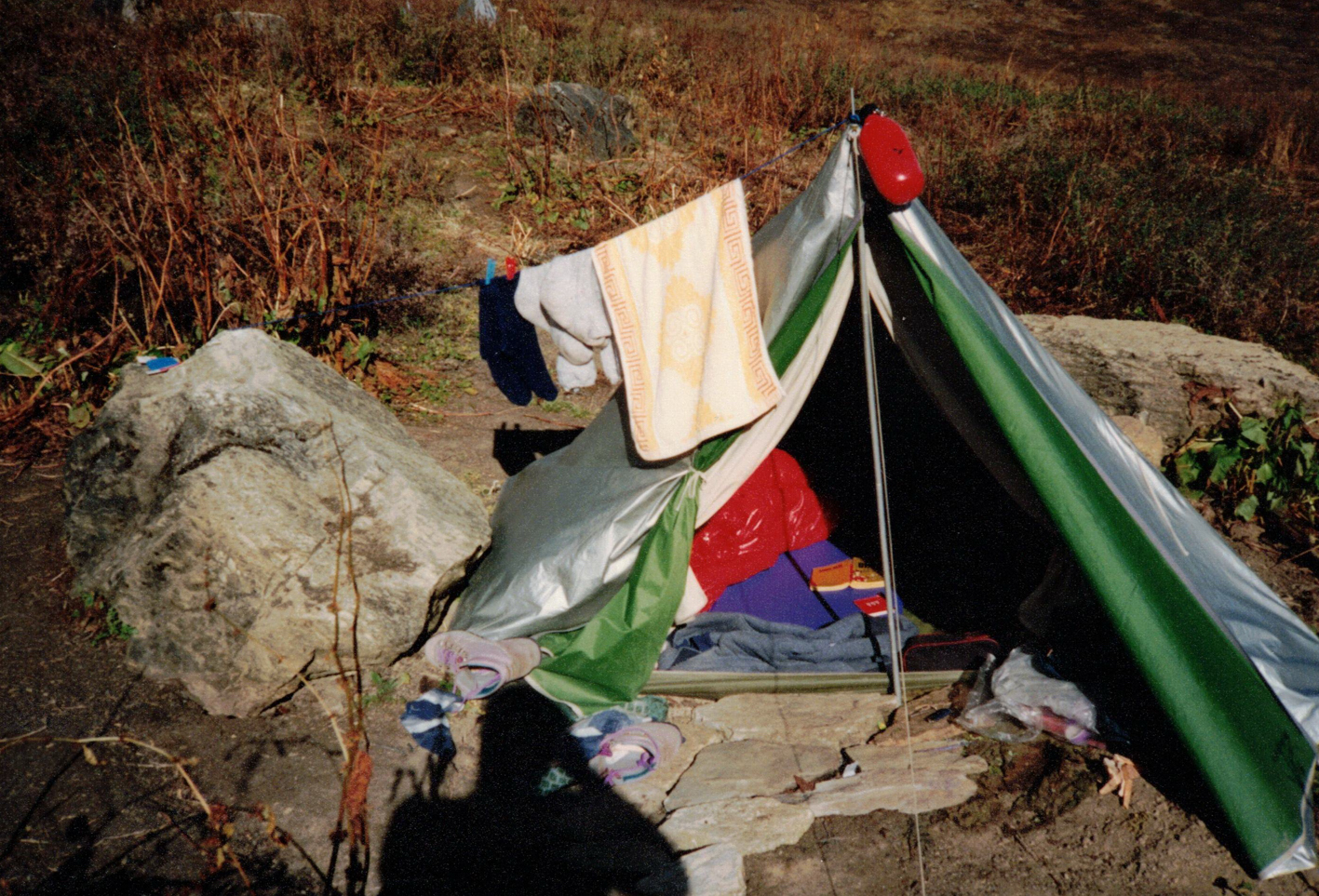
I get changed for the night, light the candle, and enjoy a few squares of chocolate (which I bought before setting off and stashed in my travel bag). Then I brush my teeth and slip into my sleeping bag, hoping that all the liquid I drank during dinner won’t force me to get out of the tent more than once during the night.
This evening, the discussion dragged on about whether it was a good idea to send someone to Muchu to try and bring forward our flight from Simikot. A discussion on the same subject will take place the following day in the presence of Gaston and Jacques. As for me, I share Georges’s view that it is unwise to rush our arrival in Simikot in the hope of gaining a day or even two, with the significant risk of having to spend four days there waiting for the flight.
As on every evening, two campfires glow in the night. One belongs to the yak herders, and the other to our cook, around which the Sherpas have gathered. Whilst the first is calm and peaceful, the second is filled with loud voices and laughter.
The yakmen are self-sufficient. They carry their own food and cook for themselves. Cereal cakes, toasted cereals, and sometimes a little rice, all washed down with salty tea made with yak butter.
31 octobre
Les sherpas, de nouveau, déploient la bâche du petit déjeuner à l’ombre, alors que l’herbe est encore couverte de givre. A quelques mètres de là le soleil réchauffe déjà la prairie. Je leur demande de déplacer la toile. Il est curieux de voir à quel point les notions de confort simple, pour ne pas mentionner l’organisation générale, leur fait défaut. Les mêmes remarques s’étendent au respect du matériel et à la prévoyance. Ils agissent comme si le présent était l’ultime instant et que le passé n’existait pas.
Départ à 10h30 et arrivée à Shala à 13h. En cours de route, Georges a eu le loisir de s’ébrouer dans la poussière tel un moineau. Nous l’avons surpris à la rivière en train de laver la poussière qui le recouvre des pieds à la tête.
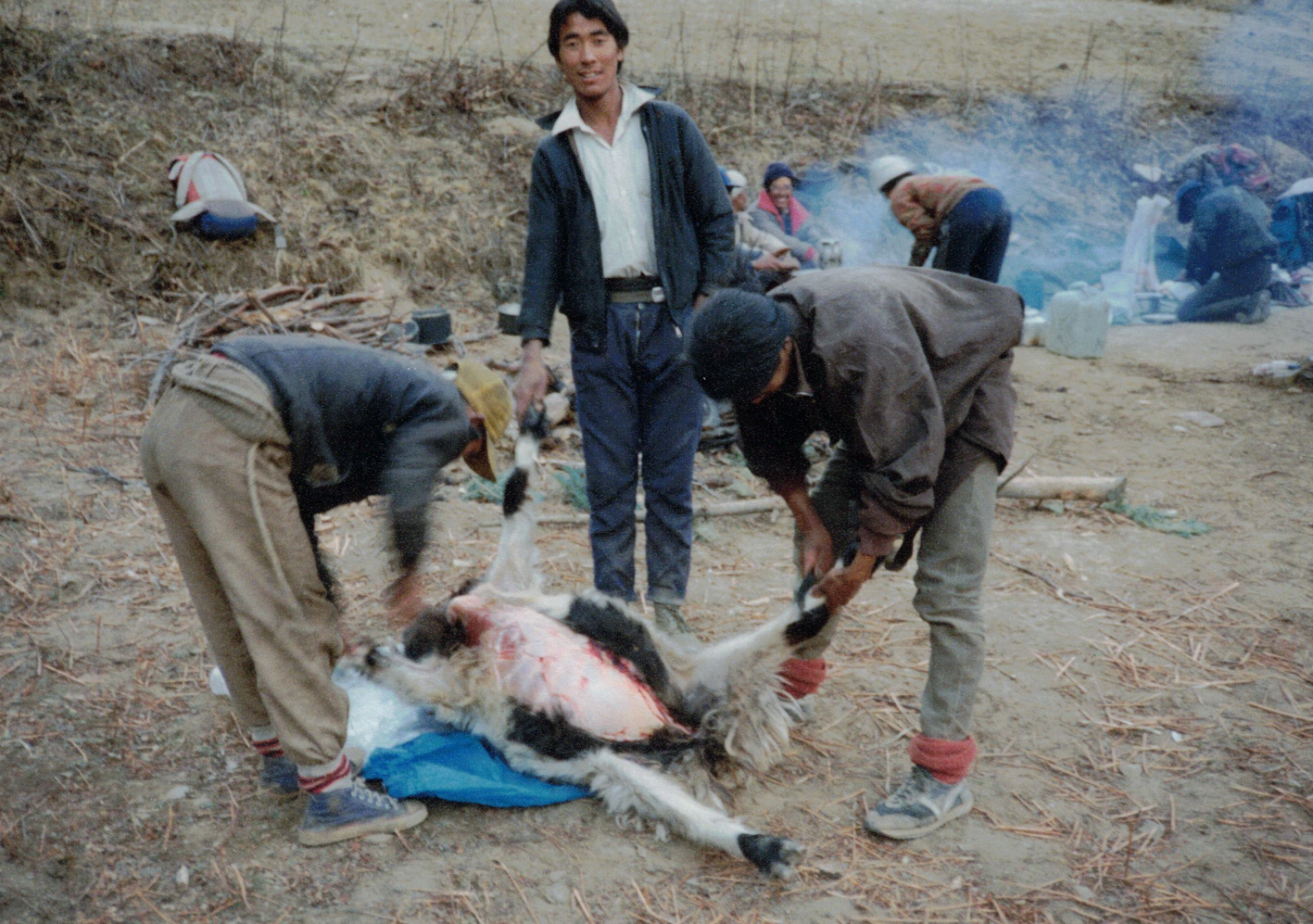
As promised, the sheep was there. It had been gutted, skinned and cut into quarters. It would be transported the following day in a jute sack to Pouilla.
It is there that we will celebrate the success of the expedition.
Finally, in the early evening, Gaston and Jacques returned to camp to a round of applause and congratulations on reaching the summit of Saipal.
To celebrate the occasion, the cook made us a chocolate cake.
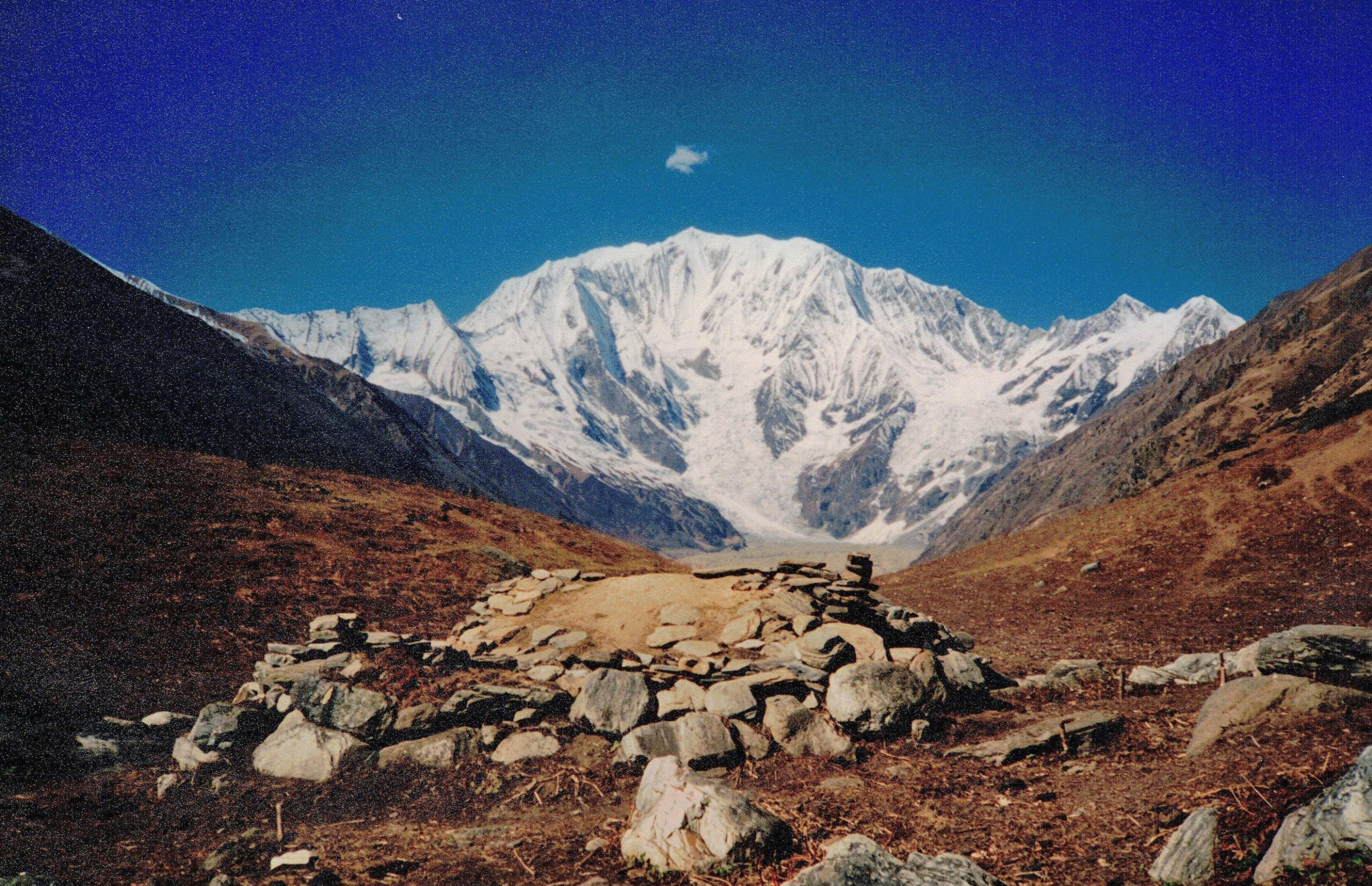
East face of Saïpal
viewed from Saïna
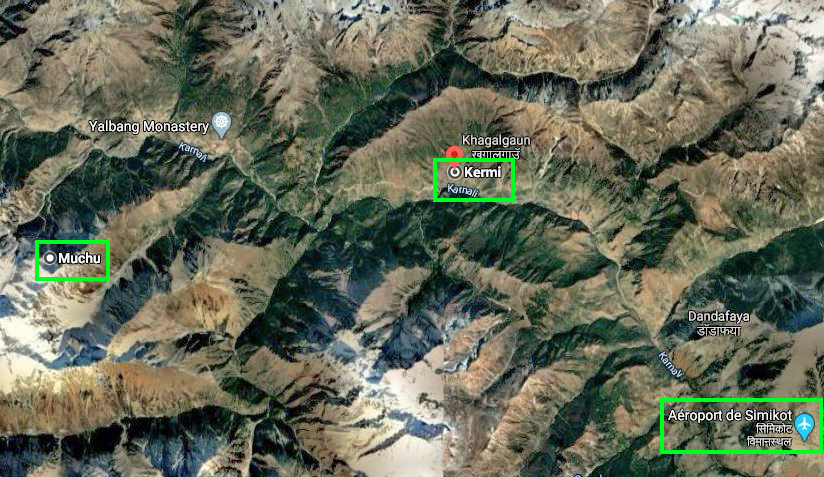
Pokharel sends a messenger to Muchu so that the local police station can inform the Ministry, the police and Pabil Treks (all three based in Kathmandu) of the expedition’s success.
Meanwhile, Danou sends a messenger to Simikot to confirm our flight to Nepalganj.
His job is also to bring back some food for the end of the trek. He should meet up with us in Kermi, which is our next stop.
According to the latest reports, the King of Nepal has been urged to ratify the latest constitution. If he fails to do so, we fear there may be unrest. Pokharel reassures us that foreigners are in no danger.
1 November
We take our time as the walk to Pouilla isn’t long. By 11 am, Danou and the yaks still haven’t arrived, so Georges gets annoyed and sets off to track them down. The sirdar gets a telling-off. He returns to camp looking rather sheepish and a bit tipsy.
Pokharel and I are invited by the only teenager who has obtained the equivalent of our school-leaving certificate to come and visit his home.
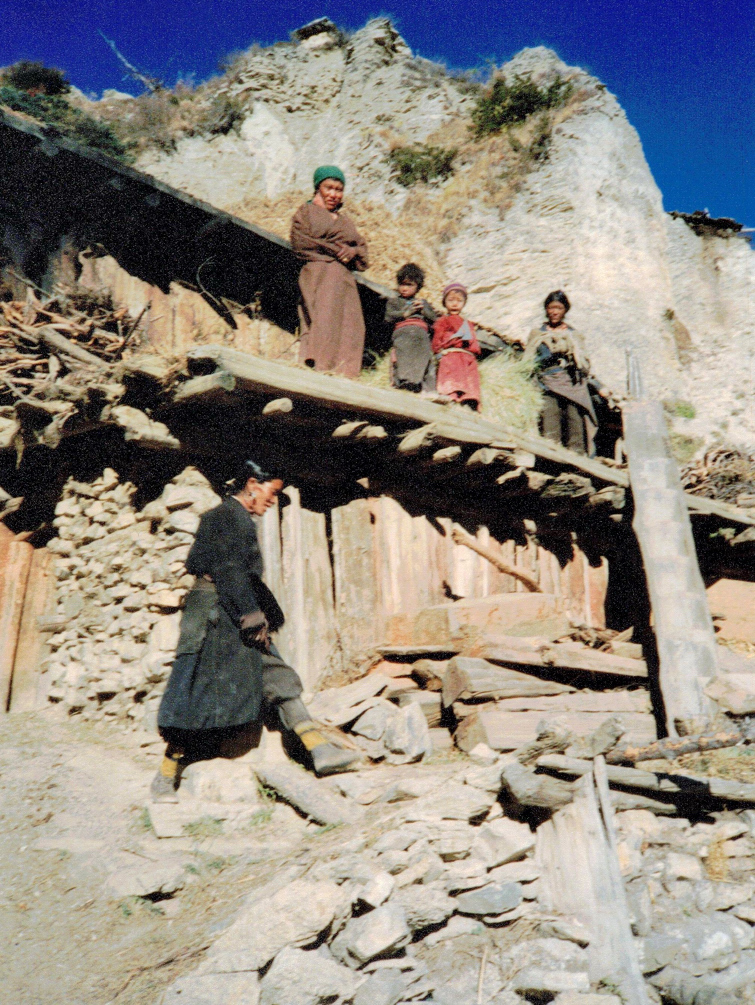
Winding our way through narrow streets and past terraced houses, we come to a rather grand house.
It is a two-storey building.
On the ground floor are the animals; upstairs, accessed via a tree trunk with steps carved into it, there is a small room, a lean-to and the main room.
The room is very dark, as only a small opening in the ceiling lets in a little daylight. This opening also serves as a chimney.
An open hearth takes up the centre of the main room.
Against one of the walls, a low bench can be made out, and against another, a few shelves. Jars contain water. All the walls and the ceiling are blackened by smoke.
An open hearth takes up the centre of the main room.
Against one of the walls, a low bench can be made out, and against another, a few shelves. Jars contain water. All the walls and the ceiling are blackened by smoke.
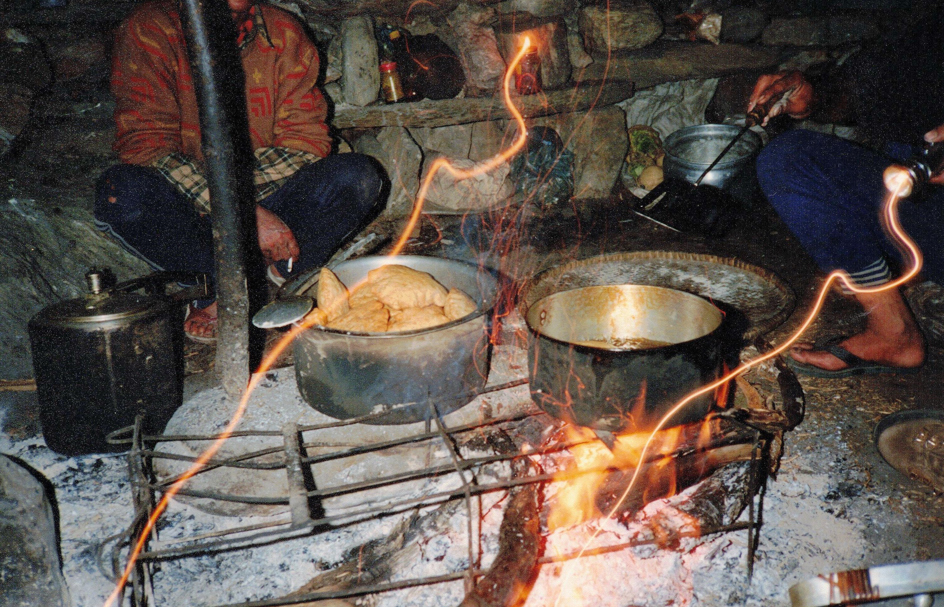
The mother is sitting cross-legged by the wood fire, breastfeeding the youngest of her nine children. She is serving her husband, who occupies the place of honour.
We are offered whey and Tibetan tea in small Chinese earthenware bowls, which suggest a certain degree of affluence. We are given a taste of a buckwheat flatbread obtained from a neighbouring village in exchange for salt. The one from nearby Tibet, a two-day’s walk away.
We learn that the village has 362 inhabitants, 36 families and around 500 yaks. We also learn that the eldest son, who is fifteen and has passed his school-leaving certificate, is due to marry a girl from the village in a few days’ time, following a series of negotiations between the two families.

As we step outside, we find Geneviève, who, as usual, is surrounded by adults and children seeking medical care and toys.
Meanwhile, Christophe has been paragliding over the village, causing a stir, arousing amazement and, at times, fear.
We continue towards the pass at 4,300 metres.
After a break, we head down towards Pouilla. This hamlet, consisting of just a few houses, has already been deserted for the winter and lies at the bottom of the valley, with the Karnali river flowing 700 metres below.
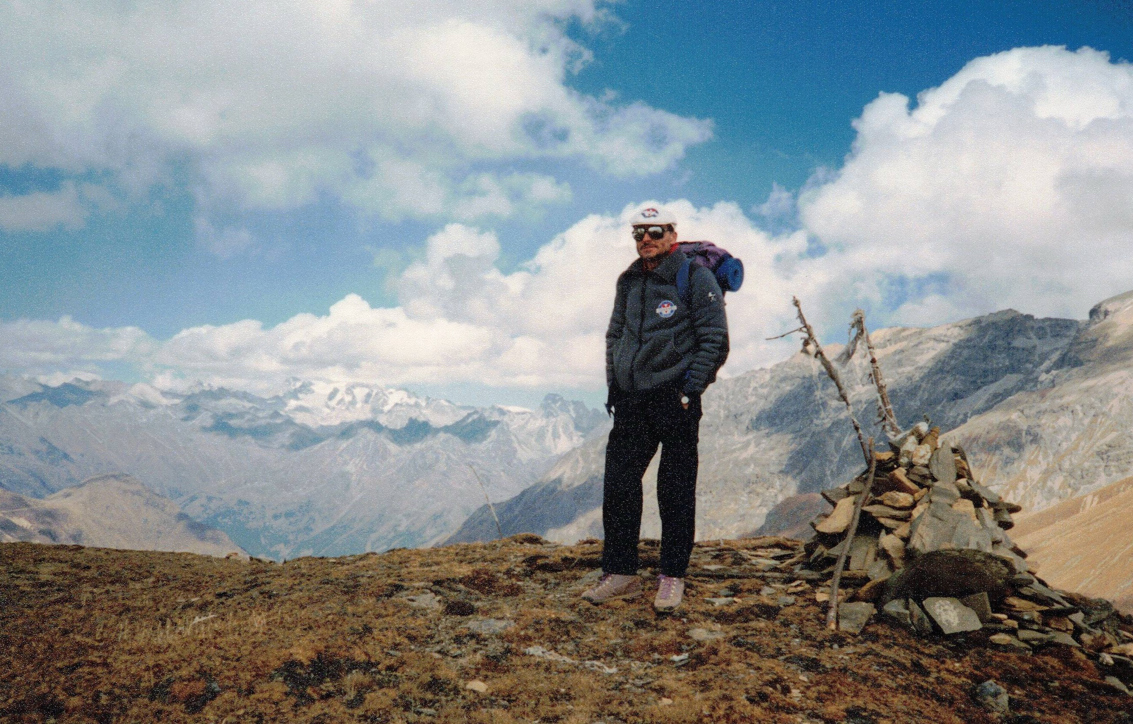
From there, two tracks lead off. One heads up towards Muchu, a village on the border with Tibet,
the other follows the river towards Kermi.
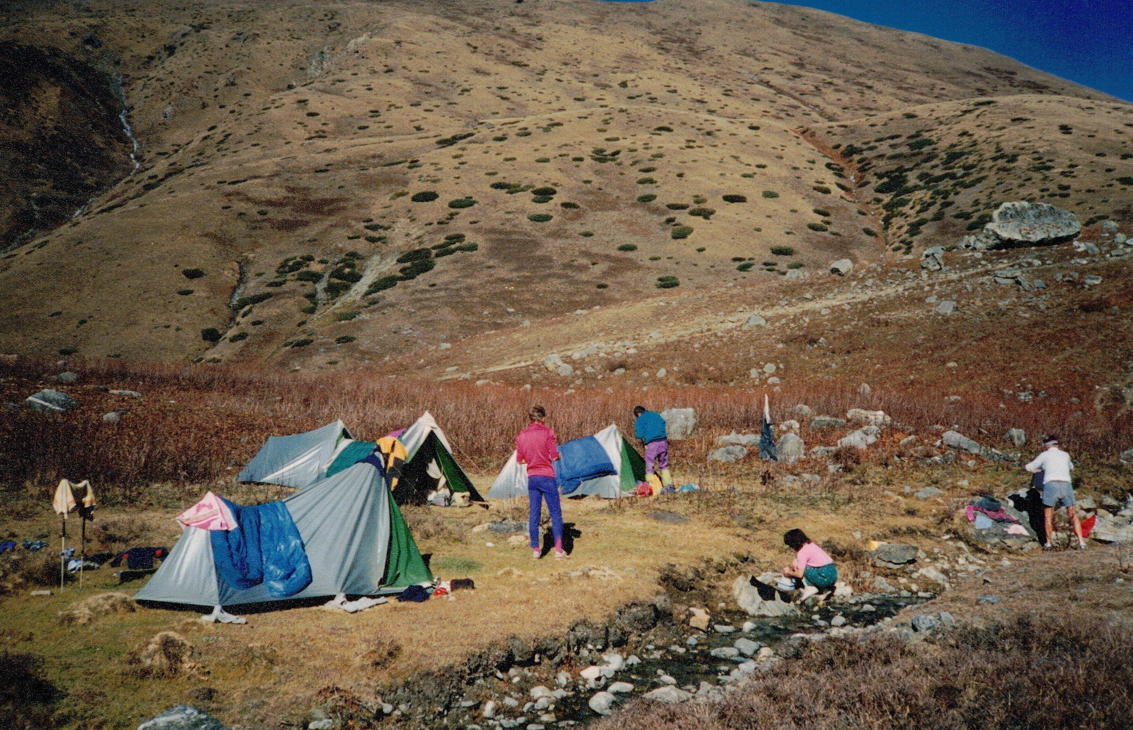
We pitch our tents on the site of two recently harvested cereal fields.
The yaks arrive shortly afterwards. We learn that one of the animals lost its footing on the descent and that its load tumbled down the slope, disappearing among the pine trees and rhododendrons that cover the mountainside. Tomorrow, the yak herders will try to find the luggage.
We celebrate our ascent of Saipal once again by opening a good bottle of whisky that Alex bought during our stopover in Frankfurt. Given the late hour, we decide to roast the sheep the following day for dinner. The meat is hung up in the mess tent to keep it safe from any potential predators.
Gaston, who had celebrated the success of the expedition in style the night before, has a yellowish complexion and makes do with a “Saipal tea”.
2 November
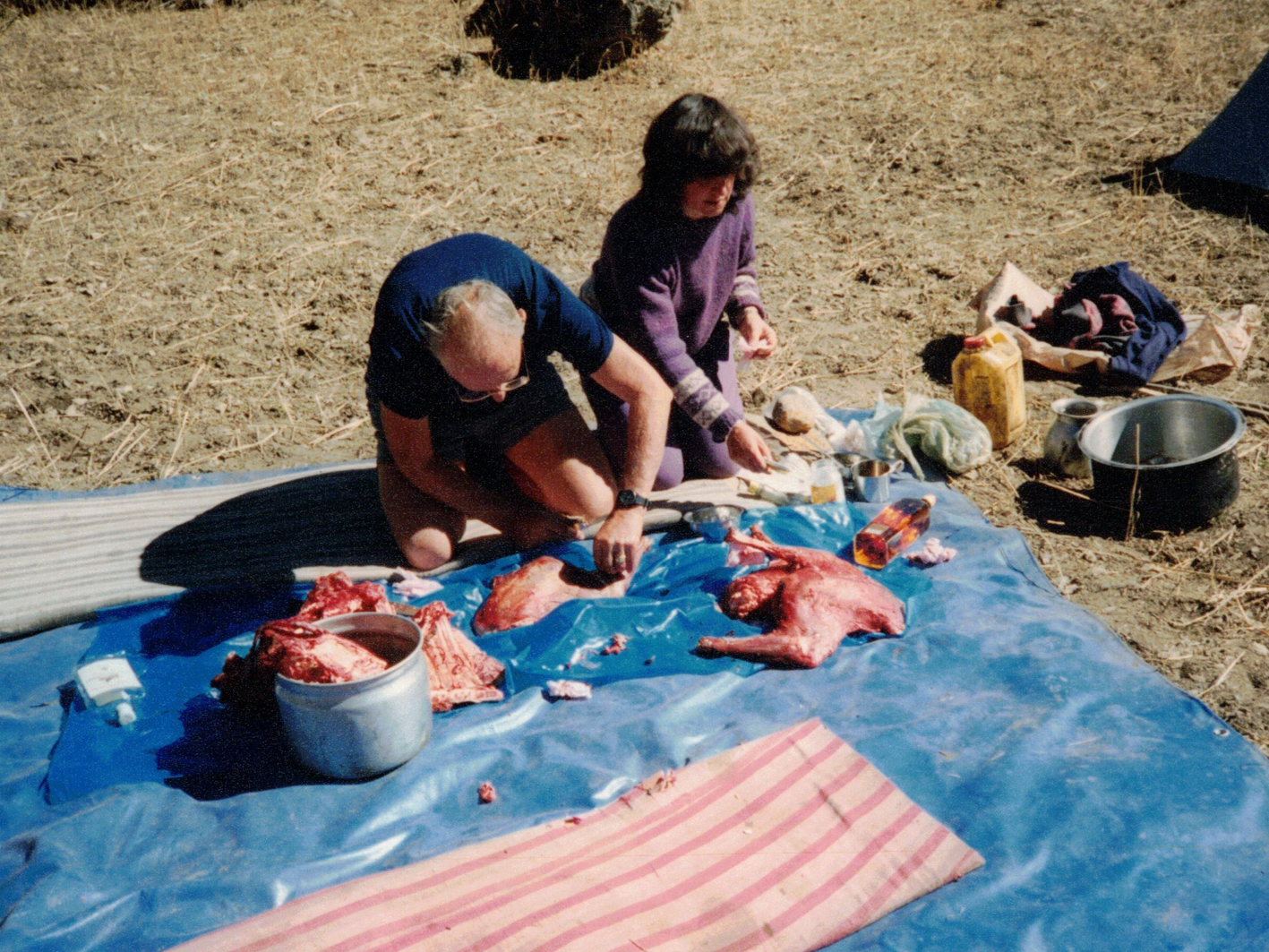
Geneviève and Georges are preparing the cuts of meat.
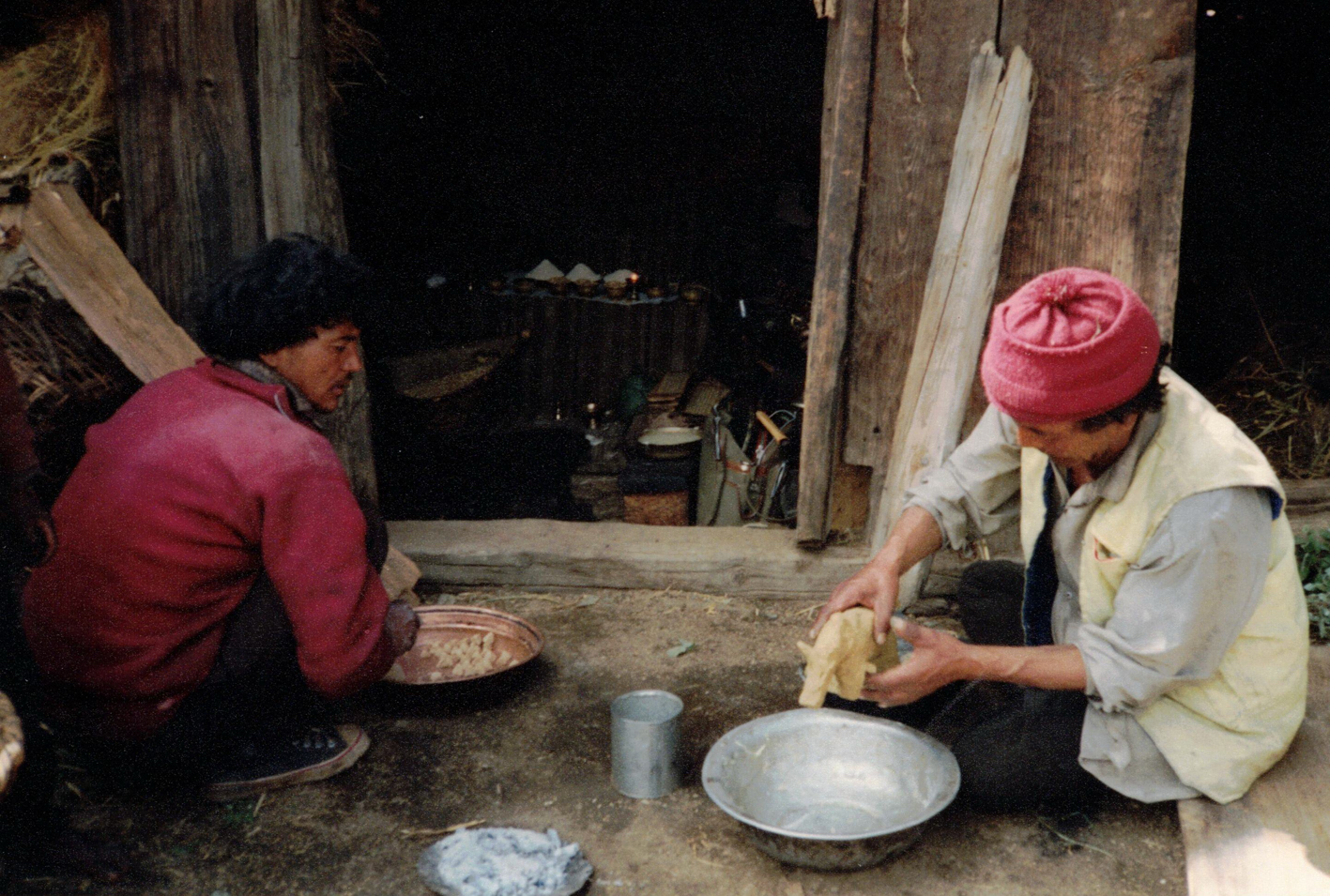
Cleaning, brushing with oil, rubbing with herbs, infusing with garlic and…
(injecting with whisky (to sterilise?)).
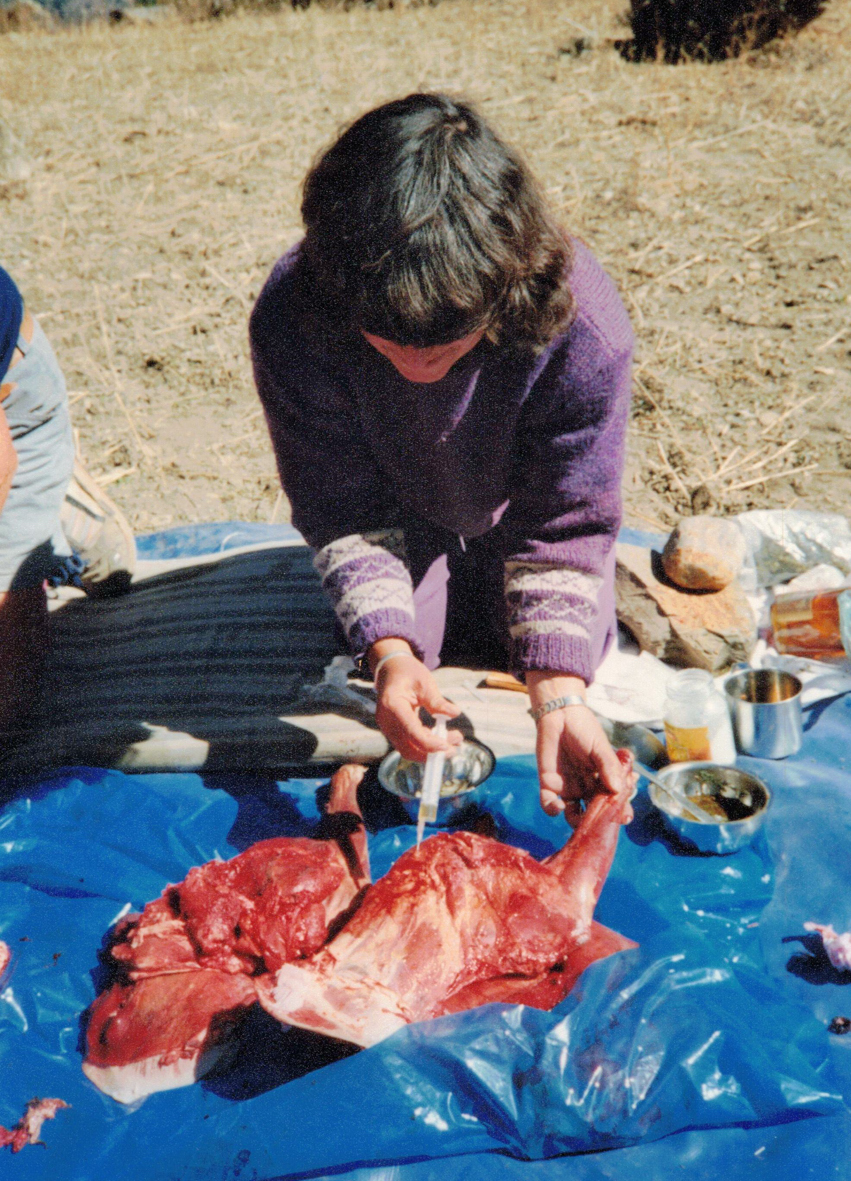
Shanka digs a rectangular hole, places the egg crate inside to use as a grill, and lights a big fire to make the embers. We enjoy some delicious mutton served with jacket potatoes.
It has been decided to draw up a list of the equipment each of us is willing to donate to the Nepalese staff, and a sum of money will be set aside to reward our liaison officer for his cooperation and courtesy.
I’ve also learnt that a kilo of meat sells for around 70 rupees. Given that the sheep yielded thirteen kilos of meat, the 1,000 rupees (or around CHF 8) paid for the animal seems fair to me.
We have a light supper. An hour after the meal, the cook invites us for tea. “I hope there’ll be biscuits,” I say jokingly. It wasn’t a joke, just a reflection of my knowledge of the customs and traditions of the Nepalese people.
The evening is enlivened by a lively yet courteous exchange of views between Geneviève and Jacques on the respective merits of Eastern and Western medicine. It’s a full moon tonight and the atmosphere is magical.
3 November
I woke up at 7 am, an hour and a half before sunrise. It was very hard to crawl out of my sleeping bag. It was going to be a long day, so we had to set off early. The yaks left at 9 am and we left at 9.30 am. We overtook them shortly afterwards.
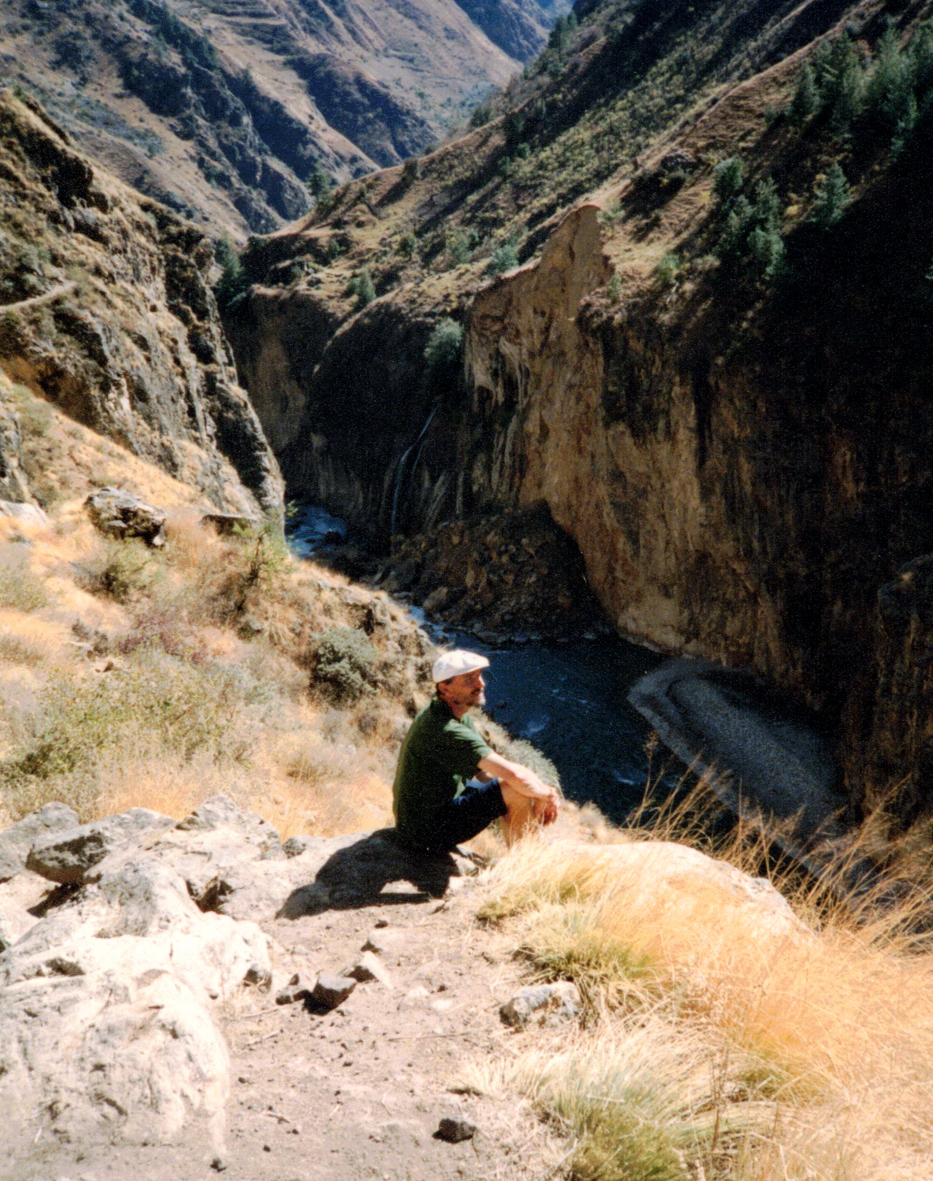
The descent towards the Karnali River is stunning. From Yalbang to Kermi, the route is just as beautiful. New species of trees come into view: walnut and wild apricot trees.
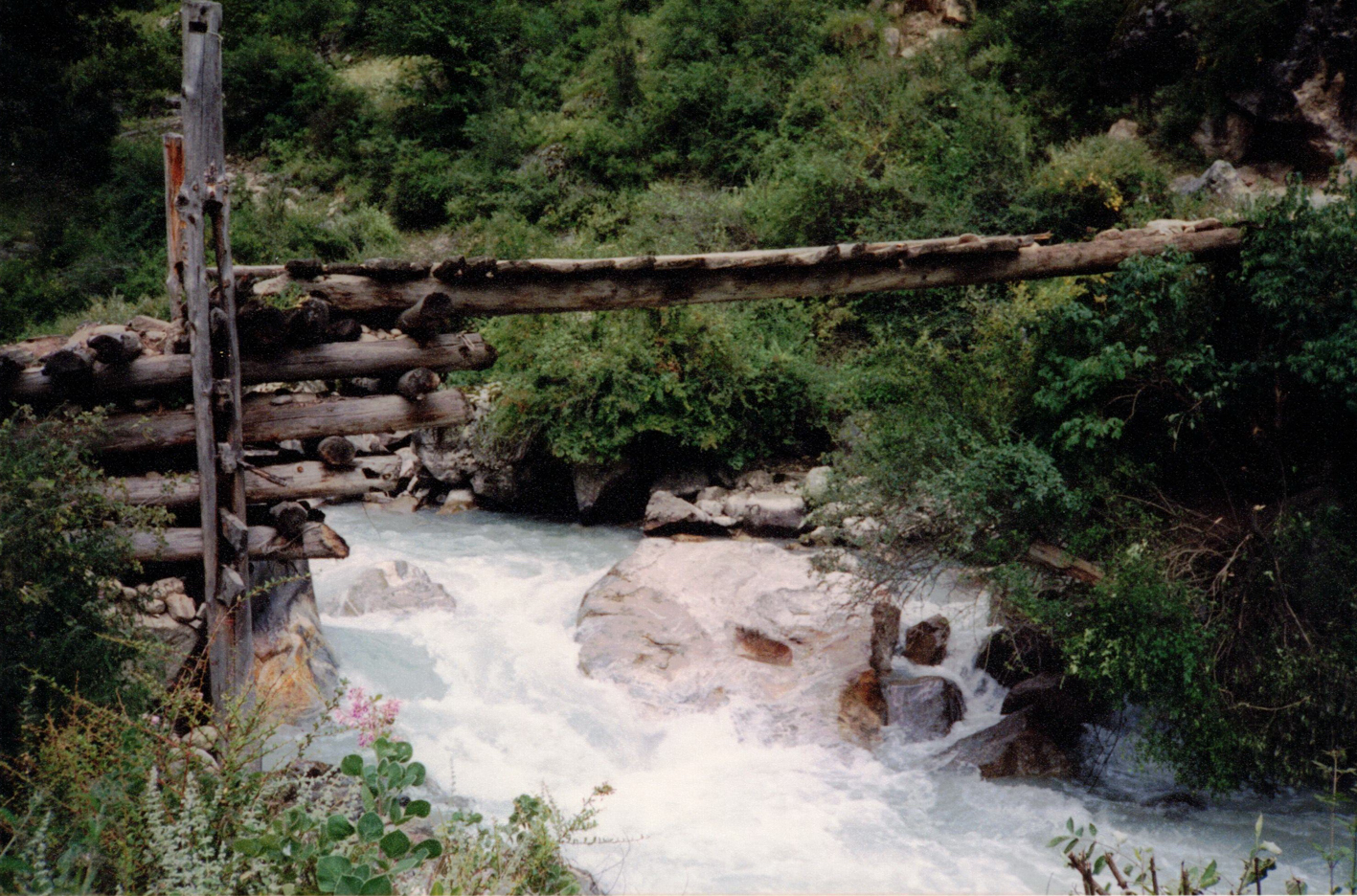
All that remains of the old bridge are two abutments.
It has been replaced by a suspension bridge further upstream.
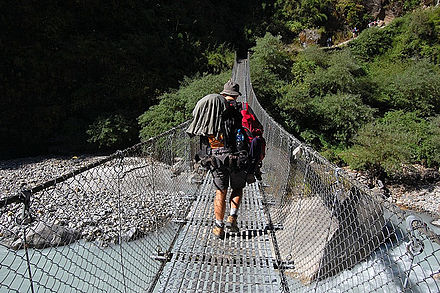
This was one of the most hilarious moments of our trek.
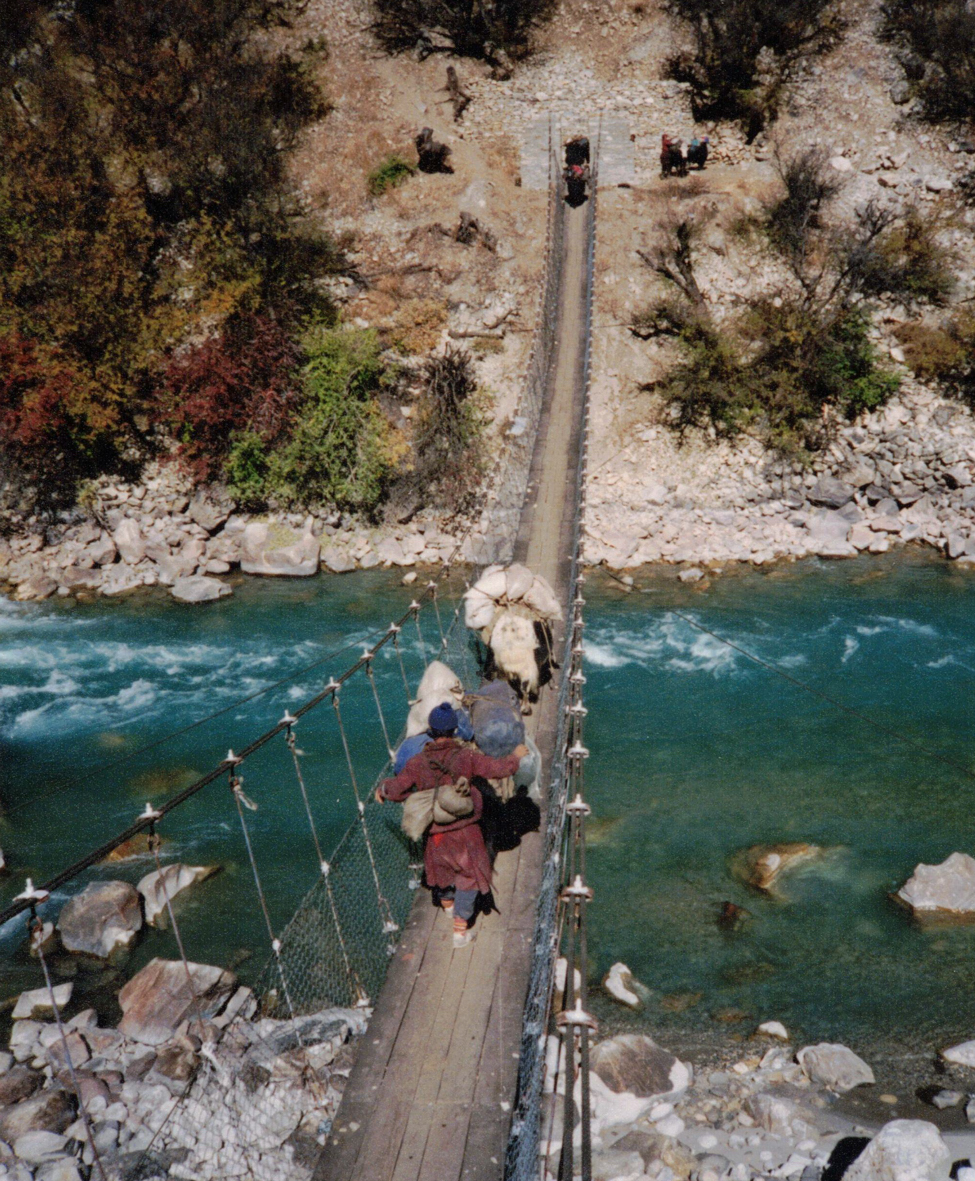
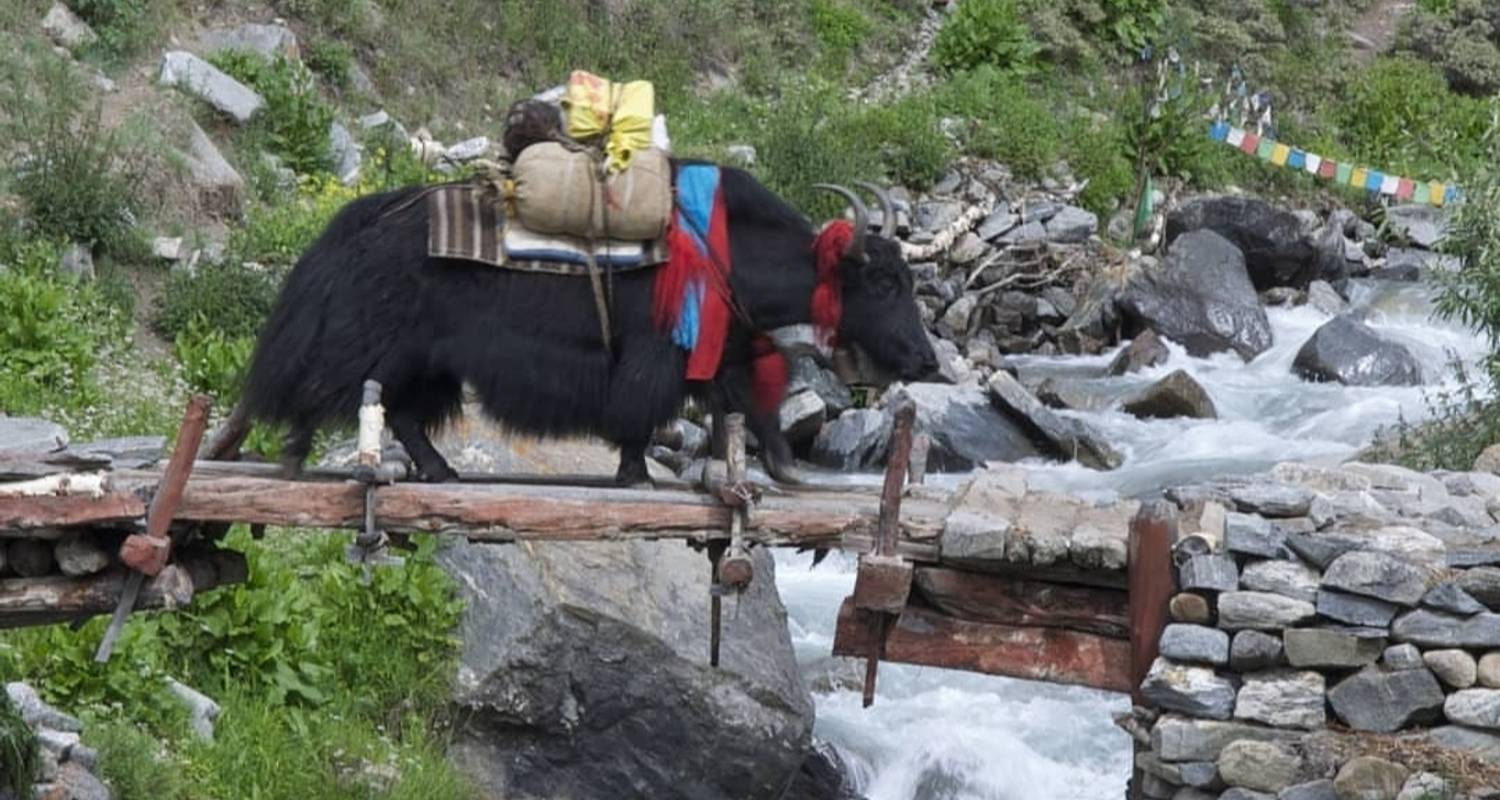
The yaks, frightened by this wobbly footbridge, refused to cross it. The yak herders had to work together to get a single animal across. It was a real battle between man and beast.
One of the yaks, seeing this struggle, slips past the watchful eyes and jumps into the water with all its gear. It swims, fights against the current and finally manages to reach the other bank. The luggage takes on water, and amongst it is my bag of equipment.
On our way up to Yalbang, as we round a bend in the path, we come across a watermill and a lovely surprise. Inside, a young miller’s wife is busy grinding grain.
In the village, we are welcomed by Pema, who introduces us to his wife.
As in every village we pass through, Geneviève provides medical care.
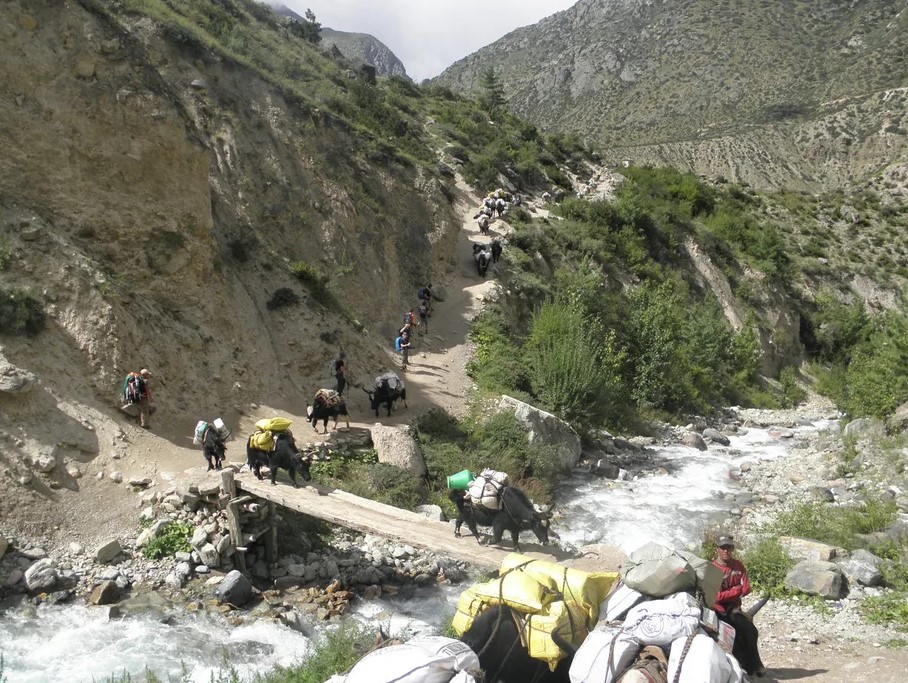
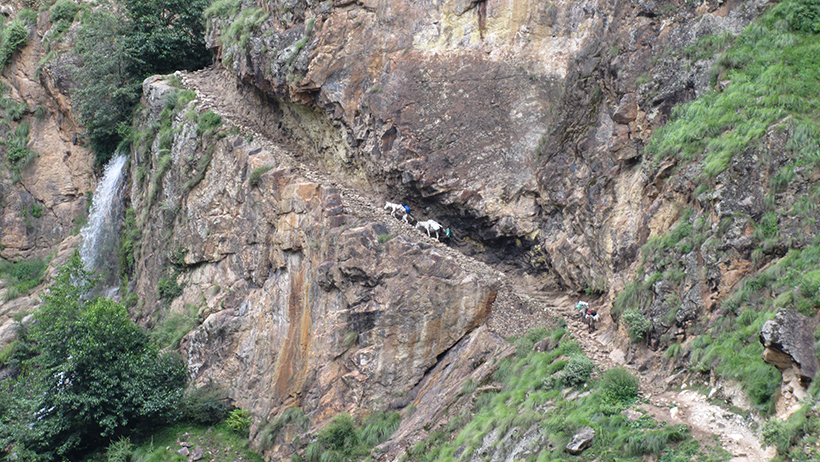
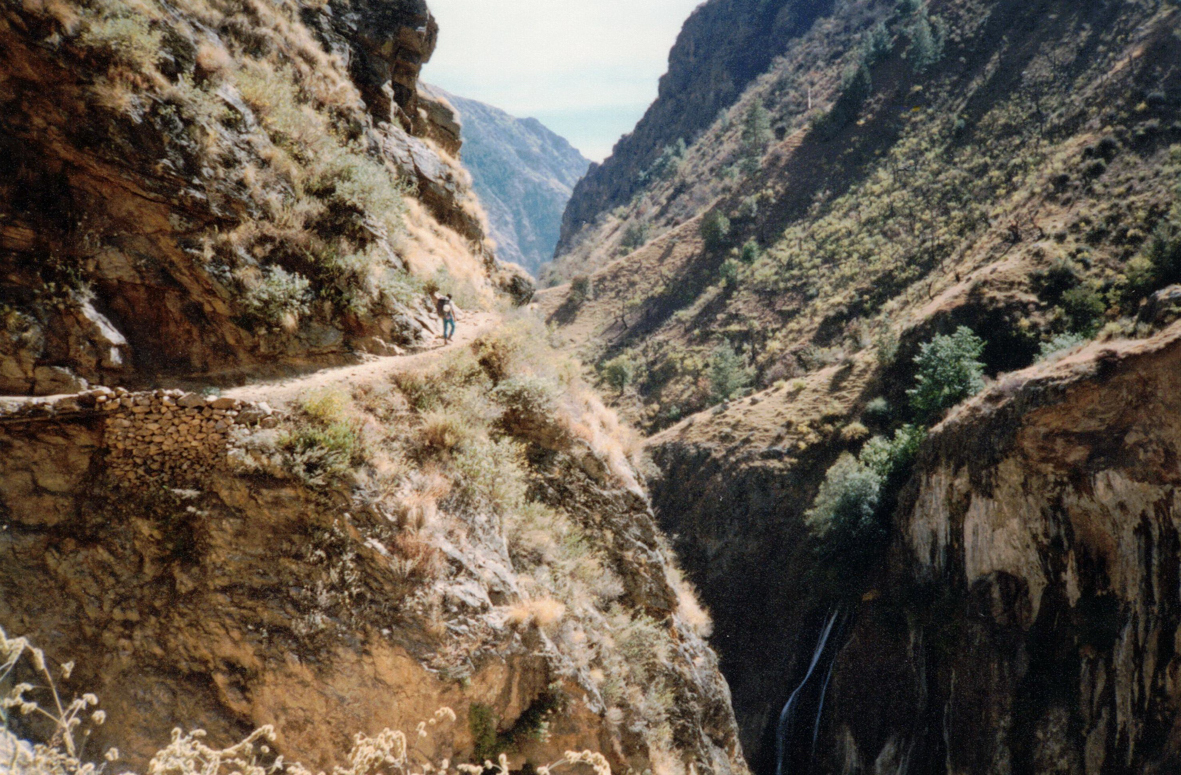
After the lunch break, we set off on the key section: a path carved into the rock face.
Two years ago, the yaks had to be unloaded to get across. This time, that wasn’t necessary as the path had been improved.
Then we meet a one-eyed boy who offers us some nuts. Gaston gives him a notebook and a pencil. The lad is immediately taken under their wing and nicknamed ‘Friday’. He won’t let go of his notebook until we reach Kermi.
At the fork in the road, Gaston turns left towards Kermi to visit a lama (religious leader) and, above all, his younger sister! We won’t see him again for the rest of the evening.
4 November
The camp at Kermi is in a good spot and the sun is already warming us up by 7am. Given how hot it gets during the day (25°C), the yak herders from Chala don’t want to carry on, as their animals struggle to cope with these temperatures.
We manage to acquire three horses and a few dzos (male hybrids of yaks and cows) in Kermi.
Meanwhile, the yak herders from Chala manage to sell their wooden bowls and some ropes made from yak hair to Alex and Christophe, who feel they’ve got a good deal.
We pass quite a few people along the way. This road seems very busy.
A stop at an inn (a wooden hut) gives Christophe the chance to treat Georges and me to a cup of milk tea for three rupees (tourist price).
We follow the Karnali all day long. Just before Dara Pori (Dara = source and Pori = behind), we pass the bridge that had allowed us to cross the river on the way there, and so we knew we had come full circle.
A short stop at Dara Pori, where a local sells us apples for 1 Rps each. Then we head towards a tributary of the Karnali.
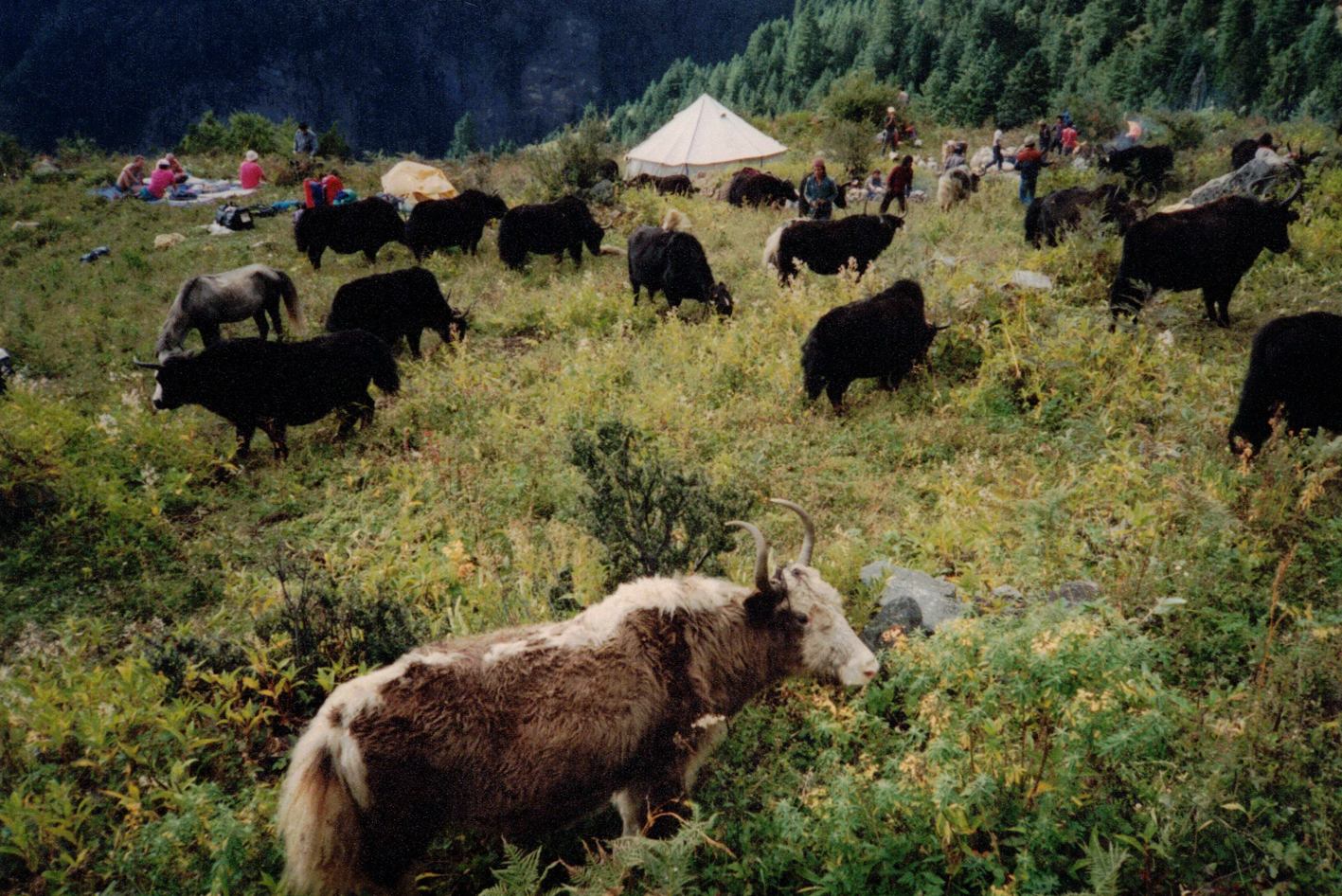
The camp is set up. It is 4 pm and we are at 2,800 metres.
On a field next to ours, a group of traders had already set up camp. They are on their way to Tibet with a load of rice.
We all feel that it is time
to bring our journey to an end
Apart from the minor niggles that seem to be popping up everywhere, we’re finding that our gear is starting to show its age and, despite a few washes in cold water, our clothes are beginning to take on the local smell.
On Radio Kathmandu’s evening news
there is mention of the expedition’s success
5 November
The climb up to the 3,400-metre pass leading to Simikot is gruelling,
but the descent is quick, as we can already feel the beer on our lips.
On the way, the Sherpas bought two running chickens
(it took an hour to catch the second one).
During an evening gathering, it was decided to invite our Nepalese staff to a dinner in Kathmandu
at which we would hand out ‘gifts’ in the form of equipment and clothing.
We finally left Simikot
on 8 November 1990
I like this blog very much, Its a very nice position to read and receive information.Leadership
Thanks for your comment.